

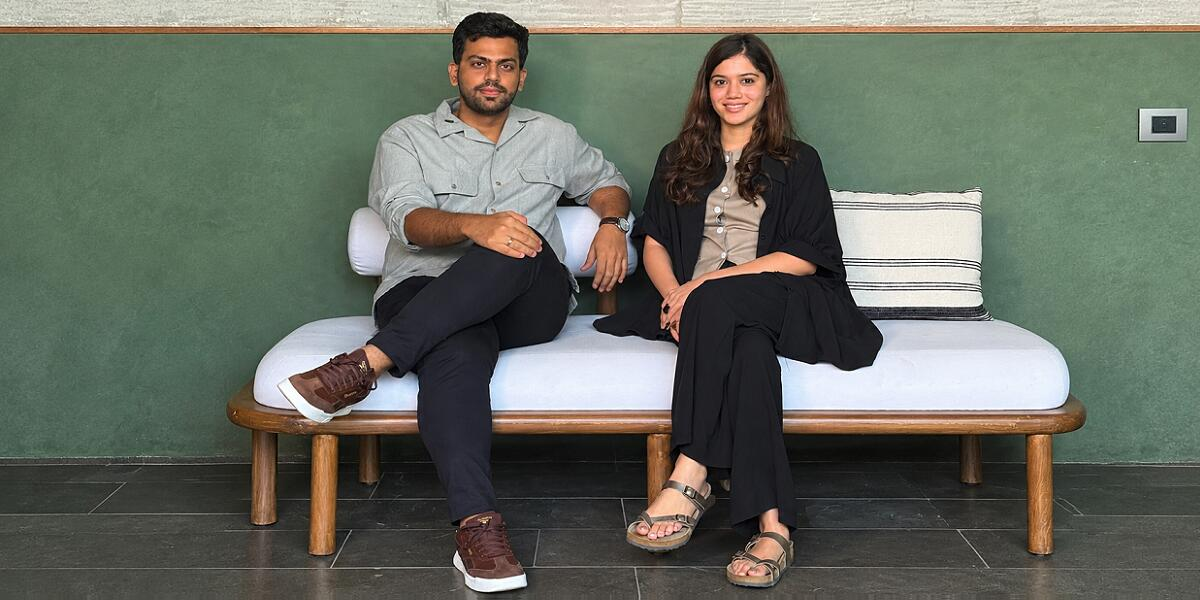
In a design landscape often shaped by rapidly changing aesthetics and visual trends, Mumbai-based boutique practice RAD Co + Lab is taking a different approach. Rather than beginning with a predetermined style, the studio develops each project from its context, narrative and the experience it seeks to create.
Working across architecture, interiors, furniture and objects, RAD Co + Lab views design as an interconnected process. For the young studio, the identity of a project emerges from understanding its surroundings, its users and the stories that shape the space.
Beginning With Context, Not Aesthetic
For RAD Co + Lab, every project begins with observation.
The studio looks at the site, architecture, client, lifestyle, cultural influences and environmental conditions before developing a visual direction. These observations are then translated into a central concept or narrative that guides the project.
Rather than imposing a fixed visual language, the studio uses this narrative as a framework for making design decisions from spatial planning and material selection to detailing and objects.
This approach has gradually become central to the studio’s identity. While each project is intended to have its own character, a common thread runs through the work: a conceptual starting point, sensitivity to context and a strong emphasis on how a space is experienced.
For RAD Co + Lab, the project itself becomes the medium through which the studio’s design voice develops.
One Design Conversation Across Different Scales
Architecture, interiors and furniture are often treated as separate disciplines. RAD Co + Lab sees them differently.
The studio describes these areas as different scales of the same design conversation.
Proportion, materiality, tactility, detailing and the relationship between an object and its surroundings remain important whether the studio is designing an entire building, an interior space or a piece of furniture.
The aim is to allow an idea established at an architectural scale to translate into smaller details without losing its essence.
However, consistency does not mean repetition.
RAD Co + Lab deliberately avoids creating every project in the same visual language. Instead, the consistency comes from the studio’s process and design thinking.
This allows individual projects to develop their own identities while retaining the underlying principles that define the practice.
Designing for Wellness Through Spatial Experience
One project that reflects this approach is Wellness Haven, an exploration of how architecture can influence emotions and wellbeing.
Rather than treating wellness as an additional feature or a separate amenity, RAD Co + Lab approached it as something that could be embedded into the spatial experience.
The project examines elements such as natural light, materiality, proportion, movement, landscape and transitions between spaces. These seemingly subtle characteristics can influence how people perceive and inhabit an environment.
The studio’s interest lies in the quieter dimensions of architecture spaces that encourage moments of pause, calm and connection.
For RAD Co + Lab, projects such as Wellness Haven also serve as opportunities to explore design ideas beyond the immediate requirements of a brief.
The process becomes an investigation into how architecture can shape experience rather than simply provide a functional response.
The Client as Part of the Narrative
Balancing a client’s requirements with an independent design vision is another important part of the studio’s process.
RAD Co + Lab approaches the client not simply as someone providing a list of requirements, but as an integral part of the project’s story.
Understanding how clients live, what they value and what they want a space to communicate often provides the starting point for the design narrative.
At the same time, the studio believes designers should bring new possibilities into the conversation. The process therefore involves dialogue, discovery and a degree of exploration.
The goal is to create environments that feel deeply personal without becoming entirely dictated by convention or expectation.
According to the studio, the strongest projects emerge when the client’s story and the design concept become closely connected. The result is a space that feels specific and authentic rather than simply decorated or styled.
Mumbai as an Influence
RAD Co + Lab’s identity is closely connected to Mumbai, a city defined by density, contrasts, layers of history and continuous transformation.
For the studio, being based in Mumbai is not simply a geographic detail. The city’s complexity naturally informs how its designers observe space, context and urban life.
The practice intends to continue exploring projects that allow it to move across different scales and typologies rather than being restricted to a particular category of architecture or a fixed aesthetic.
Architecture, interiors, furniture and objects will continue to form part of that exploration.
The studio is particularly interested in projects where it can engage with the complete experience of a space, from the larger architectural idea to the smallest tactile detail.
Building a Voice Through the Work
As a young practice, RAD Co + Lab is choosing to let its projects define its identity.
Rather than attempting to establish a recognisable style at an early stage, the studio wants to develop a body of work connected by its approach to design.
Its ambition is to pursue concept-driven projects where narratives are strong enough to provide direction but subtle enough to be experienced rather than explicitly explained.
This philosophy also reflects the studio’s understanding of what it means to build a contemporary design practice.
A RAD Co + Lab project does not necessarily need to look like another RAD Co + Lab project.
Instead, it should reveal a similar sensitivity to context, an interest in material and experience, and a willingness to experiment.
For the Mumbai-based studio, the future is therefore less about defining a signature aesthetic and more about continuing to ask questions through design.
As the practice grows, its emerging design language may ultimately be found not in a particular colour palette, material or formal vocabulary, but in the thought process behind every project conceptual, contextual and deeply attentive to the experience of space.