

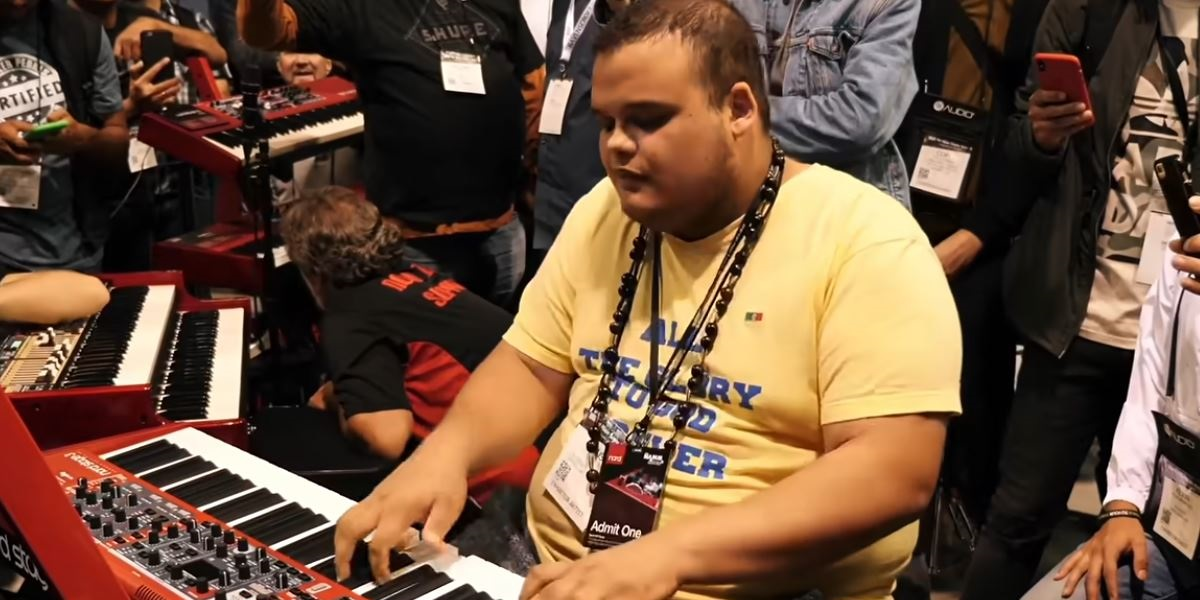
For a company that never competed with the manufacturing scale of Yamaha, Roland or Korg, Nord has achieved something remarkably difficult: turning a bright red keyboard into one of the most recognizable instruments on the modern stage.
Nord keyboards are praised by professional musicians for their simplicity, distinctive design and live-performance workflow. At the same time, they have attracted criticism over their high prices, limited memory, displays, keybeds and the cost or availability of replacement parts.
So how did a relatively small Swedish company become such a powerful name in the keyboard world?
From Complex Workstations to Simplicity
In the early 2000s, professional keyboard players had plenty of powerful options from major Japanese manufacturers. Instruments such as the Yamaha EX5, Roland XP-80 and Korg Trinity Pro offered extensive workstation capabilities.
But there was a problem for musicians performing live: powerful instruments could also mean complicated menus, multiple screens and layers of functions hidden behind software.
Nord took a different approach.
Founded by Hans Nordelius, Clavia focused on putting controls directly in front of the musician. Instead of forcing players to navigate deep menus, Nord instruments emphasized dedicated knobs, buttons and controls.
The red finish became part of that identity.
Following the success of products such as the Nord Lead, Nord Modular and Nord Electro, the company introduced the Nord Stage in 2005. The concept was straightforward: combine piano, organ and synthesizer capabilities in a single stage instrument designed around live performance.
That formula helped Nord establish a distinctive position in the market.
The Rise of the Red Keyboard
Nord’s timing also mattered.
As online video platforms began changing how musicians discovered new performers, musicians no longer needed to be global superstars to attract an audience.
Session players, jazz musicians, gospel performers and emerging keyboardists could demonstrate their skills directly to thousands of viewers.
Nord’s instruments became highly visible in these performances.
The red keyboards appeared in churches, jazz clubs, studios, concert stages and online performances. For a new generation of musicians, seeing a Nord became almost as familiar as hearing one.
That visibility helped transform the instrument from a piece of professional equipment into a recognizable brand.
Why Professionals Keep Choosing Nord
Nord’s popularity isn’t simply about marketing.
For many live musicians, the appeal is practical. The company’s instruments are designed around quick access to sounds and controls, allowing players to make changes without navigating complicated menus.
That can be particularly valuable during a live performance, where a few seconds can make a significant difference.
Nord also developed a reputation for its piano, organ and synthesizer sounds, while maintaining a relatively straightforward interface.
But not every famous keyboard player has made Nord their primary instrument.
Musicians such as Jordan Rudess have used instruments from several manufacturers depending on their specific needs. Other legendary players have continued to rely on Yamaha, Korg, Kurzweil, Moog and other brands.
That reveals an important point: Nord’s popularity does not mean it has replaced every other professional keyboard.
Instead, it created a particularly recognizable solution for musicians who prioritize immediacy and live control.
The Handmade Image
Another part of Nord’s identity comes from the company’s approach to manufacturing.
Rather than presenting itself as a massive industrial keyboard manufacturer, Nord has maintained an image centered on specialized production and Scandinavian design.
Its instruments have featured components sourced from specialist manufacturers, including Fatar keybeds from Italy, while certain physical components and wooden elements have been associated with smaller workshops.
That contributes to Nord’s premium image.
The company isn’t simply selling a collection of electronic components. The design, color, physical controls and materials are all part of the product’s identity.
And that identity comes at a price.
The Criticism Behind the Red Finish
Nord’s success has also created a growing debate among keyboard players.
One of the most common criticisms is cost. High-end Nord instruments can command premium prices compared with competing keyboards that offer extensive specifications.
Some users have also criticized Nord’s memory capacity, displays, keybeds and replacement-part availability.
For musicians who spend thousands of dollars on an instrument, expectations are naturally high.
A keyboard used professionally isn’t merely another piece of consumer electronics. If it fails during a concert or tour, the consequences can be much greater than simply losing access to a device at home.
This is why reliability, repairability and spare-parts availability matter so much to touring musicians.
The Nord Paradox
And this creates the central paradox surrounding Nord.
The same characteristics that make the brand attractive can also make it controversial.
Its distinctive design creates strong brand recognition.
Its simple interface makes live performance easier for many musicians.
Its premium construction and specialized identity support its high-end positioning.
But those same factors can also make customers question whether the price is justified compared with competing instruments.
In other words, Nord isn’t simply selling specifications.
It is selling a particular philosophy of how a stage keyboard should work.
How Nord Changed the Market
Whatever musicians think about the price, Nord’s influence on the stage-keyboard market is difficult to ignore.
The company’s success demonstrated that professional musicians could value simplicity and immediate physical control just as much as an enormous list of specifications.
Competitors have increasingly emphasized dedicated controls, simplified stage interfaces and instruments designed specifically for performance rather than general-purpose workstation use.
The red keyboard therefore represents more than one company’s product line.
It represents a shift in what musicians expect from a professional stage instrument.
Why Nord Remains So Famous
Nord became famous not because it built the biggest keyboard company in the world, but because it built a recognizable identity.
The red color is instantly identifiable.
The interface is familiar.
The instruments are frequently visible on professional stages.
And generations of musicians have grown accustomed to seeing that red panel beside a singer, guitarist or drummer.
For supporters, Nord represents simplicity, reliability and professional workflow.
For critics, it represents premium pricing and specifications that can sometimes appear modest compared with competitors.
Both perspectives explain why the brand continues to generate debate.
Ultimately, Nord’s greatest achievement may be turning a keyboard into a brand that musicians can recognize from across a concert hall.
And that may be the real reason the red keyboard became one of the most famous instruments in the world.