

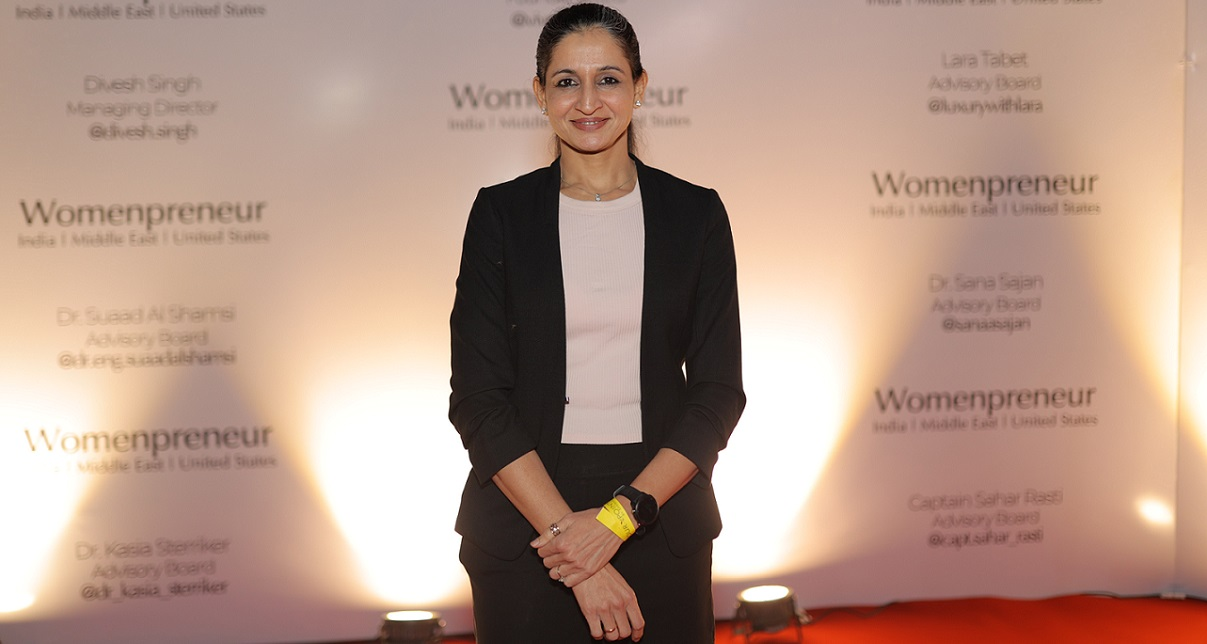
In a world where diet trends, unrealistic body standards, and conflicting health advice often dictate how people eat and exercise, Mitushi Ajmera believes that wellness should be rooted in knowledge, flexibility, and self-awareness rather than fear and restriction.
A wellness coach, fitness professional, and author of Fearless Diet: A Step-by-Step Guide to Balanced Nutrition, Mitushi advocates a more practical and sustainable approach to health—one that encourages people to understand their nutritional needs, enjoy their food without guilt, and build fitness routines that work for their individual goals and lifestyles.
Drawing from her own experiences with physical challenges and injuries, she emphasises that health is not a linear journey and that there is no universal formula for achieving it. Her philosophy centres on helping people develop a healthier relationship with food, fitness, and their bodies, empowering them to make informed decisions without depending on rigid rules or constantly chasing perfection.
In this exclusive conversation with A2Z Insider, Mitushi shares insights into her wellness journey, challenges common nutrition and fitness misconceptions, and discusses her vision of making evidence-based health knowledge accessible to everyone.
Q1. Your journey from overcoming personal physical challenges to becoming a wellness coach is inspiring. How has your own experience shaped the way you guide others toward better health and fitness?
Mitushi Ajmera: My own journey has taught me that health and fitness are not linear processes. I’ve experienced physical challenges and injuries, and I’ve had to learn how to adapt my training and nutrition, understand my body, and work towards getting stronger without constantly pushing through limitations.
These experiences have taught me that there is no one-size-fits-all approach to health. Individual needs are particularly important when it comes to nutrition because we all have different health conditions, physical limitations, food preferences, cultural and religious considerations, routines, and life circumstances. What works for one person may not work for another.
I strongly believe that food must give us pleasure. Nutrition isn’t just about getting the right nutrients; it’s also about enjoying what we eat. When I coach someone, one of the first things I tell them is, “From today, whatever you eat, don’t feel guilty about it. And don’t try to compensate for it the next day.”
That doesn’t mean nutrition doesn’t matter. It means moving away from guilt and punishment towards mindful choices. If you’ve eaten something indulgent today, you don’t need to skip meals or overexercise tomorrow. You simply return to making thoughtful food choices and work towards meeting your nutritional needs over time.
This belief is also at the heart of my book, Fearless Diet: A Step-by-Step Guide to Balanced Nutrition. I wanted to help people stop fearing food, stop labelling foods or themselves as good or bad, and learn to make informed choices independently. The book is designed as a workbook that takes readers through the process step by step, helping them put what they learn into practice.
Ultimately, my goal is to help people build a relationship with food, fitness, and their bodies that is informed, flexible, and sustainable. I want them to feel empowered to look after their health without feeling that they have to live by rigid rules or strive for perfection.

Q2. You focus on helping people build a fearless relationship with food, fitness, and health. What does this mean in practice, and how does your approach differ from conventional fitness routines?
Mitushi Ajmera: To me, being fearless means removing the guilt, judgment, and unnecessary restrictions that often surround food and fitness.
I see people who feel guilty about eating sugar, fear carbohydrates, or believe they’ve done something wrong by enjoying a dessert. At the other end, some feel morally superior because they eat a salad or follow a particular diet. But food choices are not a measure of character. Eating a salad doesn’t make you virtuous, and eating sugar doesn’t make you a culprit.
The same judgment can extend to fitness. Some people feel that running, exercising every day, or pushing themselves through boot camps makes them healthier or more disciplined than others. But fitness isn’t a moral achievement, and one type of exercise doesn’t automatically make someone fitter or healthier than another. What matters is whether your training is appropriate for your goals, abilities, health, and circumstances.
I believe nutritious food doesn’t have to be boring, bland, or boiled. Food has to nourish you, but it should also satisfy you. Your nutritional needs matter, and so do taste, pleasure, and satiety. When your food meets your nutritional requirements and satisfies your taste buds, you’re more likely to enjoy eating and sustain those habits.
My philosophy is to help people understand what they’re eating and make informed decisions rather than blindly follow rules. A traditional mithai made with sugar and a diet soda have different nutritional profiles, but both can have a place in an overall balanced eating pattern. The important thing is understanding what each offers, its limitations, and how it fits into your needs.
Ultimately, I want people to understand the principles behind their choices. If you don’t understand nutrition, you’ll always need someone else to tell you what to eat. My goal is to equip people with the knowledge to make those decisions themselves, without fear or guilt. That’s the philosophy behind Fearless Diet.
Q3. As a wellness coach and fitness professional, how do you help people move beyond unrealistic body expectations and develop sustainable, healthy habits?
Mitushi Ajmera: I begin by helping people understand that their bodies are not projects that need constant fixing. There’s nothing wrong with wanting to lose fat, build muscle, or change your body composition. The problem arises when appearance becomes the only measure of health and self-worth.
I see people pushing themselves through boot camps, gruelling workouts, or extended training sessions at the gym, believing that intense exercise is the only way to lose fat or become healthier. My approach is different. I always say that more does not necessarily mean better. Exercise needs to be appropriate to your goals, fitness level, recovery, and lifestyle. You don’t have to exhaust yourself to make progress.
Similarly, I don’t subscribe to the simplistic philosophy of “eat less and move more.” If you’re moving more, you also need to ensure you’re eating adequately to meet your nutritional needs. Eating adequately also means making room for foods you enjoy, so that your diet provides both nutrition and satisfaction.
One experience that reinforced this for me was coaching a tennis player who was highly disciplined but constantly restricting food to lose weight. She would play tennis for hours on an empty stomach, yet struggled to achieve the results she wanted.
We spent several months gradually increasing her food intake without chasing weight loss. When she went on holiday, she asked me for food rules. I told her there were none and encouraged her to enjoy herself. When she returned, she had lost about two inches around her waist. We can’t attribute that change to relaxation alone, but the experience reinforced how counterproductive constant food anxiety and restriction can become. I’ve even shared her story in Fearless Diet.
This is why I encourage people to look beyond the weighing scale. Progress can also mean becoming stronger, improving stamina, recovering better, or developing a healthier relationship with food and your body.
I teach people to choose the best available options within their circumstances rather than wait for ideal conditions. Health that cannot travel with you is not health. Your routine may change when you’re travelling, working late, managing family responsibilities, or attending social gatherings, but that doesn’t mean you have to abandon your health.
Sustainable health is about learning to adapt, nourishing your body adequately, and building habits you can maintain—not striving for perfection.
Q4. What are some of the most common misconceptions about nutrition and fitness that you believe need to change, especially among Indian audiences?
Mitushi Ajmera: I believe we need to move away from fear-based nutrition advice and focus more on developing nutrition literacy. There are several misconceptions that deserve to be challenged.
Protein is only for bodybuilders. One of the biggest misconceptions is that protein is important only for bodybuilders or people who go to the gym. Protein is essential for everyone, supporting muscle maintenance, recovery, and several other bodily functions, particularly as we age.
Many people also assume that home-cooked food automatically provides enough protein. While home-cooked meals can be nutritious, their protein content depends on what goes into them. Simply eating roti and sabzi doesn’t necessarily make a balanced meal, nor does a breakfast of poha and chai provide adequate protein by default. We need to consciously include protein-rich foods as anchors in our meals.
Carbohydrates cause weight gain. Rice, roti, and other carbohydrate-rich foods are often blamed for weight gain, while millets are promoted as universally healthier alternatives. But millets are also primarily carbohydrate sources, not protein substitutes.
Individual tolerance matters, too. One person’s gut may not tolerate millets well, while another may struggle with wheat or rice. That doesn’t make any of these foods universally bad. Nutrition needs to be personalised rather than driven by food trends.
Exercise can compensate for eating. I also see people treating exercise as a way to compensate for what they’ve eaten. Food is not something you need to earn, and exercise should not be punishment for eating. More exercise isn’t automatically better, and doing endless abdominal exercises won’t selectively remove belly fat.
Natural means healthy. Another misconception is that natural, plant-derived, or “clean” foods are automatically healthy, while everything packaged is unhealthy. Natural is not a safety certificate, and packaged does not automatically mean unhealthy. What matters is the food’s nutritional composition, safety, and how it fits into your overall diet.
Packaged foods can also offer convenience, which matters for busy people. For someone who regularly skips meals because they don’t have time to prepare food, a convenient packaged option can sometimes be a better choice than eating nothing.
Superfoods guarantee good health. We also need to question the obsession with superfoods. The term “superfood” is largely a marketing term, not a formal nutrition category. No single ingredient can make you healthy or fit on its own. Health comes from the combination of your overall diet, physical activity, sleep, and other lifestyle habits.
Healthy food has to be boring. Nutritious food doesn’t have to be boring, and eating healthily doesn’t mean giving up everything you enjoy. Nutrition matters, but so do taste, pleasure, and satiety. A diet that meets your nutritional needs but leaves you perpetually dissatisfied is unlikely to be sustainable.
We need less fear-based advice and more nutrition literacy. People should learn to evaluate foods based on evidence and context rather than labels such as “natural,” “clean,” “bad,” or “superfood.”
Q5. Looking ahead, what is your vision for making holistic wellness more accessible, and what impact would you like your work to create in people’s lives?
Mitushi Ajmera: My vision is to make evidence-based health and fitness knowledge accessible and practical enough for people to apply in their everyday lives.
Not everyone can work with a personal coach, and not everyone needs an elaborate programme. But everyone deserves access to reliable information that helps them make better decisions about their health. This is one of the reasons I wrote Fearless Diet. Since I cannot coach everyone individually, I wanted to put my coaching process into a book that people can work through, chapter by chapter, and implement in their own lives.
I don’t want people to keep jumping from one diet to another or depend on a nutritionist or dietitian for every food decision. I want them to understand the basics well enough to make mindful choices independently—whether they’re eating at home, enjoying mithai at a celebration, choosing a diet soda, or navigating meals while travelling.
My philosophy is not about eating perfectly. It’s about knowing enough to make the best available choice in the circumstances you’re in. It’s also about understanding that health isn’t built by eating less and exercising more indefinitely. We need to nourish our bodies adequately, build strength, move regularly, and allow ourselves the flexibility to enjoy life.
If my work helps people become stronger, more confident, less fearful of food, and better equipped to look after their health independently, I would consider that meaningful impact.
I want people to spend less time chasing perfection and more time actually living well.
A Final Thought: Wellness Without Fear, Guilt, or Perfection
Mitushi Ajmera’s approach to wellness offers a refreshing reminder that good health is not about following the strictest diet, completing the toughest workout, or achieving an ideal body. It is about understanding individual needs, making informed decisions, and developing habits that can adapt to the realities of everyday life.