

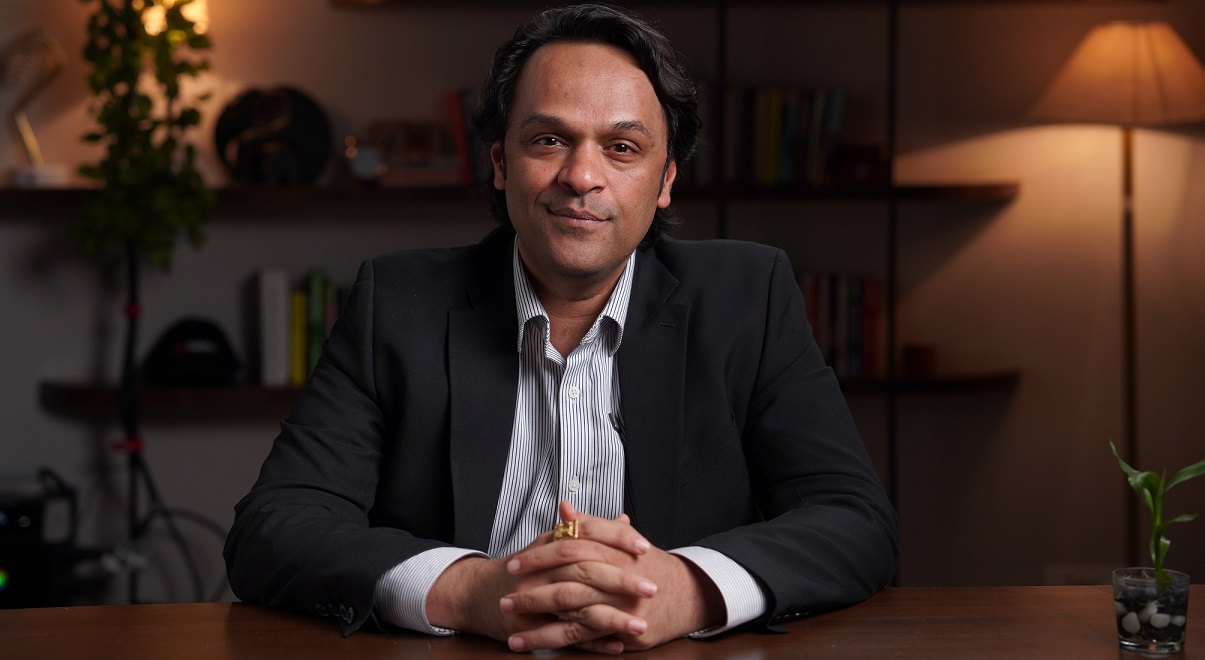
In this insightful conversation, Mr. Dipak Sanghavi, MD & CEO of Nilon’s, reflects on the company’s transformation from a family-run food processing business into a diversified FMCG brand. From taking charge at the age of 24 following his father’s demise to navigating business expansion, strengthening professional leadership, and mentoring entrepreneurs through Bharat BrandDShala, he shares valuable lessons on building sustainable businesses, earning consumer trust, and scaling with focus.
Q1. Nilon’s has grown from a relatively small family business into a diversified FMCG brand with a turnover of over ₹450 crore. What were the most critical decisions that shaped this transformation?
Dipak Sanghavi: Nilon’s was founded by my father in 1962, with a strong foundation in food processing. When I joined the business in 2001, we were a much smaller organisation. Our journey from ₹8 crore to over ₹450 crore has taught me that growth is not simply about launching more products or entering new markets; it is about building the right business systems.
One of our biggest learnings was the importance of focus. We realised that instead of expanding across too many categories and markets simultaneously, we needed to strengthen our core categories, deepen our distribution network, and develop products that consumers could repeatedly trust.
Today, our focus is on scaling the business through stronger execution, channel expansion, and responding to evolving consumer needs. We also see opportunities in emerging channels such as quick commerce and in international markets.
My biggest learning is that sustainable growth comes from focus, consistent execution, and building a brand that consumers trust.
Q2. You took charge of the family business at the age of 24, just four months before your father’s demise. How did this experience shape your leadership philosophy?
Dipak Sanghavi: I joined the family business at the age of 24, and just four months later, I lost my father. It was an extremely difficult period because I had to take on responsibilities much earlier than I had anticipated.
I had to learn business not just from textbooks, but through real-life decisions, understanding people, managing challenges, and dealing with uncertainty. Those early experiences shaped my understanding of leadership.
Over time, I realised that a founder cannot be the person who makes every decision. For a business to grow, you have to build capable leaders, delegate responsibility, and give people the freedom and confidence to perform.
One of the most important turning points in our journey was learning to trust professional leadership and allowing people to take ownership.
That experience taught me that leadership is not about having all the answers. It is about building a team that can find the answers, make decisions, and take the organisation forward.
Q3. Diversification can create new growth opportunities, but it also comes with risks. How do you identify the right opportunities while preserving consumer trust?
Dipak Sanghavi: Diversification should never happen simply because a new category looks attractive or the market is growing. The real question is whether that category fits your existing capabilities, distribution network, consumer understanding, and brand promise.
At Nilon’s, our expansion into categories such as sauces, spices, ginger-garlic paste, and other food products has offered us important lessons. There was a phase when we expanded across too many categories simultaneously. We eventually realised that spreading our resources too thin could weaken our ability to establish leadership in our core businesses.
Our approach today is to focus on the right products, win the right markets, and then expand systematically.
Consumer trust is built through consistent quality, product availability, and delivering on the brand promise every single time. It takes years to build trust, but it can be compromised if execution is inconsistent.
My philosophy is simple: win one product in one market, build a strong position, and then move to the next opportunity. Growth without focus can increase complexity faster than profitability.
Q4. From your entrepreneurial journey and interactions with business owners, what are the most common mistakes Indian entrepreneurs make while scaling their businesses?
Dipak Sanghavi: The biggest mistake I see is entrepreneurs trying to do too many things at once. They expand into new products, enter new markets, and increase their teams without first building the systems required to manage that growth.
Another common mistake is making the founder the centre of every decision. A business cannot scale sustainably if every important decision depends on one individual.
Entrepreneurs must develop strong leaders, establish clear accountability, and build repeatable processes. The organisation should gradually become capable of functioning independently of the founder.
Through Bharat BrandDShala, I emphasise practical execution over theoretical knowledge. Entrepreneurs need to understand their customers, strengthen sales and distribution, build the right organisational structure, and focus on profitability alongside revenue growth.
A business does not scale just because its sales increase. It scales when its systems, people, processes, and decision-making capabilities grow along with it.
Q5. When evaluating an entrepreneur or a business idea, what qualities make a founder stand out? What advice would you give aspiring entrepreneurs?
Dipak Sanghavi: When I evaluate a founder, I look beyond the presentation or the business idea. I want to understand whether the founder truly knows the customer, understands the economics of the business, and has the ability to execute consistently.
A strong founder must demonstrate resilience, clarity of purpose, financial discipline, and the ability to build a capable team. Ideas are important, but execution ultimately determines whether those ideas can become sustainable businesses.
My advice to aspiring entrepreneurs is to solve a genuine customer problem, understand your unit economics, and build a business that can function beyond your personal involvement.
Do not chase valuation or growth at any cost. Focus on creating real value for customers and building a strong organisation.
Through Bharat BrandDShala, our larger ambition is to help entrepreneurs build future-ready Indian businesses and contribute to the goal of scaling 100 companies to ₹100 crore.
Ultimately, the objective should not just be to build a successful business for today, but to create an institution that can continue to grow for generations.
Beyond Growth: Building Businesses That Last
The journey of Nilon’s highlights an important distinction between growing a business and building an institution. While expanding from ₹8 crore to over ₹450 crore represents a significant business milestone, the larger lessons lie in the decisions behind that growth: staying focused, developing professional leadership, understanding consumers, and creating systems that support long-term success.
The same philosophy now extends to Bharat BrandDShala, where the emphasis is on helping entrepreneurs move beyond founder-dependent businesses and build scalable, professionally managed Indian brands.
At its core, the message is clear: sustainable entrepreneurship is not about doing more things; it is about doing the right things consistently, building the right people, and creating value that lasts.