

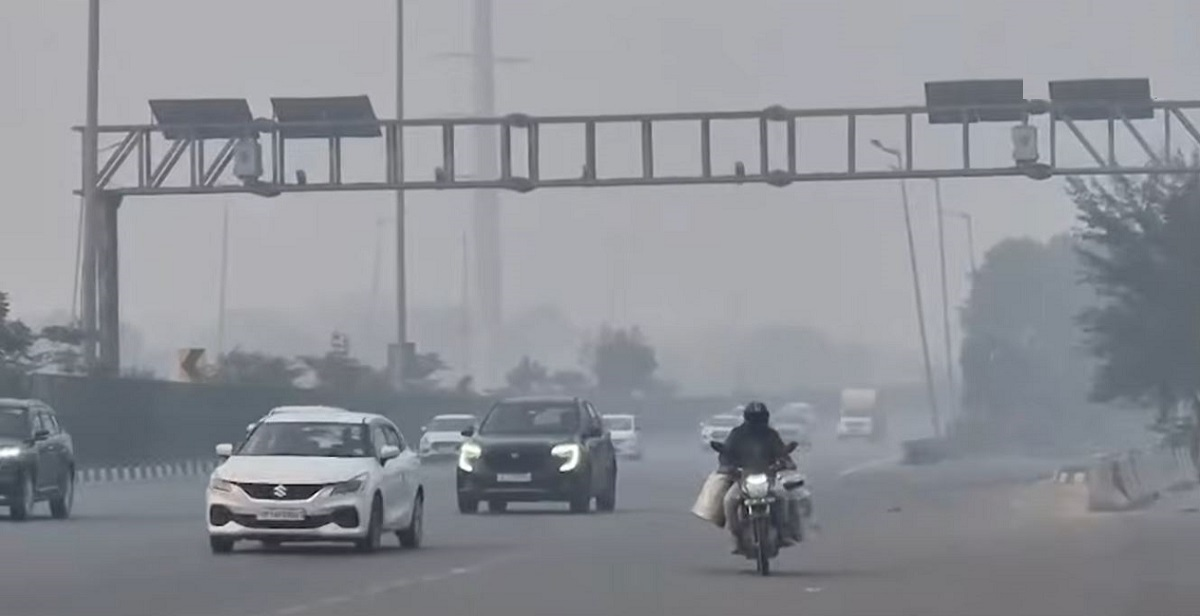
Delhi faced a severe air pollution crisis following Diwali celebrations, with PM2.5 concentrations reaching alarming levels at several monitoring stations across the national capital. The situation has sparked serious concerns not only about the health risks posed by toxic air but also about missing pollution data during some of the worst hours of the night.
According to figures subsequently released by the Delhi Pollution Control Committee (DPCC), the PM2.5 concentration at Mundka reached an astonishing 3,744 micrograms per cubic metre at 2 am. Jawaharlal Nehru University (JNU) recorded 3,023 micrograms per cubic metre at 4 am, while several other locations also reported extremely high pollution levels.
In total, 11 DPCC monitoring stations recorded PM2.5 concentrations above 2,000 micrograms per cubic metre.
The scale of the pollution becomes clearer when compared with India’s prescribed 24-hour PM2.5 standard of 60 micrograms per cubic metre. Mundka’s peak reading was more than 62 times the national benchmark.
36 Pollution Monitoring Stations Went Silent
While pollution levels were rising, several monitoring stations across Delhi stopped reporting readings, raising questions about the accuracy and transparency of the available air quality data.
An analysis by the Centre for Research on Energy and Clean Air (CREA) revealed a sharp increase in the number of stations reporting missing data throughout the night.
At 7 pm, only one monitoring station was not reporting readings. By 10 pm, the number had increased to seven. At 11 pm, it reached 23, and by midnight, 29 of Delhi’s 59 monitoring stations were no longer reporting data.
The situation worsened further at 1 am, when 36 stations were missing readings. This meant that only 23 of the 59 monitoring stations were reporting data during a critical period of rising pollution.
At 2 am, 35 stations were still not reporting readings.
The DPCC’s subsequent data release added another dimension to the controversy. According to the analysis presented, 125 station readings missing from Central Pollution Control Board (CPCB) records were above 1,000 micrograms per cubic metre in the DPCC data.
This raised questions about why some of the most concerning pollution readings were unavailable in the initial records.
Political Controversy Over Missing Pollution Data
The missing readings quickly became a political issue, with the Aam Aadmi Party (AAP) accusing the BJP-led Delhi government of manipulating pollution data.
AAP leader Saurabh Bharadwaj alleged that monitoring stations had been shut down during peak pollution hours. He also questioned the locations of certain monitoring stations and alleged that water was being sprayed near some monitors to influence pollution readings.
These allegations have not been independently established.
Meanwhile, the Delhi government has faced questions about why so many monitoring stations were not reporting data during a period of extremely high pollution. Officials have cited technical glitches in the monitoring systems as an explanation.
However, the explanation has not fully addressed the concerns surrounding the missing readings.
Why PM2.5 Pollution Is Dangerous
Beyond the political controversy, the pollution levels represent a serious public health concern for millions of Delhi residents.
PM2.5 refers to fine particulate matter measuring 2.5 micrometres or less in diameter. Due to their extremely small size, these particles can travel deep into the lungs and potentially enter the bloodstream.
Prolonged or high-level exposure can aggravate asthma, worsen existing respiratory and cardiovascular conditions and increase the risk of serious health complications.
Children, older adults and people with existing heart or lung conditions are particularly vulnerable to the effects of severe air pollution.
The reported concentrations highlight the potential health dangers associated with exposure to extremely polluted air.
Transparency Remains the Biggest Concern
Delhi’s post-Diwali pollution crisis has exposed two major concerns: dangerously high concentrations of toxic particles and gaps in the monitoring systems responsible for tracking air quality.
For residents, accurate and continuous pollution information is essential. People rely on air quality readings to make everyday decisions about outdoor activities, school attendance, travel and protecting vulnerable family members.
When monitoring stations stop reporting during peak pollution hours, it becomes difficult for citizens to understand the actual severity of the situation.
While the government has cited technical glitches and the opposition has alleged manipulation, the central question remains unanswered: Why did so many pollution monitoring stations go silent when Delhi’s air was at its most dangerous?
The issue goes beyond political blame. Reliable pollution monitoring is essential for public health, government accountability and public trust. When it comes to the air millions of people breathe, missing data is not merely a technical problem; it is a serious public concern.