

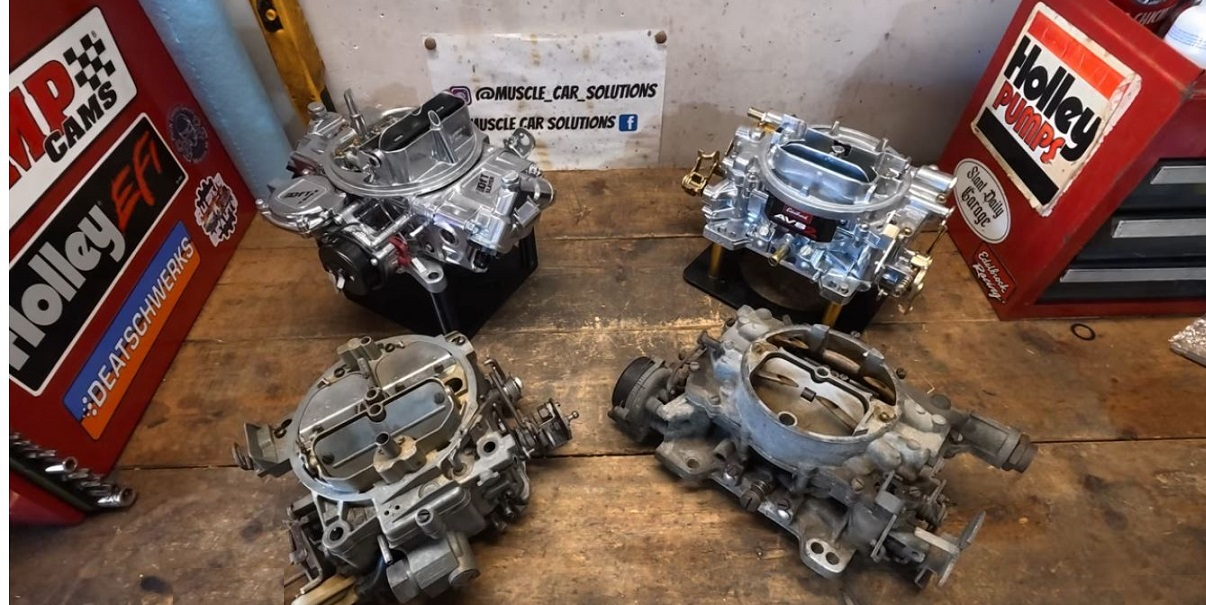
Improving fuel economy in a carbureted engine requires more than simply reducing the amount of fuel entering the engine. Proper carburetor tuning involves carefully balancing the air-fuel mixture, ignition timing, engine temperature, and driving conditions. While a leaner fuel mixture can potentially improve mileage, making incorrect adjustments can lead to overheating, poor performance, and serious engine damage.
For classic car and truck owners looking to get better mileage, choosing the right carburetor is an important first step. Street-oriented carburetors are generally better suited to fuel-efficient driving than performance-focused models. Popular options include the Edelbrock Performer and AVS2 series, as well as Holley vacuum-secondary carburetors. Original equipment (OE) carburetors, such as the GM Quadrajet and Ford Autolite, can also deliver good fuel economy thanks to their carefully designed fuel-metering systems.
An Overdrive Transmission Can Improve Fuel Economy
Carburetor tuning is only one part of improving a vehicle’s fuel efficiency. Transmission selection also plays a major role. Installing an overdrive transmission can significantly reduce engine RPM during highway cruising, helping the engine operate more efficiently.
Driving habits matter just as much. Avoiding aggressive acceleration, maintaining moderate speeds, and keeping engine RPM within an efficient operating range can help reduce fuel consumption.
Essential Tools for Carburetor Tuning
Accurate measurements are critical when adjusting a carburetor for fuel economy. Several tools can help monitor engine performance and identify potentially dangerous operating conditions.
The Risks of Running an Engine Too Lean
One of the biggest mistakes when tuning a carburetor for fuel economy is making the air-fuel mixture excessively lean. Although reducing fuel delivery may appear beneficial, an overly lean mixture can create several problems.
Common warning signs include hesitation during acceleration, rough idling, sluggish throttle response, and increased engine temperatures. Excessive heat can potentially damage pistons, piston rings, valves, and spark plugs.
Fuel also helps cool internal engine components. Reducing fuel delivery too aggressively can increase combustion temperatures and put additional stress on the engine.
For this reason, monitoring AFR and EGT readings is particularly important. If the engine begins running unusually hot or develops rough running conditions, tuning should stop until the cause is identified.
Establish a Proper Baseline Before Making Adjustments
Before beginning any tuning work, make sure the carburetor is clean and in good working condition. Inspect the fuel pump, filters, fuel lines, and pressure regulator to ensure the fuel system is functioning correctly.
Ignition timing should also be checked before changing carburetor calibration. Incorrect timing can affect engine performance, fuel consumption, and operating temperatures.
Always begin with a documented baseline. Record the existing carburetor settings, ignition timing, vacuum readings, AFR measurements, and other relevant data.
Making small adjustments and recording the results helps identify which changes improve performance and which ones create problems.
Make Small Changes and Monitor Results
Carburetor tuning should be a gradual process rather than a series of major adjustments. Change one variable at a time and evaluate the results under different operating conditions.
Testing should include idle, light-throttle cruising, acceleration, and heavier engine loads. Vehicles used for towing should also be evaluated under their intended operating loads.
Spark plugs should be inspected regularly for unusual deposits, overheating, or signs of damage. Keeping a detailed tuning log makes it easier to return to a previously successful calibration if an adjustment produces undesirable results.
Ignition timing may also need to be reassessed as the air-fuel mixture changes. Any adjustments should follow the engine manufacturer’s specifications and be verified using appropriate monitoring equipment.
Not Every Engine Is Suitable for Lean Tuning
An important consideration is that not every engine is designed to operate with an aggressively lean air-fuel mixture. Performance engines, particularly those with high-performance camshafts and specialized internal components, may require richer fuel mixtures to operate safely under certain conditions.
Attempting to maximize fuel economy without considering the engine’s design can lead to expensive mechanical failures.
The tuning process can take several weeks of careful testing and evaluation. Patience, accurate measurements, and a willingness to reverse unsuccessful adjustments are essential.
Improving fuel economy in a carbureted vehicle requires a combination of proper carburetor selection, accurate ignition timing, appropriate transmission gearing, and sensible driving habits.
While careful tuning can help improve mileage, protecting the engine should always remain the priority. Using an AFR gauge, monitoring exhaust temperatures, inspecting spark plugs, and documenting every adjustment can help reduce the risks associated with carburetor tuning.
Ultimately, the goal is not simply to make an engine consume less fuel, but to achieve a reliable balance between fuel efficiency, drivability, and long-term engine durability.