

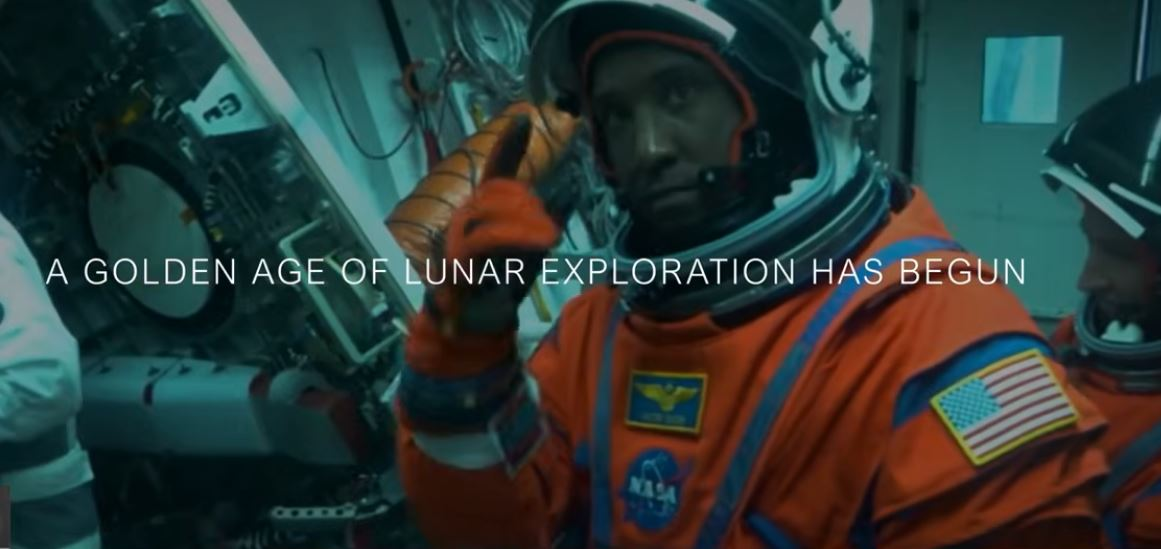
In a major development for India’s space programme, NASA has invited the Indian Space Research Organisation (ISRO) to join its Moon Base programme, opening a new chapter in India–US cooperation in lunar exploration. The invitation was discussed during the ninth meeting of the India–US Civil Space Joint Working Group, held at ISRO headquarters in Bengaluru on August 5–6, 2026.
The proposed Moon Base is part of NASA’s broader Artemis programme and aims to establish a sustained human presence on the Moon, particularly around the lunar South Pole. Astronauts and robotic systems would use the outpost for scientific research, technological experiments and preparation for future missions deeper into space.
For ISRO, participation could provide an important opportunity to contribute Indian technologies and scientific expertise to a major international lunar programme. India already has growing experience in lunar exploration through the Chandrayaan missions. ISRO is also working with Japan on the Chandrayaan-5/LUPEX mission, which is planned to investigate the Moon’s polar region and search for water and ice.
The proposed cooperation also builds on the growing relationship between NASA and ISRO. Their collaboration includes the NISAR Earth-observation satellite and cooperation in human spaceflight. ISRO’s annual report notes that Indian astronaut Shubhanshu Shukla travelled to the International Space Station in 2025 as part of the Axiom-4 mission, with ISRO and NASA cooperation.
If India joins the Moon Base programme, it could strengthen India’s position as a major partner in international space exploration. It could also help Indian scientists and engineers gain experience with lunar habitats, robotics, life-support systems and technologies needed for long-duration human missions.
The development is therefore significant not only for India and the United States but also for the future of human exploration beyond Earth. The Moon could become a testing ground for technologies that may eventually enable missions to Mars and other destinations in deep space.