

The United States is pushing to rebuild domestic manufacturing, but a less visible problem is emerging deep inside the industrial supply chain: America needs more factories capable of producing highly specialized metal castings for aircraft, defense systems and power turbines.
The issue has become increasingly important as demand for turbines rises. A 2026 aerospace supply-chain report found that the rapid expansion of industrial gas turbines, partly driven by electricity demand from AI data centers, is competing with aerospace for the same critical manufacturing capacity—particularly turbine-blade and vane castings.
That pressure is arriving as Washington attempts to reduce America’s dependence on foreign manufacturing. In July, the White House said foreign dependence and years of outsourcing had contributed to declining U.S. manufacturing capacity, a shrinking skilled workforce and rising production costs in the aerospace sector.
The challenge is particularly acute for components that are difficult to manufacture. Turbine blades, for example, must withstand extreme temperatures while maintaining precise internal cooling passages and aerodynamic shapes. Producing them requires specialized casting expertise, materials and quality-control processes.
A startup bets on a new kind of foundry
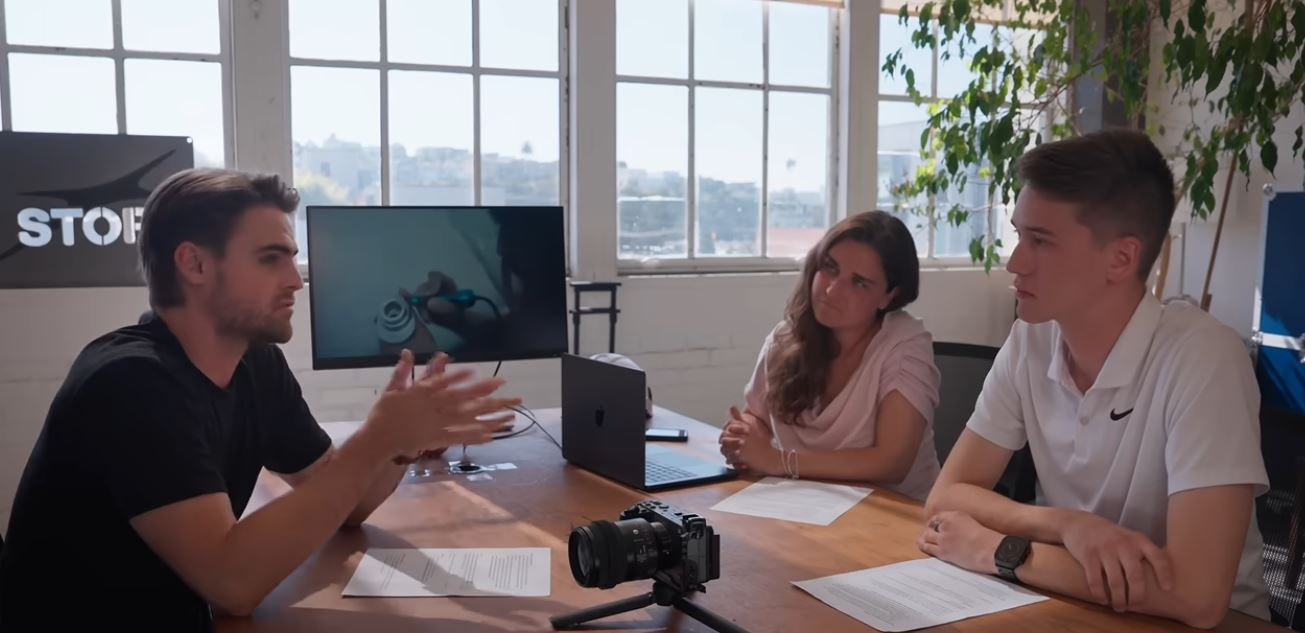
California-based Rangeview is trying to attack that bottleneck with a software-driven approach to investment casting.
The company says traditional foundry production can require expensive physical tooling, with tooling for some components costing hundreds of thousands of dollars and taking many months to produce. Rangeview’s approach attempts to replace much of that physical tooling with digital manufacturing processes, allowing it to move from a digital design toward physical castings more quickly.
The company has recently moved beyond the vision described in the video transcript.
On August 4, Rangeview announced a contract to operate foundry capacity producing maintenance, repair and overhaul replacement parts for U.S. Navy programs. The company says the work is intended to address shortages in the domestic defense casting industrial base.
Just days earlier, on July 30, Rangeview announced that Kratos Defense & Security Solutions had selected it to develop advanced cast components for turbine-engine programs. Rangeview said the program involves flight-quality cast superalloy hardware and addresses a component category that the U.S. Department of Defense has identified as a gap in domestic casting capacity.
AI is creating another customer for the same factories
The manufacturing problem is no longer confined to aerospace and defense.
AI data centers require enormous amounts of electricity, and power companies are increasingly turning to natural-gas turbines to meet that demand. Reuters reported in August that Siemens Energy’s latest surge in orders was being driven significantly by demand for gas turbines from U.S. AI data centers and Middle Eastern power projects.
That creates an unusual industrial competition: AI companies need more electricity, power producers need more turbines, aircraft manufacturers need more turbine components, and defense companies need many of the same specialized manufacturing capabilities.
The aerospace supply-chain report warns that these sectors are competing for turbine blades and vanes made by overlapping suppliers.
The bigger problem is not just factories
The deeper challenge is skilled manufacturing knowledge.
For decades, production moved toward lower-cost overseas suppliers. The White House’s July aerospace assessment specifically cited the loss of domestic manufacturing capacity and skilled workers as a consequence of that shift.
That means rebuilding American manufacturing is not simply a matter of constructing new buildings and installing machines. Companies also need workers who understand casting, metallurgy, tooling, inspection and the complex processes required to turn engineering designs into reliable physical components.
That is the problem Rangeview is attempting to solve through automation and digital manufacturing.
The company’s strategy reflects a broader shift in American industry: instead of trying to recreate the factories of the past exactly as they were, new manufacturers are attempting to build highly automated factories designed around today’s labor shortages and supply-chain requirements.
A national-security issue disguised as a manufacturing problem
The stakes extend beyond business.
On July 20, the White House issued an executive order directing greater attention toward securing U.S. defense supply chains and increasing domestic or allied sourcing of critical materials and components. The order specifically identifies production capacity, obsolete infrastructure, supplier concentration and the ability to surge production as supply-chain risks.
That makes foundries increasingly important to national security.
A fighter aircraft, naval system or power turbine may begin as an advanced digital design. But eventually, somebody has to turn that design into a physical component capable of surviving extreme conditions.
America may have plenty of engineers capable of designing the next generation of machines. The harder question is whether it has enough modern factories—and enough people who know how to run them—to build those machines at scale.
And that may become one of the defining tests of America’s new industrial revival.