

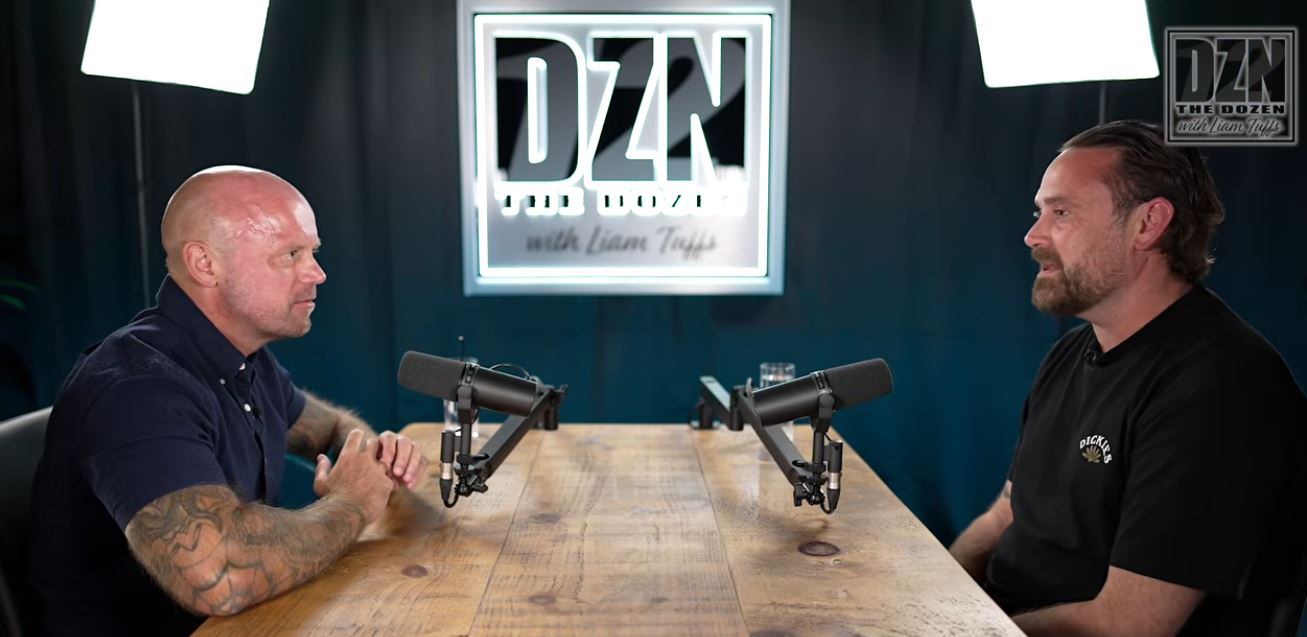
Former British soldier Eddie has opened up about the lasting impact of his military service, describing his experiences in Afghanistan as brutal and traumatic and saying that the conflict “damaged everyone” who served there.
Speaking in a candid interview, Eddie reflected on his time serving in Iraq and Afghanistan, the loss of fellow soldiers, the psychological pressure of deployment and the difficulties many service personnel face after returning home.
Eddie said that arriving in Afghanistan was very different from what he had expected after serving in Iraq. He described having a “false sense of confidence” before deployment and said soldiers were not necessarily told about the full horrors they would encounter before experiencing them themselves.
‘I’ve lost so many brothers’
One of the most emotional parts of the interview came when Eddie discussed soldiers he knew who were killed in Afghanistan.
He recalled the death of a fellow soldier, Rocco, who was shot in the stomach by a PKM while returning from patrol. Eddie said that Rocco initially appeared to be laughing after being wounded, but later died from his injuries while being evacuated by helicopter.
Eddie also spoke about another soldier, Jordan, whose death became another devastating memory from the deployment.
For Eddie, these experiences remained among the defining memories of his military career and illustrated the reality faced by soldiers operating in Afghanistan.
A war where sleep became a weapon
Eddie described Afghanistan as an environment of constant uncertainty, violence and exhaustion.
He recalled one operation in which his platoon was deployed as a distraction while engineers cleared a road. The unit was dropped during the night and had to cross difficult terrain before reaching a compound, where they came under sustained attack.
He said opposing forces would sometimes fire intermittently specifically to prevent soldiers from sleeping, describing periods when troops could go several weeks without proper rest.
The experience, he suggested, went beyond conventional battlefield danger. The combination of constant threat, exhaustion and uncertainty created an environment in which soldiers were continually operating under extreme pressure.
The struggle after coming home
The interview also explores what happened after Eddie returned from Afghanistan.
He spoke openly about his drinking, acknowledging that he had consumed large quantities of alcohol and that, although he did not initially believe he had a problem, he later recognised that his drinking had become serious. He described drinking heavily even while working in the Army and recalled consuming very large quantities of vodka.
His account provides a personal perspective on the difficulties that can continue after soldiers leave a combat environment.
Rather than presenting the end of deployment as the end of the experience, Eddie’s story suggests that the consequences of war can follow veterans back into everyday life.
Eddie also raises concerns about the British Army
Away from his personal experiences, Eddie criticised what he sees as changes within the British Army.
He said his battalion had been told that it did not have enough personnel to deploy while also maintaining the ability to defend Britain domestically.
He also questioned aspects of modern military training, arguing that today’s recruits may not experience the same level of pressure that previous generations faced. His comments included criticism of what he described as “woke policies” and the introduction of systems allowing recruits to issue “yellow cards” to instructors.
These are Eddie’s personal views based on his experience and should be understood in that context.
From warzones to protecting communities
The interview also marks a new chapter for Eddie.
After working in military and private security environments, including experience in Libya, Eddie says he is now focusing on a Community Protection Group aimed at providing civilian training and helping communities become better prepared for emergencies and potentially dangerous situations.
The initiative is planned around practical training, including self-defence, medical skills and scenario-based exercises. Eddie says the team includes experienced personnel from military and operational backgrounds, as well as medics and martial arts and boxing specialists.
The first event was being planned for August, with participants expected to take part in simulated scenarios designed to teach people how to respond when confronted with unexpected situations.
For Eddie, the project is about rebuilding confidence within communities.
He argues that communities should know and support one another rather than relying entirely on outside intervention, while describing the initiative as a community-based protection effort rather than a vigilante organisation.
Looking ahead
At 38, Eddie says his life has included experiences of violence, military service and conflict that have fundamentally shaped his outlook.
Asked whether he is optimistic or pessimistic about Britain’s future, he said he is currently pessimistic and believes the country needs stronger political leadership.
Yet his decision to establish the Community Protection Group represents a shift from surviving dangerous environments to helping civilians prepare for them.
His story is ultimately one of a former soldier confronting the memories of war while attempting to put his experience to use in civilian life.
From the battlefields of Iraq and Afghanistan to a new community-focused initiative in the UK, Eddie’s message is that the effects of war do not simply end when a soldier comes home.