

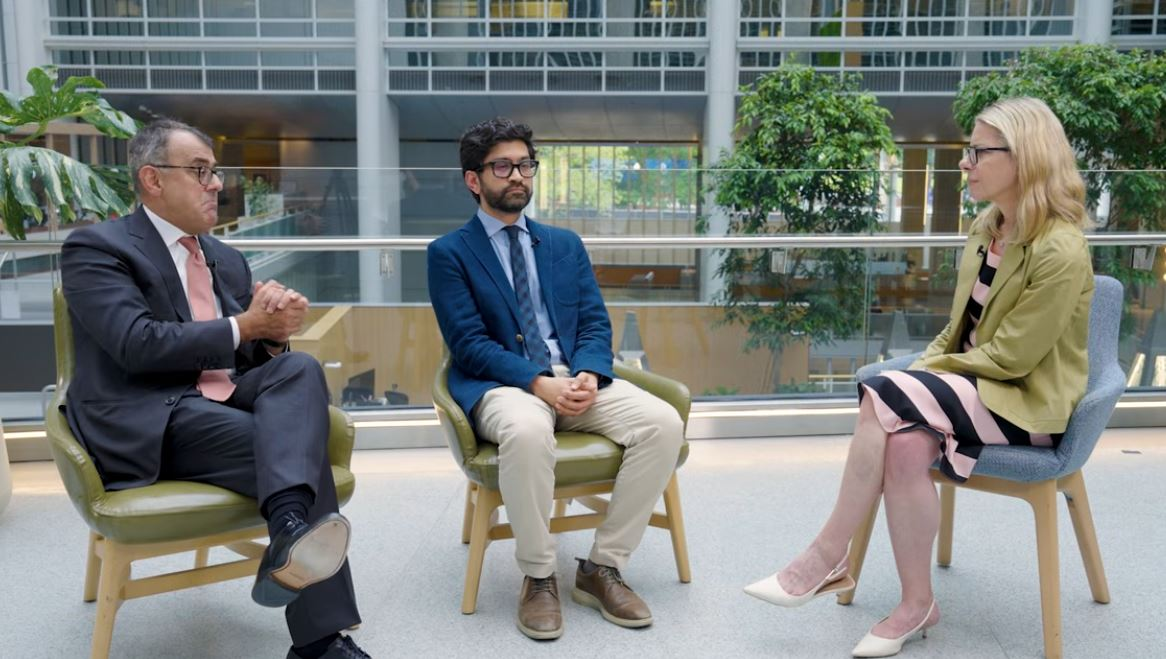
Artificial intelligence could become a powerful engine of development for emerging and developing economies, helping countries accelerate progress in areas ranging from healthcare and agriculture to education and public services, according to the World Bank’s World Development Report 2026, The Promise of Artificial Intelligence.
The report argues that developing countries have a significant opportunity to use artificial intelligence to address long-standing shortages of skills and expertise. Rather than focusing primarily on AI replacing workers, the report emphasizes the technology’s potential to augment human capabilities and help people become more productive.
According to the World Bank, developing countries could potentially accomplish in a decade what might otherwise have taken a century if they move quickly to adopt and adapt AI to local needs. The opportunity comes at a time when many emerging economies are dealing with limited access to skilled professionals, infrastructure gaps and slower economic growth.
AI Could Help Close Critical Skills Gaps
The World Bank report highlights healthcare, agriculture, education and government administration as areas where AI could have an immediate development impact.
In many developing countries, shortages of doctors, agricultural experts, teachers and skilled public officials limit the delivery of essential services. AI tools could help extend the reach of these professionals and provide expertise to communities that have historically had limited access to it.
The video discussion accompanying the report highlights examples including AI-assisted agricultural forecasting, where farmers can receive information on weather, flooding and potential locust activity. Such tools could help farmers make more informed decisions and improve productivity.
Healthcare is another area where AI is already being tested. The discussion points to applications that can assist with diagnosis and patient triage, potentially reducing pressure on overstretched public healthcare systems.
The World Bank similarly identifies medical diagnosis, agricultural advice and public-service delivery among the areas where AI can help overcome shortages of skilled personnel.
Developing Countries May Not Need to Build Frontier AI
One of the report’s central arguments is that developing economies do not necessarily need to compete with the world’s largest technology companies by building the most advanced AI models from scratch.
Instead, the World Bank recommends a three-stage approach: adopt, adapt and advance.
Countries can begin by adopting existing AI tools, then adapt those technologies to local languages, cultures, institutions and economic conditions. Only later, where resources and capabilities allow, should countries consider advancing toward the development of frontier AI systems.
This approach could allow developing economies to benefit from AI without making the enormous investments required to build large-scale AI models and data-center infrastructure themselves.
Infrastructure and Skills Remain Major Challenges
The potential benefits of AI, however, are not automatic.
The report warns that countries need reliable electricity, internet connectivity, computing infrastructure, data systems, education and institutional capacity to take full advantage of AI.
The gap is particularly significant in poorer regions. The World Bank notes that nearly one-third of rural schools in Sub-Saharan Africa lack reliable electricity, while more than two-thirds lack dependable internet access.
The video discussion similarly stresses that AI adoption will be slow without the necessary foundations, including connectivity, skills, infrastructure and locally relevant data.
AI Could Change Jobs Rather Than Simply Eliminate Them
The report also challenges the idea that the primary impact of AI in developing countries will be widespread job replacement.
Because a larger share of employment in developing economies involves manual rather than cognitive work, the immediate potential of AI is often to complement workers rather than replace them. The World Bank says the greatest opportunity may come from enabling workers to perform tasks more efficiently and access capabilities that were previously unavailable.
The video discussion reinforces this point, arguing that many jobs are likely to evolve as workers gain access to AI tools. Farmers, healthcare workers and other professionals could use AI to make better decisions and improve productivity rather than simply being displaced by the technology.
Governments Urged to Start Using AI
For policymakers, the World Bank emphasizes practical experimentation and investment.
Governments are encouraged to strengthen digital and physical infrastructure, invest in people and skills, establish appropriate regulatory frameworks and actively use AI in public services.
The report recommends that governments evaluate and scale AI applications in areas such as healthcare, education and agriculture while developing trustworthy approaches to AI regulation.
During the discussion, Google’s Karan Bhatia also emphasized the importance of governments actually using AI rather than limiting their efforts to pilot projects. He argued that government adoption could send a strong signal throughout public institutions and encourage wider use of the technology.
A Narrow Window for Action
The World Bank describes AI as a potentially historic opportunity for developing economies, but warns that the window to prepare is limited.
Countries that invest in electricity, connectivity, skills, data and institutions could use AI to expand access to expertise and improve economic and public-service outcomes. Countries that fail to build these foundations, meanwhile, risk falling further behind.
The report therefore presents AI not simply as a technology story, but as a development challenge. Its impact on emerging economies will depend on how effectively governments, businesses and institutions adapt the technology to local needs.
As the World Bank’s 2026 report concludes, AI could help developing countries accelerate development substantially but whether it narrows or widens global development gaps will depend on the choices made today.