

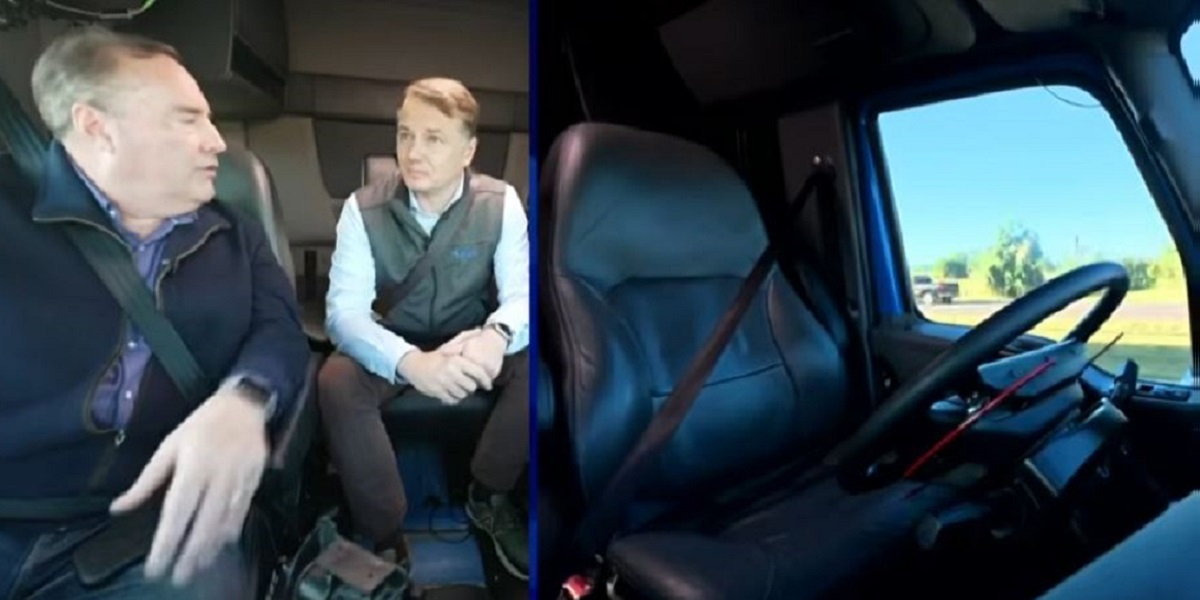
Aurora Innovation has begun commercial operations of fully autonomous Class 8 trucks in Texas, marking a significant step in the company’s effort to expand driverless freight transportation across the United States.
Speaking during a CNBC segment, Aurora CEO Chris Urmson said the company is moving from testing and pilot programs toward commercial-scale deployment. CNBC’s Phil LeBeau reported from inside an Aurora autonomous 18-wheeler traveling in Texas on a commercial run to Dallas.
According to Urmson, Aurora expects to have a couple hundred autonomous trucks on the road by the end of this year, with plans to reach more than 1,000 trucks next year.
“The inflection point is now,” Urmson said, describing the current phase as the beginning of a broader production ramp. He said Aurora plans to increase production to about 20 trucks per week later this year, supporting the company’s deployment targets.
Focus on Cost and Efficiency
Urmson said trucking companies are primarily focused on safety, followed by the persistent shortage of professional drivers. Aurora’s technology is designed to complement existing trucking operations while allowing autonomous vehicles to operate for longer periods.
The company estimates that autonomous trucking can improve utilization, reduce fuel-related costs and lower operating expenses. During the CNBC discussion, Aurora’s cost figures were described as roughly $0.85 per mile for its autonomous operation compared with about $1.18 per mile when a driver is included, although actual costs can vary depending on operating conditions.
Fueling Autonomous Trucks
One practical question raised during the segment was how a driverless truck handles routine tasks such as refueling.
Urmson said Aurora’s trucks have large fuel tanks and the company is working on pilot programs that would allow the vehicle to communicate ahead of time that it needs fuel. A fuel-station attendant could then come out, refuel the truck and allow it to continue its journey without a driver inside the cab.
Path Toward Profitability
Aurora is also outlining a longer-term path toward profitability.
Urmson said the company expects to achieve profitability on a unit-economic basis next year and reach positive free cash flow in 2028.
The company’s current expansion represents a shift from demonstrating autonomous driving technology in limited tests to operating driverless trucks in commercial freight networks.
As Aurora increases production and deployment, the company’s ability to maintain safety while scaling its autonomous fleet will remain a central focus for trucking customers, regulators and the broader transportation industry.
For now, the sight of an 18-wheeler traveling without anyone behind the wheel remains unusual on American highways. But Aurora’s latest commercial operations suggest that driverless freight transportation is moving from testing into an early stage of real-world deployment.