

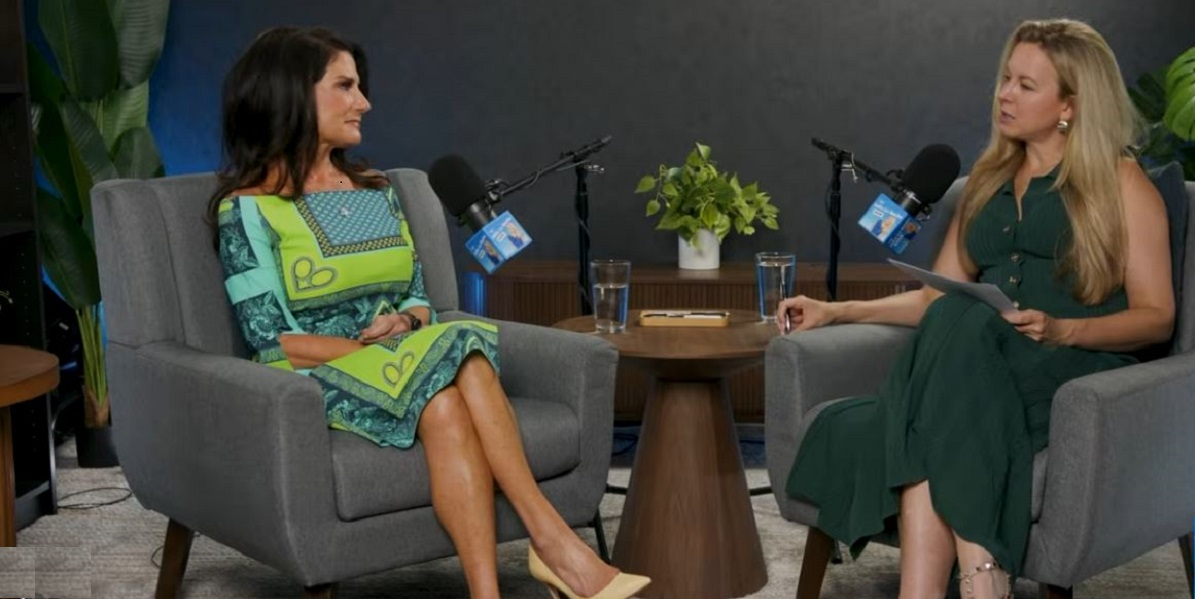
Federal Reserve policy is facing renewed scrutiny after the U.S. central bank raised its benchmark interest rate by 25 basis points, with economist Danielle DiMartino Booth warning that the move could intensify pressure on an already vulnerable U.S. economy.
Speaking on The Julia LaRoche Show, DiMartino Booth, CEO of QI Research and author of Fed Up, discussed the Federal Reserve’s latest decision under Chair Kevin Warsh. The Fed raised its policy rate to a range of 3.75% to 4%, its first rate increase since 2023. The decision was unanimous.
The interview was recorded Sept. 17, shortly after the Fed’s decision. According to the show’s episode description, markets initially viewed the decision as relatively dovish before Warsh’s press conference signaled that additional rate increases could be forthcoming.
DiMartino Booth questions the Fed’s tightening path
DiMartino Booth argued that Warsh’s comments amounted to a form of forward guidance, despite his stated preference for reducing such communication. She said markets interpreted the chair’s remarks as indicating that further rate hikes remain possible.
That interpretation has been reflected in some market analysis. Bank of America, for example, has said it expects two additional rate increases in 2026, citing persistent inflation and a resilient economy, although other analysts have projected fewer increases.
The Fed itself has emphasized persistent inflation pressures. Recent Fed officials have pointed to insufficient progress toward the 2% inflation target, supply shocks and energy prices as reasons for maintaining pressure on inflation.
Labor market becomes a key fault line
A major focus of the interview was the U.S. labor market.
DiMartino Booth argued that the labor market is weaker than the Fed’s characterization suggests. She highlighted the increase in long-term unemployment and argued that rising unemployment risks could become more visible if monetary policy remains restrictive.
Her assessment is more pessimistic than the Fed’s stated outlook. Fed officials have pointed to continued job growth and economic resilience as factors supporting the rate increase, while acknowledging that higher rates can eventually weigh on employment.
The disagreement illustrates one of the central questions facing policymakers: how aggressively should the Fed combat inflation without creating unnecessary damage to employment and economic activity?
Treasury yields add to the pressure
The rate decision also came as Treasury yields moved sharply higher. The 10-year Treasury yield reached around 5%, a level that has significant implications because government borrowing costs influence mortgage rates, corporate financing and other credit markets.
The combination of higher short-term rates and elevated long-term yields could place additional pressure on households and businesses that need to refinance debt.
DiMartino Booth argued during the interview that tighter credit conditions are already becoming increasingly important for consumers and companies.
AI investment emerges as another economic risk
DiMartino Booth also identified the artificial-intelligence investment boom as a major potential vulnerability.
She argued that a slowdown in AI-related capital investment could remove an important source of U.S. economic growth. She also questioned whether some of the strength in technology-company earnings fully reflects the underlying economics of AI investment.
Her concern comes amid a broader debate on Wall Street over whether the enormous spending on AI infrastructure can generate sufficient economic returns to justify current valuations.
A divided outlook for the U.S. economy
The interview ultimately presented two competing views of the U.S. economy.
The more optimistic interpretation is that inflation remains above target but can continue moving lower while employment and economic activity remain sufficiently strong to withstand moderately higher interest rates.
DiMartino Booth offered a more cautious assessment. She argued that falling inflation, tighter credit, rising bankruptcies and weakening labor-market conditions could eventually expose vulnerabilities that are not immediately visible in headline economic data.
The Fed’s recent communications suggest that policymakers remain focused on controlling inflation, while markets continue to debate how many additional rate increases may be necessary. Recent reporting has shown forecasts ranging from another hike to several additional increases.
For households and businesses, the key issue is increasingly whether the Fed can bring inflation under control without turning tighter monetary policy into a broader economic downturn.
DiMartino Booth’s message on the Julia LaRoche Show was clear: the latest rate hike may not be the end of the Fed’s tightening cycle, and the economic costs of additional hikes could become increasingly visible in jobs, credit and business activity.
This version keeps the article news-style and publishable, while distinguishing DiMartino Booth’s analysis from independently reported Fed and market developments.