

American Eagle Outfitters is taking a technology-driven approach to managing the growing complexity of global retail, with artificial intelligence, omnichannel fulfillment and supply chain innovation playing an increasingly important role.
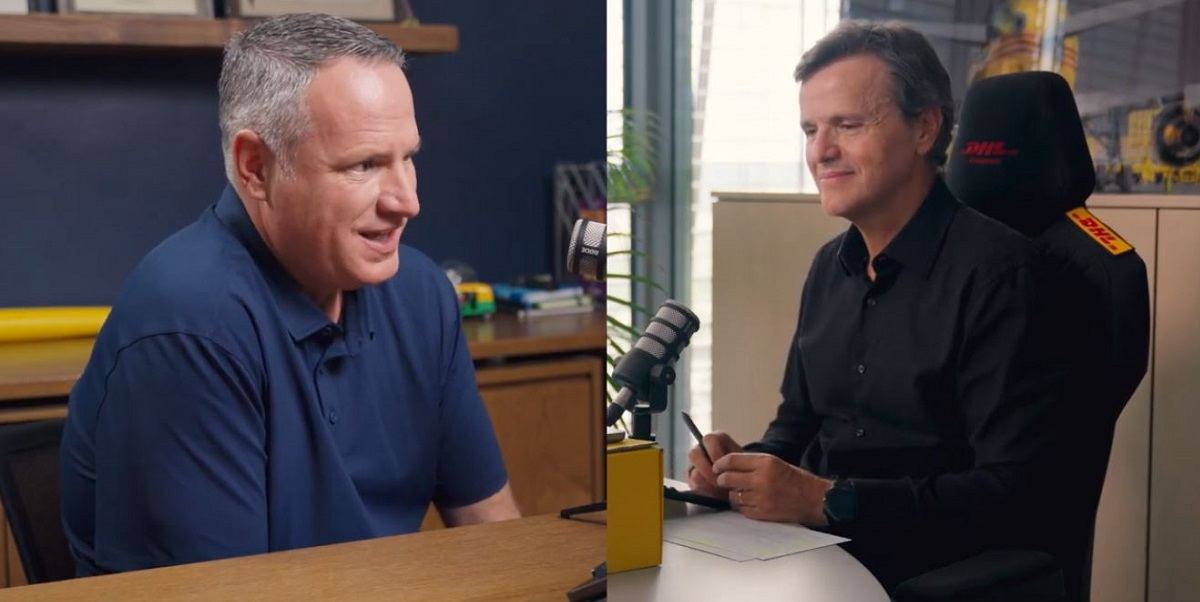
In a recent episode of DHL eCommerce’s Unpacking Success podcast, Pablo Ciano, CEO of DHL eCommerce, spoke with Brandon Friez, Senior Vice President of Global Logistics and Supply Chain Intelligence at American Eagle Outfitters, about how the retailer has built a supply chain designed to remain flexible amid changing customer expectations, tariffs and technological disruption.
Building a Global, Multi-Brand Supply Chain
Friez explained that American Eagle operates a multi-brand supply chain spanning American Eagle, Aerie and Todd Snyder, among other businesses. The company sources products from more than 14 countries, works with more than 100 vendors and operates distribution facilities across multiple continents.
The retailer also serves customers in more than 70 countries, making supply chain coordination a significant part of its global operations.
Despite differences between its brands, Friez said American Eagle focuses on standardizing processes throughout the underlying supply chain. Differentiation is primarily introduced closer to the customer, particularly through packaging and the final fulfillment experience.
Stores Become Part of the Omnichannel Network
A major part of American Eagle’s supply chain transformation has been integrating physical stores into its digital fulfillment network.
Friez discussed the company’s ship-from-store and pickup-in-store capabilities, which allow inventory located in stores to support online customers. The approach helps the company make products available even when inventory is not located at a traditional distribution center.
The retailer has also expanded curbside pickup and is preparing to further utilize store inventory for same-day delivery.
Technology has been central to this model. American Eagle has deployed RFID across its American Eagle brand to help store teams locate products more quickly and efficiently, supporting online fulfillment as well as in-store customers.
From E-Commerce to a Multi-Channel Network
Friez described how American Eagle began its omnichannel transformation more than a decade ago. The initiative involved developing an order management system while the company was simultaneously building a multi-distribution-center network.
The initial system took about a year to launch, followed by another year of optimization and refinement.
The result was a more integrated network in which stores and distribution centers could work together to fulfill customer orders. According to Friez, digital orders now account for roughly 40% of the organization’s business, although the role of stores extends beyond that figure because physical locations also support pickup, returns and the broader customer experience.
Innovation and Learning From Mistakes
Friez emphasized that experimentation is an important part of American Eagle’s approach to innovation.
He described an agile development mindset centered on breaking large projects into smaller pieces, delivering continuously and learning from mistakes. Rather than viewing mistakes as something to avoid entirely, he said the focus should be on responding constructively and avoiding repeated errors.
That approach also applies to brainstorming and technology development, where teams are encouraged to test ideas, communicate openly and work together to solve problems.
Deciding What to Build and What to Buy
Another key part of American Eagle’s supply chain strategy is determining which capabilities should be developed internally and which should be sourced from technology and logistics partners.
Friez said the primary question is whether a capability can create a strategic differentiator for the company.
American Eagle operates its own distribution centers in the United States and has developed proprietary applications and data capabilities for areas such as inventory deployment. At the same time, the company works with external providers where standardized solutions can deliver the required capabilities.
Friez also suggested that artificial intelligence could make software-as-a-service platforms increasingly customizable, potentially reducing the gap between standardized technology and the unique requirements of individual supply chains.
AI Moves From Experimentation to Productivity
Artificial intelligence emerged as one of the central themes of the discussion.
American Eagle has already been using AI for forecasting and supply chain decisions. Friez explained that the scale of modern retail makes certain forecasting tasks difficult for humans to perform manually, particularly when thousands of stores and tens of thousands of SKUs are involved.
The company has therefore worked to automate forecasting and use AI-generated forecasts to support inventory deployment and freight decisions.
American Eagle has also established an AI council to help guide the responsible adoption of the technology. The company has rolled out Google’s Gemini to employees, with Friez encouraging workers to treat AI as an additional productivity resource that must be trained and used effectively.
He highlighted curiosity and experimentation as important skills for employees working alongside AI.
An AI Agent That Changed Friez’s Perspective
Friez also shared a personal example that changed his perception of what AI agents could accomplish.
While experimenting with an AI tool, he asked it to collect external information related to tariffs and create a dashboard. The system subsequently offered to publish the dashboard and update it daily.
The following day, the AI agent returned with another dashboard it had created based on Friez’s previous activity.
For Friez, the experience demonstrated the potential of agentic AI to work toward an outcome rather than simply responding to individual prompts.
He also acknowledged that deploying AI within a corporate environment presents challenges involving data security, governance and access to information.
AI and the Future of Retail
The conversation also explored how AI could change the customer shopping experience.
Friez expects technologies such as conversational search, AI-powered recommendations, virtual try-on and shopping agents to alter how consumers discover and purchase products.
However, he noted that apparel retains a uniquely physical component. Customers ultimately want to experience how clothing looks and feels when worn, something that digital tools may enhance but not completely reproduce.
Resilience Amid Tariffs and Uncertainty
Tariffs and ongoing supply chain uncertainty were another focus of the discussion.
Friez said American Eagle’s approach has been to avoid overreacting and remain focused on customers while coordinating across the organization to respond to changes.
The company’s experience managing tariffs is part of a broader effort to build resilience into its global supply chain, allowing teams to respond to disruptions without abandoning long-term strategy.
A Supply Chain Built for Change
The conversation between Ciano and Friez highlighted how modern retail supply chains increasingly depend on the combination of physical infrastructure, technology, data and organizational culture.
For American Eagle, the strategy involves connecting stores with distribution centers, investing in proprietary capabilities where they can create differentiation, partnering with technology providers where appropriate and using AI to improve forecasting and productivity.
As retail continues to evolve, Friez’s message was that resilience comes not simply from preparing for individual disruptions, but from creating an organization capable of continually adapting, experimenting and learning.