

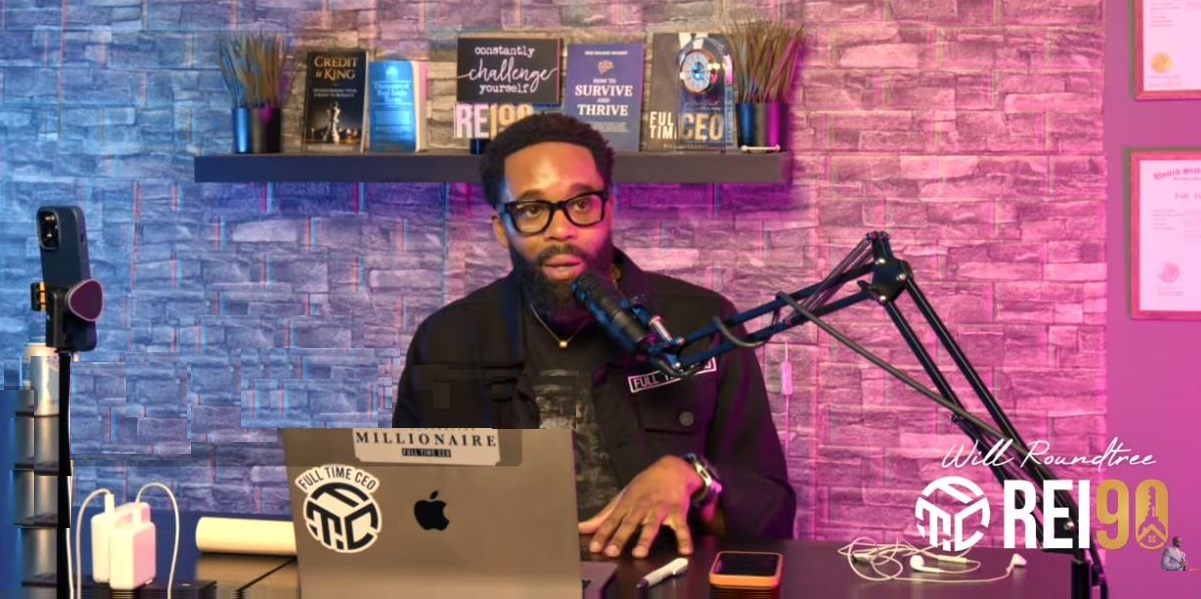
Entrepreneur and investor Mr. Will Roundtree has highlighted the importance of discipline, decisive action and long-term thinking in building sustainable financial success, outlining five habits he believes entrepreneurs and investors should develop to strengthen both their businesses and personal finances.
Speaking during a recent session, Roundtree emphasised that success is not simply a result of having access to capital, good credit or the right mentor. According to him, lasting progress requires individuals to develop habits that are aligned with their ambitions.
“Your habits have to match your ambition,” Roundtree explained, reflecting on his own entrepreneurial journey and the lessons he learned along the way.
Making Decisions Faster
Roundtree identified the ability to make decisions efficiently as his first essential habit. He argued that excessive hesitation can cause entrepreneurs to miss opportunities, particularly in fast-moving business and investment environments.
Drawing from his own experience, he recalled being given only a few hours to decide whether to pursue an eight-unit property. For Roundtree, the experience demonstrated the importance of being prepared to make significant decisions based on information and clear criteria rather than prolonged uncertainty.
He also stressed that decision-making is a skill that develops with practice, encouraging entrepreneurs to become increasingly comfortable evaluating opportunities and taking calculated action.
Separating Emotions from Financial Decisions
The second habit Roundtree discussed was learning to separate emotions from business and financial decisions.
He explained that using objective criteria and numbers can help entrepreneurs evaluate opportunities more clearly. In his real-estate investment approach, he described the use of a predefined “buy box” to assess potential properties according to factors such as purchase price, financing costs, rental income and expenses.
For Roundtree, the objective is not to eliminate emotion from life, but to prevent emotions from becoming the primary driver of important financial decisions.
He also connected this principle to investing in education and mentorship, sharing how an investment he made in a 15-minute consultation earlier in his career provided him with an important piece of guidance that influenced his subsequent progress.
Living Below Your Means
Roundtree’s third habit focuses on financial discipline: living below one’s means.
He cautioned entrepreneurs against allowing lifestyle expenses to rise simply because their income increases. According to him, higher earnings do not necessarily mean that every additional dollar should be spent.
He encouraged individuals to maintain manageable personal expenses so that they have greater flexibility to invest in their businesses, education and long-term financial goals.
“Stop trying to wear your success,” was one of the central messages of his discussion, as he encouraged entrepreneurs to focus less on appearances and more on building financial stability.
Roundtree also pointed out that entrepreneurs often face a unique challenge because business income must coexist with personal financial responsibilities. Keeping living expenses under control, he suggested, can provide entrepreneurs with more room to reinvest in their ventures.
Building and Maintaining Good Credit
The fourth habit Roundtree highlighted was maintaining good credit.
Rather than viewing credit solely as a means of purchasing cars, homes or consumer goods, he described it as a financial resource that can provide flexibility during emergencies and potentially help entrepreneurs access capital.
He emphasised that responsible credit management can give business owners additional options when opportunities arise or when unexpected expenses occur.
Roundtree also discussed the role credit can play in entrepreneurship, including helping business owners fund operations, marketing and other business activities. At the same time, the responsible use of credit remains important, particularly when borrowing creates repayment obligations.
For Roundtree, building strong credit is part of creating a broader financial foundation rather than simply obtaining access to more debt.
Getting Comfortable with Boredom
The fifth habit Roundtree addressed was perhaps the least obvious: becoming comfortable with boredom.
He explained that meaningful financial progress often does not happen overnight. Real estate investing, business development and wealth building can require patience, consistency and repeated execution over long periods.
In an environment where social media often highlights quick success stories, Roundtree encouraged entrepreneurs to recognise the less glamorous side of building wealth the everyday decisions, delayed gratification and consistent habits that may not attract attention but can contribute to long-term progress.
He cautioned against constantly searching for shortcuts or immediate results, arguing that sustainable success is generally built through disciplined actions over time.
A Focus on Long-Term Financial Discipline
Throughout his discussion, Roundtree returned to the idea that entrepreneurs should focus on changing their behaviours rather than simply searching for the next opportunity, programme or financial strategy.
He reflected on his own journey, including his move to Las Vegas in 2005 with $500, as an example of taking calculated risks while remaining committed to personal progress.
His broader message was that financial success requires individuals to evaluate their priorities, control their expenses, make informed decisions and remain patient with the process.
As he concluded his session, Roundtree left his audience with a question that encapsulated his message: “Are you worth it?”
For him, the question is about more than money. It is about whether individuals are willing to invest in themselves, develop better habits and make the sacrifices necessary to pursue the financial future they want.
The five habits he highlighted making decisions faster, separating emotions from financial decisions, living below one’s means, maintaining good credit and becoming comfortable with patience and routine form the foundation of Roundtree’s message on entrepreneurial discipline.
Ultimately, his message is straightforward: building financial success is less about chasing quick wins and more about developing habits that can support consistent progress over time.