

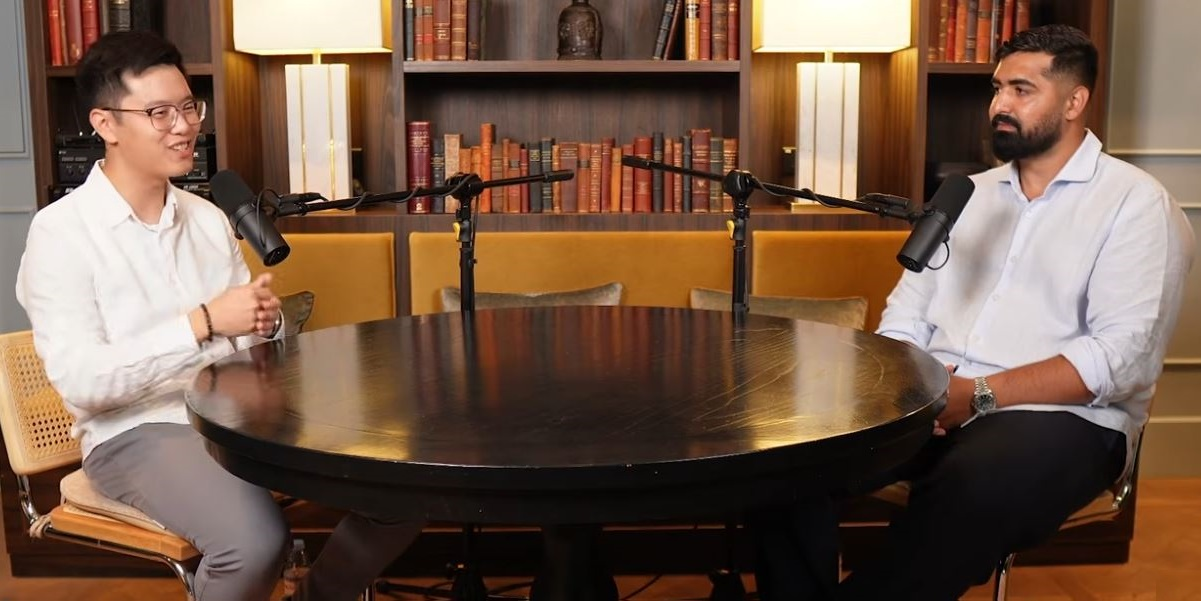
Clement Bank has reflected on his evolution as a trader, highlighting the role that market conditions, risk management and systematic decision-making have played in shaping his approach to the financial markets.
Bank began trading in late 2019 while studying economics and finance at university in Singapore. His early experience coincided with several major market cycles, including the COVID-19 market crash in 2020, the subsequent bull market through 2020 and 2021, and the difficult bear market of 2022.
According to Bank, experiencing these different environments helped him understand that trading strategies cannot always be applied in the same way regardless of broader market conditions. He said one of the important lessons from his early years was learning to treat trading as a business, track performance data and understand his own strengths and weaknesses.
Learning From a Difficult Market Cycle
Bank pointed to 2022 as a particularly important period in his development. As the broader market moved into a downtrend, he continued attempting to trade long positions, saying he had not yet developed a strong understanding of market cycles and the importance of the overall environment.
That period was followed by another difficult experience in early 2023 involving short positions in Tesla. After an initial stop-out, Bank increased his position size and continued trading, eventually experiencing a drawdown of approximately 60% over a period of one to two weeks.
The experience prompted him to reconsider how he approached risk and market conditions. Rather than viewing individual trade setups in isolation, he began placing greater emphasis on the broader environment in which those setups appeared.
Market Environment as a First Filter
For Bank, market environment has since become an important filter before taking individual positions.
He explained that even a setup that meets his technical criteria may have a lower probability of working when the broader market is weak. In such conditions, he may become more selective rather than automatically taking every setup that appears.
His stock-selection process also incorporates specific technical criteria. As a predominantly long-side trader, Bank looks for stocks in what he describes as Stage 2 uptrends. His screening process includes stocks trading above their 50-day and 200-day moving averages, with those averages trending higher. He also prefers stocks trading above their 20-day exponential moving average.
Relative strength is another part of his process. Bank looks for individual stocks that are performing better than the broader market, including situations where a stock remains stable or advances while the overall market is declining.
This approach allows him to combine a mechanical screening process with an assessment of the wider market environment before deciding whether to participate.
Building a Strategy That Fits the Trader
Bank also emphasized that developing a trading strategy involves more than adopting a successful approach used by another trader.
During his development, he studied the work of other traders, followed interviews and read books about different approaches to the markets. He said he took ideas from these sources and adapted them to his own trading style and psychological makeup.
For example, Bank described himself as relatively impatient and said holding positions for months could be difficult for him. As a result, he developed trade-management and profit-taking practices that better suited his personality rather than attempting to replicate another trader’s approach exactly.
Adjusting Risk as Conditions Change
Risk management has also evolved throughout Bank’s trading career.
He recalled that during the first quarter of 2025, he was risking approximately 0.5% to 1% of his account per trade while the market was undergoing a correction. Although he finished the quarter positive, he said the volatility of his equity curve created considerable stress.
He subsequently adjusted his approach and began risking approximately 3% to 5% of his capital per trade. Bank said the change made him more comfortable psychologically and allowed him to focus more closely on managing individual trades.
He also described using a more dynamic approach to risk. When market conditions improve and he sees a greater balance of favorable setups, he may gradually increase his exposure. When conditions deteriorate, his willingness to take risk changes accordingly.
Turning Experience Into a Structured Process
Bank’s trading journey illustrates how his process has developed through different market environments and personal experiences. Rather than relying solely on individual stock setups, he now considers the broader market, technical conditions, relative strength and his own risk parameters before participating.
His experience also reinforced the importance of reviewing mistakes and adapting a trading process over time. The approximately 60% drawdown he experienced became a significant part of that learning process, leading him toward a more structured approach to risk and market selection.
For Bank, the objective is not simply to identify individual opportunities but to understand whether the broader environment supports the type of trading he wants to execute. His approach combines mechanical screening with discretion, while allowing his risk exposure to change as market conditions evolve.