

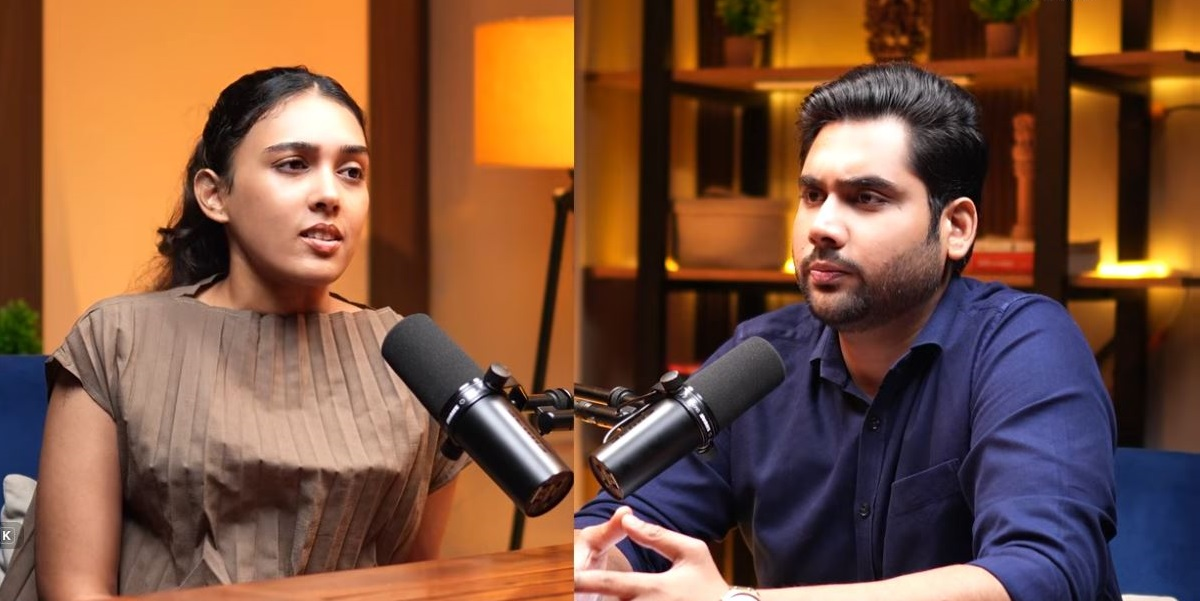
Entrepreneurship, workplace technology and changing patterns of office usage are reshaping how businesses think about workspaces and growth. In a recent conversation, entrepreneur Princy Goyal reflected on her journey from starting her first venture after college to building businesses in the co-working and workplace technology sectors.
Goyal began her entrepreneurial journey at the age of 20, starting her first venture shortly after completing college. According to the interview, she later took the company to an IPO and became a Forbes fellow. She is now a two-time entrepreneur and is focused on building a work technology company aimed at addressing changing workplace requirements.
From Entrepreneurship to Building Sustainable Businesses
Discussing her approach to entrepreneurship, Goyal said her early journey was driven by curiosity rather than a predetermined plan. She described herself as a curious person while growing up and said that she started her first venture without having a fixed vision of becoming an entrepreneur.
Her experience later led her to build Contour Space, a business operating in the co-working and managed-office segment. Goyal explained that when Contour Space was launched, an IPO was not the original objective.
Instead, the focus was on growing the company organically and building a sustainable business. She said the company was not started with the intention of simply increasing valuation or scaling for an eventual listing.
The Evolution of Co-Working and Managed Offices
During the conversation, Goyal also explained how the co-working business model has evolved.
She described co-working as a combination of services within real estate, where multiple companies can share office resources such as rent, electricity and reception services. The model initially attracted freelancers and startups, but she noted that the industry has expanded beyond traditional shared offices.
One development she highlighted is the growth of managed offices. Under this model, an operator can take up a space for a company, configure it according to the company’s requirements and continue managing services associated with the workplace.
For occupiers, the model can reduce the need for significant upfront investment in office fit-outs while allowing them to use a private workplace. Services such as housekeeping, basic administration, electricity and security can also be managed by the operator.
Competing in a Crowded Market
Goyal’s experience with Contour Space also included operating in an increasingly competitive co-working market. She discussed how the company approached growth as larger players entered the sector.
According to the interview, Contour Space eventually pursued an early IPO as one element of its strategy as the market became more crowded. Goyal said the listing brought capital and marketing benefits and helped position the company alongside larger industry participants.
She also discussed the economics of co-working, noting that occupancy requirements can vary depending on the business model and property economics. In the interview, she cited approximately 60% occupancy as a point at which a co-working business can generally reach operational break-even, while noting that the exact economics depend on the property.
How Hybrid Work Is Changing Offices
The conversation also examined the impact of remote and hybrid work on traditional office spaces.
Goyal described work as becoming increasingly location-agnostic. In her view, people may continue to want physical workplaces, but their expectations around location and commuting are changing.
She pointed to the emergence of more decentralized business districts in international markets and suggested that proximity could become increasingly important for office users who still want access to physical workspaces without lengthy commutes.
In India, she said the transition is happening more gradually, with hybrid arrangements such as three days in the office and two days working from home becoming more common among some companies. She also noted that workplace culture and management expectations continue to influence how quickly these changes develop.
From Physical Workspaces to Workplace Technology
Goyal’s experience in real estate and co-working eventually contributed to the development of Vibrate, a workplace technology venture.
She explained that her experience at Contour Space exposed a gap in technology designed specifically for the real estate sector. While generic digital tools were available, she saw an opportunity for technology tailored to the industry’s operational requirements.
According to Goyal, real estate involves multiple layers and stakeholders, which can contribute to inefficiencies. The idea behind Vibrate emerged from the need to digitize and connect different aspects of workplace and real estate management.
Connecting Data Across Workplace Systems
A central theme of Goyal’s technology approach is the importance of connecting data rather than leaving information isolated in individual systems.
She explained that data from a single platform, such as visitor management, may have limited value when it remains separated from other workplace information. An integrated platform can potentially connect information such as visitor activity and footfall with other operational systems.
Goyal gave examples of how connected data could help identify patterns in building usage, support decisions around energy consumption and inform additional services within a property. She emphasized that data becomes more useful when different systems can communicate with each other and generate actionable information or automated alerts.
AI’s Emerging Role in Real Estate
The discussion also touched on artificial intelligence and its role in real estate.
Goyal said AI is increasingly being discussed across industries, but she observed that significant AI use cases in India’s real estate sector remain limited because digitization itself is still developing.
She identified AI calling and certain applications related to property sales as areas where adoption is taking place, while also mentioning potential applications in workspace design and operational efficiency. Her broader point was that effective AI implementation depends on the availability of structured and digitized data.
Looking Ahead at the Future of Work
Goyal said her current focus is on Vibrate and the workplace technology space, which she views as an area with room for continued development and new solutions.
Her entrepreneurial journey, as discussed in the interview, spans physical workspaces, managed offices and technology. The conversation highlights how changes in workplace behavior, the growing adoption of hybrid work and the digitization of real estate are creating new questions for businesses operating in the sector.
From starting a company at 20 to building a workplace technology venture, Goyal’s experience offers a perspective on how entrepreneurship can evolve alongside changing business models and workplace needs.