

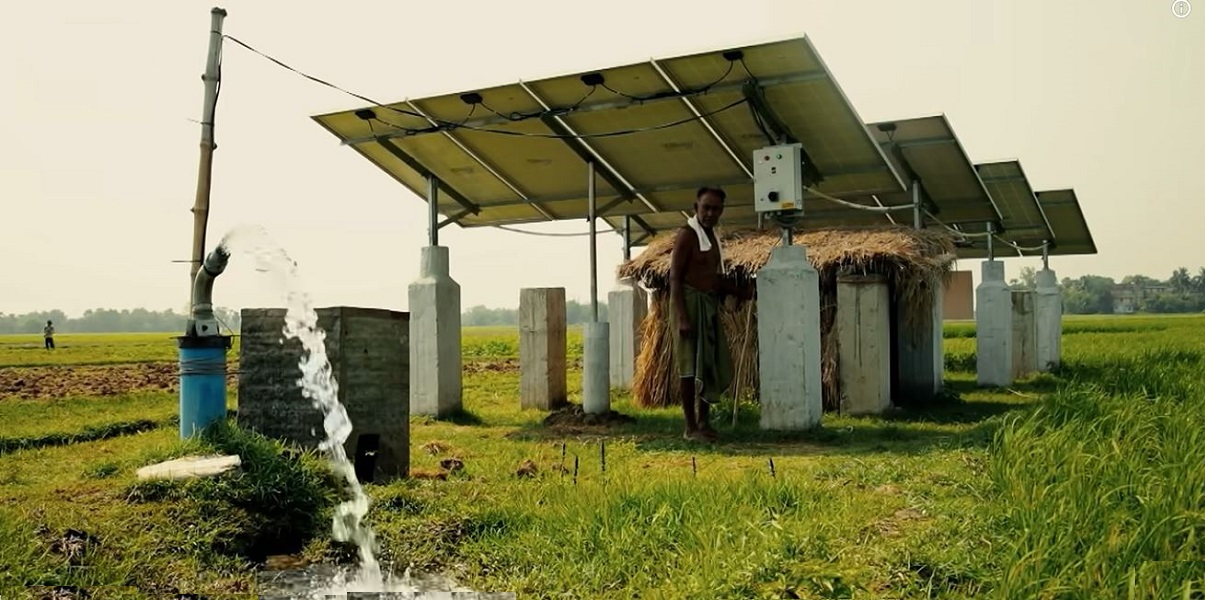
As droughts intensify and water supplies come under increasing pressure, countries around the world are exploring an innovative solution to protect freshwater resources: water banking. The technique involves collecting excess water during wet periods, filtering it and storing it underground for use during dry seasons.
Known as Managed Aquifer Recharge (MAR), water banking uses natural underground formations called aquifers to store water. These layers of permeable rock, sand and sediment hold water in their pores and cracks, creating reserves that can be accessed when needed.
With climate change contributing to unpredictable rainfall patterns and prolonged dry periods, water banking is emerging as a potential tool for improving water security.
How Does Water Banking Work?
Water banking involves directing suitable surface water, river water or treated wastewater into the ground to replenish underground aquifers. Depending on local conditions, this can be done through infiltration trenches, recharge ponds, engineered basins and specially designed wells.
Berlin, Germany, has been experimenting with an infiltration trench that allows river water to seep through porous gravel and gradually reach groundwater reserves. Monitoring wells and sensors help researchers track the quality of the water as it moves underground.
The natural filtration process can improve water quality, although appropriate treatment and continuous monitoring are necessary to ensure that the water remains safe for drinking.
Berlin already uses managed aquifer recharge as part of its drinking-water supply system. According to the project described in the documentary, approximately 10% of the city’s drinking water comes from water banking, with plans to increase this share as new infrastructure is developed.
The principle is simple: store water when it is available and recover it when supplies become scarce.
Global Examples of Water Banking
Several countries are adopting groundwater recharge techniques to improve their resilience against droughts and water shortages.
In California, the Orange County Groundwater Replenishment System treats wastewater using advanced filtration, reverse osmosis and ultraviolet disinfection before replenishing underground water reserves. The system has a production capacity of 130 million gallons per day, helping provide a reliable source of water for the region.
In Windhoek, the capital of Namibia, carefully treated wastewater contributes to the city’s drinking-water supply, demonstrating how water reuse can complement other water management strategies.
Berlin, California and Windhoek illustrate different ways in which cities can combine treatment, underground storage and water recycling to strengthen water security.
Can Water Banking Help India Fight Water Scarcity?
India has a long history of groundwater conservation through traditional structures such as stepwells, johads, village ponds, tanks and check dams. These structures capture rainwater and runoff, allowing some of it to seep into the ground and replenish aquifers.
However, groundwater depletion remains a significant challenge, driven by agricultural demand, urbanisation and increasing water consumption.
According to India’s Dynamic Ground Water Resources Assessment 2025, annual groundwater extraction was estimated at approximately 247.22 billion cubic metres, equivalent to 60.63% of the country’s annual extractable groundwater resources. Agriculture accounts for the largest share of groundwater use.
The assessment also identified 730 groundwater assessment units as over-exploited, highlighting the need for sustainable extraction and effective recharge measures.
India could expand scientifically planned groundwater recharge projects by improving existing ponds, restoring traditional water bodies, constructing check dams and developing suitable managed aquifer recharge systems.
Such initiatives could help communities capture seasonal rainfall and improve groundwater availability during dry periods.
Challenges Facing Water Banking
Despite its potential, water banking is not a universal solution. Its success depends on several factors, including local geology, water availability, infrastructure and water quality.
Not every region has suitable soil or rock formations to support effective groundwater recharge. Transporting water to recharge sites can also be expensive, while contaminated water may introduce pollutants into underground reserves.
Maintenance is another major challenge. Recharge ponds and check dams can become clogged with sediment and lose effectiveness if they are not regularly maintained.
Moreover, groundwater recharge alone cannot solve the problem of excessive extraction. If water is pumped out faster than it can be replenished, aquifers may continue to decline even when recharge projects are operating.
Experts therefore emphasise the importance of combining groundwater recharge with rainwater harvesting, wastewater reuse, efficient irrigation, water conservation and better groundwater regulation.
Water Banking as a Climate Adaptation Strategy
As climate change makes rainfall increasingly unpredictable in many regions, storing water during wet periods could help communities prepare for prolonged dry spells.
Water banking offers a way to use natural underground formations as storage infrastructure, potentially reducing pressure on surface reservoirs and improving the reliability of local water supplies.
For India, expanding groundwater recharge while controlling excessive extraction could strengthen water security for agriculture, households and industry.
Water banking will not eliminate droughts or solve every water shortage. However, when combined with sustainable water management, conservation and recycling, it could become an important tool for protecting groundwater resources and preparing communities for an uncertain climate.