

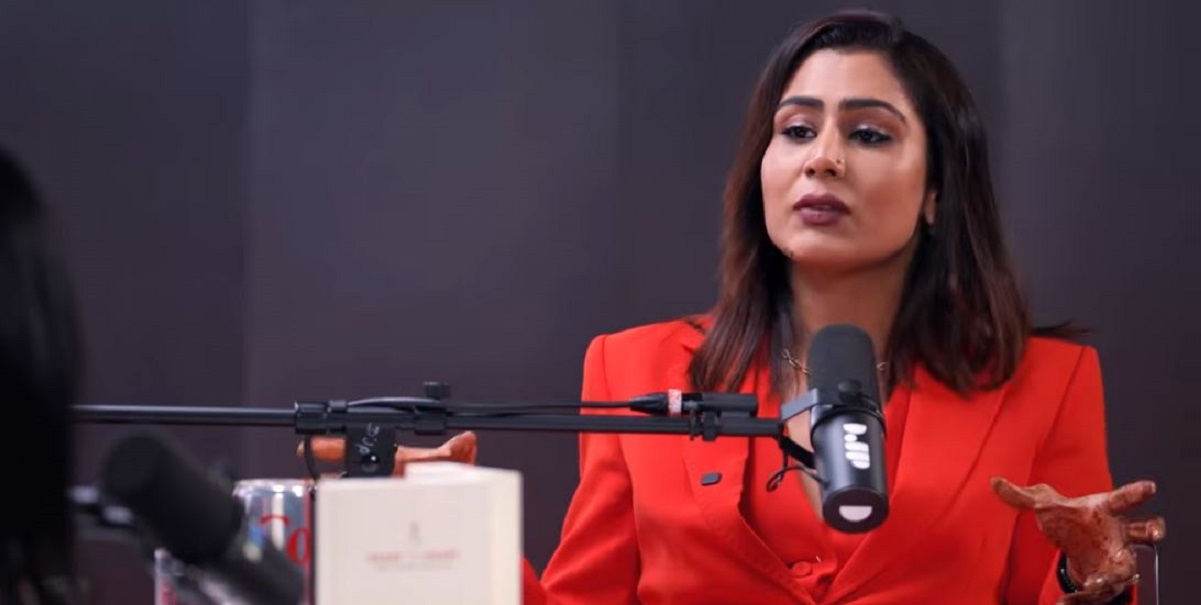
Building a successful brand requires more than a great business idea, a celebrity face or a big marketing budget. It demands a deep understanding of consumers, a strong product proposition and consistent execution. Sharing insights from her entrepreneurial journey, Ghazal Alagh, co-founder of Honasa Consumer and Mamaearth, explained how aspiring entrepreneurs can build and scale a brand from scratch.
In a conversation about entrepreneurship, innovation and brand-building, Ghazal highlighted how the startup ecosystem has evolved over the years, making it relatively easier to launch a brand today. However, she emphasised that scaling a business remains challenging and requires a clear strategy, consumer insights and a sustainable business model.
Understanding Consumers Is the First Step
Reflecting on the early days of Mamaearth, Ghazal explained that the idea emerged from her personal experience as a mother. She struggled to find high-quality baby care products in India and often had to import products from overseas, which were expensive and sometimes expired before they could be used.
After speaking with friends and family, she realised that many parents faced similar challenges. This encouraged her to explore the market opportunity and develop products that addressed the needs of Indian consumers.
She stressed that entrepreneurs should never launch a product based solely on their assumptions. Instead, they must interact with potential customers, understand their expectations and test whether their proposed solutions address genuine problems.
According to Ghazal, consumer research was one of the first steps in building Mamaearth. The founders even conducted surveys outside local stores to understand customer awareness and preferences.
Education and Trust Helped Build Mamaearth
Ghazal recalled that when Mamaearth started, many consumers were unfamiliar with terms such as sulphate-free and paraben-free. The founders realised that simply highlighting these product features was not enough; customers first needed to understand their significance.
As a result, the company initially focused on educating consumers through its website, bloggers and parenting communities. Interestingly, during the first six months, Mamaearth’s website did not even have an option to purchase products. It primarily served as an educational platform.
The founders also collaborated with bloggers and early opinion leaders who could explain the brand’s proposition and introduce its products to relevant audiences.
Ghazal believes that educating consumers and building trust can create a strong foundation for long-term brand growth.
AI Can Help Entrepreneurs, but Human Intelligence Matters
Discussing opportunities for young entrepreneurs, Ghazal pointed out that launching a business has become more accessible due to technology, digital platforms and artificial intelligence.
She suggested that aspiring founders with limited budgets can use AI to develop initial product concepts, research ingredients, understand markets and create a basic brand proposition.
However, she cautioned against relying entirely on AI-generated ideas and recommendations. Since multiple entrepreneurs may receive similar outputs from AI tools, businesses risk developing similar products and communicating identical brand messages.
She emphasised that AI should support human intelligence rather than replace it. Entrepreneurs must bring their own perspective, creativity and understanding of consumers to develop a distinctive brand.
Find a Strong Point of Difference Before Launching
One of Ghazal’s key recommendations was that every brand must have a clear point of difference.
She advised entrepreneurs to identify what makes their brand different from existing competitors and what unique value it offers to consumers.
Founders should define their brand’s personality, values, purpose and non-negotiable principles before entering the market.
She also suggested testing multiple brand concepts through small digital advertising campaigns. Even limited consumer responses, such as click-through rates and add-to-cart activity, can provide valuable early insights into which concept resonates most with the target audience.
This approach can help entrepreneurs validate their ideas before investing a significant portion of their capital in product development and marketing.
Validate the Product Before Investing Heavily
Ghazal recommended that startups with limited budgets should spend carefully during the initial stages.
Instead of committing their entire investment to manufacturing and marketing, entrepreneurs should first validate their concepts, develop prototypes and conduct relevant product testing.
She highlighted the importance of working with appropriate laboratories and conducting necessary safety and performance tests, particularly in categories such as skincare and personal care.
According to her, acquiring the first 100 genuine customers who believe in the product at a particular price point can provide an important indication of product-market fit.
Once a business establishes this foundation, it can consider investing further or raising capital to expand its operations.
Community Building Can Be More Valuable Than Influencer Marketing
Ghazal also shared how Mamaearth built its early consumer base without relying on today’s influencer marketing ecosystem.
During the brand’s initial years, the founders connected with parenting bloggers, online forums and mother-focused communities.
Rather than approaching these groups solely for promotional opportunities, Ghazal became an active member, participated in discussions and interacted directly with mothers to understand their experiences and product preferences.
She explained that building genuine relationships with community members helped the company develop an early network of supporters.
Mamaearth eventually established a Board of Moms, which continues to provide feedback, support recruitment and contribute to the brand’s development.
Her experience highlights how authentic community engagement can help startups build credibility and establish long-term relationships with customers.
Is a Founder’s Personal Brand Necessary?
Addressing the growing emphasis on founders becoming the public face of their companies, Ghazal offered a balanced perspective.
She explained that a founder’s personal brand can help generate awareness and strengthen consumer trust, particularly when the founder’s values and personal experiences align closely with the brand’s identity.
However, she clarified that a visible founder is not a prerequisite for business success.
Citing examples from the beauty and personal care industry, she pointed out that brands can achieve significant scale without making their founders public personalities.
She also highlighted the difference between celebrity-led branding and actual business execution. While a recognised face may help attract initial attention, a strong business model, product-market fit and consistent execution are essential for sustainable growth.
Execution Remains the Biggest Differentiator
Ghazal concluded that there is no universal formula for building a successful brand. Every category, target audience and market environment requires a different approach.
For aspiring entrepreneurs, her advice is straightforward: understand your consumers, identify a genuine market gap, establish a clear point of difference, test your ideas and invest in product quality.
Ultimately, building a successful brand is not about how much money a founder spends on marketing or how famous the person behind it is. It is about creating something consumers genuinely need and delivering on that promise consistently.
Her entrepreneurial journey offers an important lesson for young founders: A great idea may start a business, but consumer understanding, product quality and strong execution are what build a lasting brand.