

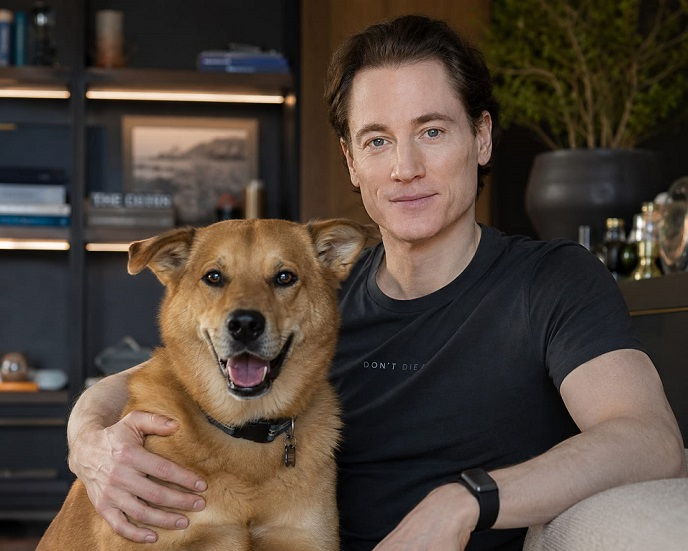
Bryan Johnson, the tech entrepreneur whose obsessive pursuit of biological youth made him the poster child of the anti-aging movement, has found a new subject for his quantified regimen. Her name is Katara, a Belgian Malinois who will turn two this autumn, and she was never originally meant to be a science experiment.
Johnson brought Katara home out of practical necessity. Speaking at a recent longevity gathering alongside venture capitalist Sarah Guo, the 48-year-old biohacker revealed that persistent death threats prompted him to acquire a professionally trained personal protection dog. Over weeks of round-the-clock companionship, however, the working relationship evolved into a deep bond, and Johnson’s signature “Don’t Die” philosophy quickly followed.
“She’s going to become the most measured dog in the world,” Johnson said, describing plans to run Katara through the same rigorous biomarker monitoring and anti-aging therapies that govern his own life. While he maintains he has no immediate intention to launch a commercial veterinary venture, Johnson is treating Katara as an N-of-1 trial for pet life extension.
His immediate target is canine nutrition. Johnson sharply criticized the modern pet food industry, arguing that conventional commercial kibble is laden with inflammatory advanced glycation end-products and harmful compounds that silently degrade internal organs over time.
Beyond affection, Johnson sees strategic scientific value in studying canine health. Biological processes and age-related decline in dogs closely mirror those in humans, but canine clinical trials operate on a fraction of the timeline. The veterinary regulatory pipeline is substantially faster than human drug approval channels, meaning anti-aging compounds can be vetted and refined in years rather than decades.
Johnson’s personal project lands amid a booming pet longevity sector, where biotech firms are already developing metabolic and gene therapies aimed at slowing cellular senescence in larger breeds. For Johnson, however, the motivation remains immediate and personal: keeping the companion charged with protecting his life around for as long as science will allow.