

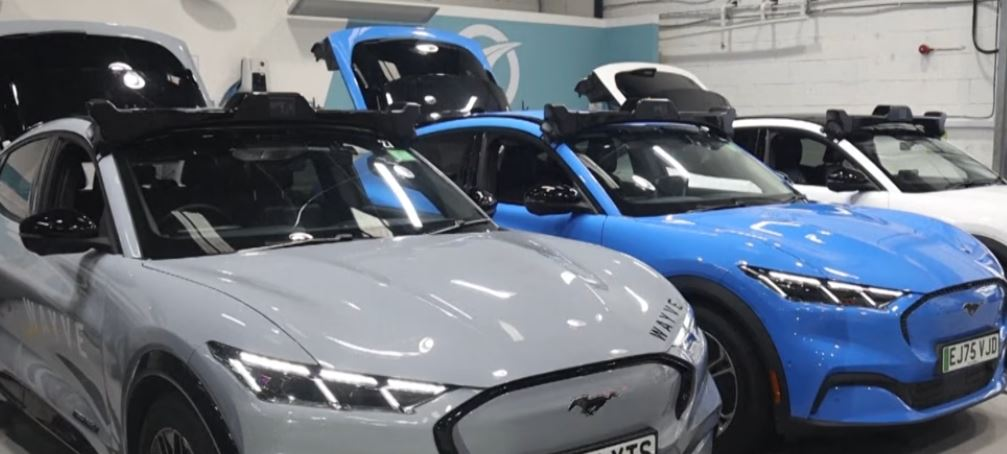
Uber is taking a major step toward the future of autonomous transportation with the launch of robotaxi services in London. The ride-hailing company has partnered with British artificial intelligence startup Wayve to introduce autonomous, all-electric Ford Mustang Mach-E vehicles on the streets of the UK capital.
The initial rollout includes just 15 Ford Mustang Mach-E vehicles, marking a cautious first step into one of Europe’s most challenging driving environments. The vehicles are designed to navigate London’s narrow roads, busy intersections, roundabouts, congested streets and unpredictable traffic conditions.
Passengers can access the autonomous rides through the familiar Uber app. Customers who are matched with an autonomous vehicle can unlock the car using their phone and follow their journey through a touchscreen located in the rear cabin. The service is designed to give passengers a firsthand experience of self-driving technology, while maintaining the convenience of a traditional Uber journey.
Despite the robotaxi branding, the vehicles are not yet fully driverless. A trained, TfL-licensed safety driver will remain in the driver’s seat during the initial rollout. The safety driver will monitor the vehicle’s performance and can intervene whenever necessary.
Uber says the response from London customers has already been significant. More than 140,000 people in the city have reportedly opted in through the Uber app for the opportunity to be matched with a Wayve-powered autonomous vehicle.
The technology faces a particularly difficult test in London. Unlike roads designed with autonomous vehicles in mind, the UK capital features narrow lanes, complex junctions, frequent roundabouts, double-decker buses, cyclists and pedestrians who can behave unpredictably.
Wayve’s approach is designed to allow autonomous vehicles to learn from real-world driving data rather than relying entirely on rigid high-definition maps and pre-programmed rules. The company says this enables its technology to adapt continuously to changing road conditions and unexpected hazards.
However, the launch does not mean London is ready for completely driverless commercial taxis. Regulatory approval remains a major hurdle. Under the UK’s new automated-vehicle framework, companies seeking to operate fully driverless passenger services must meet regulatory requirements, complete safety assessments and obtain the necessary local approvals.
In London, the regulatory process also involves Transport for London, adding another layer of oversight before autonomous vehicles can operate without a human safety driver.
The expansion of robotaxis is also creating concern among professional drivers. UK workers’ union GMB has warned about the potential economic consequences of autonomous taxis and the impact they could have on people whose livelihoods depend on driving.
Safety remains another key issue. Experts have questioned how autonomous systems will respond to unusual situations, including emergency vehicles trying to move through narrow and congested London streets. The ability of AI systems to make safe decisions in unpredictable situations remains one of the biggest challenges facing the autonomous vehicle industry.
London’s experiment comes as robotaxis are rapidly expanding elsewhere. In the United States, Waymo is already operating commercial driverless services in cities including San Francisco, Phoenix, Los Angeles and Austin. The company has accumulated millions of autonomous miles.
China is also moving quickly, with companies such as Apollo Go, WeRide and Pony.ai expanding driverless taxi operations in major cities including Beijing, Shanghai and Wuhan. Meanwhile, cities in the Middle East, including Dubai and Abu Dhabi, are developing plans and partnerships aimed at accelerating autonomous taxi services.
For Uber, the London launch is more than a technology demonstration. It could represent the beginning of a new era in the company’s ride-hailing business. If autonomous vehicles can prove safe, reliable and commercially viable, they could eventually become a larger part of Uber’s global network.
For now, however, London remains a testing ground. With a human safety driver still behind the wheel, the city is taking its first cautious ride toward a future where the person in the driver’s seat may eventually disappear.