

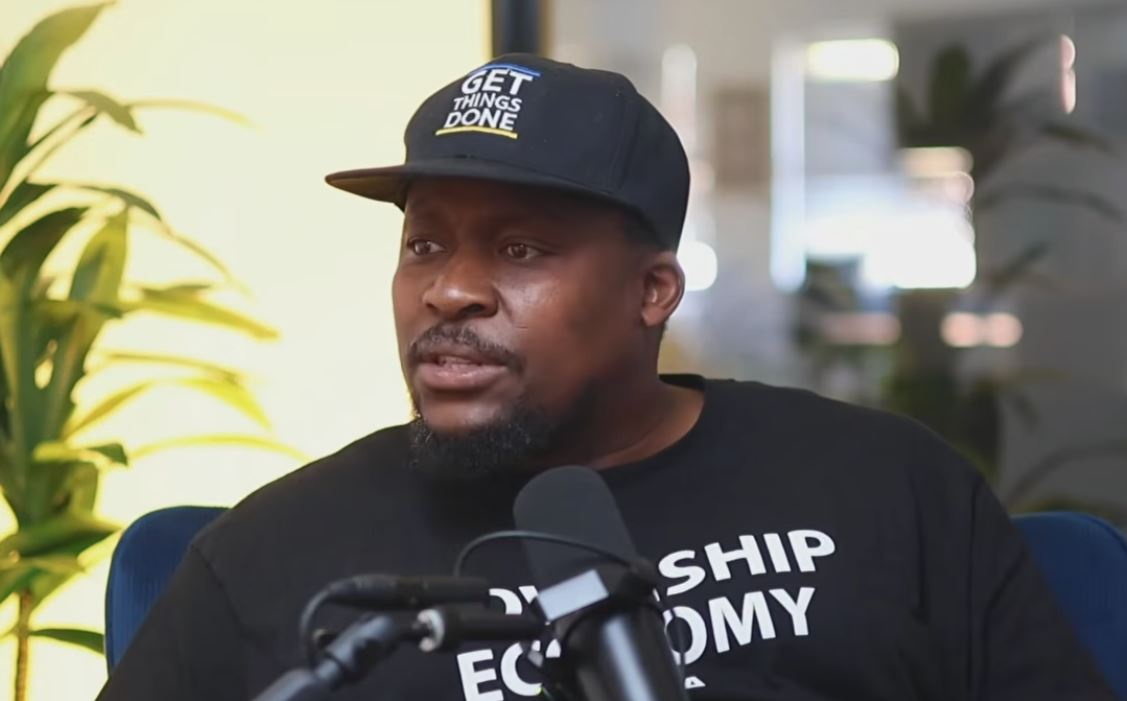
Entrepreneur and business development advocate Bulelani Balabala has shared key lessons from working with more than 130,000 entrepreneurs, challenging the popular idea that long hours and constant hustle are the foundations of business success.
Balabala, who has spent years developing entrepreneurs, particularly in South Africa’s townships, says his experience has taught him that sustainable entrepreneurship is built on value, consistency, character and systems rather than simply working harder.
According to Balabala, his programmes have directly reached approximately 130,000 entrepreneurs since 2015, with the figure currently standing at about 134,288 people.
He said the organisation tracks participation, programme outcomes, grant access and the number of entrepreneurs who go on to scale their businesses.
For Balabala, however, the significance of those numbers goes beyond the number of people trained.
“The beautiful thing for me is to see these entrepreneurs growing, impacting and hiring,” he said, highlighting the importance of entrepreneurs turning opportunities into sustainable businesses that create further economic activity.
Challenging hustle culture
One of Balabala’s strongest messages is his rejection of the idea that being constantly busy automatically means being productive.
Reflecting on his own past, he admitted that he once promoted the very hustle culture he now criticises.
“I was definitely the guy in videos. If you’re not working, you’re lazy. If you’re still sleeping, I’d post my time. It’s 4:00 a.m. I’m up. What are you doing?” he recalled.
Balabala said his thinking has since changed.
He argues that entrepreneurs need quiet time, family time and opportunities to recharge because creativity and effective decision-making cannot be sustained by being “always on”.
“A full calendar doesn’t mean productivity,” he said, stressing that entrepreneurs should evaluate whether their activity is actually producing meaningful results.
From hustle to systems
A major lesson Balabala emphasises is the importance of building systems that allow a business to function without the founder being involved in every task.
He points to three modes within entrepreneurship: the entrepreneurial, managerial and technical roles.
The entrepreneurial role focuses on vision, growth, sales and the future direction of the business. The managerial role involves supervising people and delivery, while the technical role covers the specialised work that initially attracted customers.
The problem, he says, is that many entrepreneurs remain trapped in the technical role.
A business owner may start out as a skilled hairdresser, designer, technician or service provider, only to eventually become responsible for accounting, marketing, administration, human resources and every other function in the business.
Balabala recommends that entrepreneurs track everything they do over a seven- or 14-day period and then categorise those activities.
The exercise, he says, reveals where an entrepreneur’s time and energy are actually going.
Once repetitive technical tasks are identified, entrepreneurs should document the process and train someone else to perform them.
The objective is to “replicate and duplicate yourself through other people”, allowing the founder to concentrate on higher-value activities.
Money follows value
Another central principle in Balabala’s philosophy is that entrepreneurs should focus on creating value rather than simply chasing money.
“Money follows value,” he said. “How you maintain that value is through consistency. How you ensure that the rooms that you’ve entered into you remain in those rooms is by character.”
He also believes entrepreneurs should resist a scarcity mindset.
Rather than holding tightly to every opportunity, Balabala encourages business owners to connect credible people with opportunities, arguing that relationships built through trust and generosity can create long-term value.
“You can’t withdraw where you haven’t deposited,” he said, explaining that entrepreneurs need to invest in relationships through time, trust and credibility.
The importance of community
Balabala also warned entrepreneurs against surrounding themselves exclusively with people who agree with them.
A healthy business community, he argued, should challenge its members rather than simply celebrate them.
He described a stagnant community as one characterised by entitlement, a lack of inspirational movement and conversations that make everyone comfortable.
Instead, entrepreneurs need people who are willing to tell them uncomfortable truths.
He recalled a mentor who once invited him to his home and told him that his public profile was beginning to distract him from his core business.
At first, Balabala was angry.
But six months later, he realised the criticism was intended to protect him from damaging his business in pursuit of recognition.
That experience changed how he approached public appearances.
Rather than seeing himself primarily as a speaker, he began positioning himself first as an entrepreneur. Speaking engagements became opportunities to connect with potential customers and generate business rather than simply opportunities for personal recognition.
Building relationships by giving first
Balabala believes entrepreneurs should change the way they approach collaboration.
Instead of approaching influential people with a simple request for help, he suggests asking: “How can I help you?”
He says entrepreneurs should research the person they want to approach, understand their work and clearly identify what value they can bring to the relationship.
He also stressed that receiving an opportunity creates an obligation to deliver.
“If you’ve told him, I’m going to do five, do 40,” he said, arguing that entrepreneurs are often remembered by their most recent performance.
For him, credibility is built through consistent delivery.
Sales must never stop
Balabala describes sales as the lifeline of every business and recommends that entrepreneurs consistently prospect even when business is booming.
His “Pick 20” strategy involves dedicating an hour each day to sales activity.
The first half should focus on reaching new potential customers, guests, sponsors or partners, while the second half should be used to follow up with existing prospects and previous contacts.
The principle is simple: entrepreneurs should continue planting seeds even when they are already harvesting.
Balabala said many businesses make the mistake of stopping their sales efforts when money starts coming in, only to experience a drop in revenue several months later.
Rebuilding after losing everything
Balabala also offered advice to entrepreneurs who have experienced financial or business failure.
His first message is to allow yourself to grieve, but not indefinitely.
“You’ve lost everything and your calendar is empty,” he said. “Ask yourself a key question: are you done crying?”
Once the grieving period has passed, he encourages entrepreneurs to recognise that while physical assets may have been lost, their knowledge and experience remain.
He describes that knowledge as a form of equity.
From there, entrepreneurs should identify three areas they can pursue: something they can start immediately, something they can work towards over six months, and longer-term ambitions.
He also encourages entrepreneurs to study the value chain of their desired industry.
Someone who cannot afford to open a large business immediately may still be able to enter the industry through a smaller service or supply opportunity.
That approach, Balabala argues, allows entrepreneurs to gain knowledge, relationships and industry experience while gradually positioning themselves for larger opportunities.
“The business is small, but the founder is not”
Perhaps one of Balabala’s most powerful messages is directed at entrepreneurs who describe themselves as “small business owners”.
He argues that while a business may currently be small in terms of revenue, staff or infrastructure, the founder should not allow that description to limit their thinking.
“The business is small, but the founder is not,” he said.
For Balabala, entrepreneurs should enter rooms with larger companies recognising that they may have fewer resources, but they can still bring knowledge, ideas, expertise and value.
His broader message is that entrepreneurship is not simply about working harder.
It is about learning continuously, building systems, developing strong relationships, creating value, maintaining discipline and positioning yourself for sustainable growth.
After working with more than 130,000 entrepreneurs, Balabala’s message is clear: success is not measured by how exhausted you are at the end of the day, but by the value you create and whether what you have built can continue to grow without consuming you.