

Artificial intelligence is rapidly reshaping the e-commerce industry, changing how businesses analyze data, manage operations, attract customers, and drive growth. According to e-commerce specialist and AI innovator Diego Santana, the next major transformation will go beyond automation and traditional analytics. It will be driven by Cognitive AI intelligent systems capable of understanding business challenges, connecting different departments, and recommending actionable solutions.
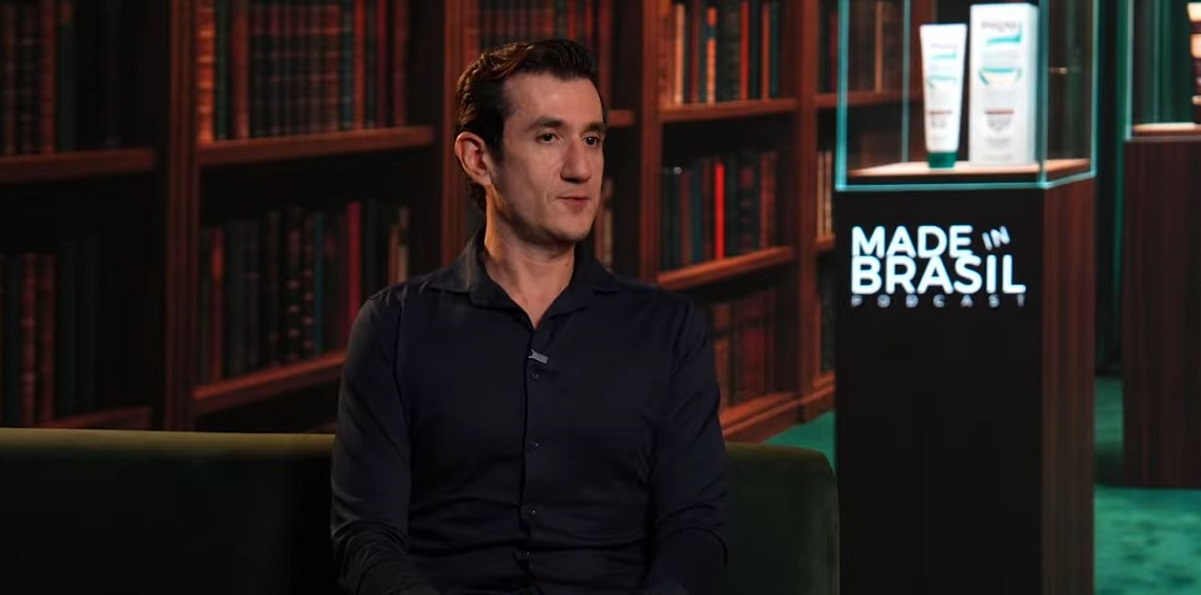
During his third appearance on the Made in Brasil podcast, Santana shared his vision for the future of e-commerce, highlighting how businesses can use artificial intelligence to improve productivity, optimize performance, and build more sustainable growth strategies.
Recognized by the Brazilian Association of Electronic Commerce as a leading e-commerce professional, Santana discussed the common mistakes brands make, the growing importance of creative strategy, customer retention, and the role of AI in creating more intelligent business operations.
From Data Dashboards to Intelligent Business Solutions
One of Santana’s central arguments is that simply having access to business data is no longer enough.
Most e-commerce companies already have dashboards showing sales, traffic, conversion rates, advertising performance, and customer behavior. However, the real challenge is understanding what those numbers mean and determining what actions should follow.
He believes the industry is moving away from traditional business intelligence dashboards toward AI-powered systems that can identify problems, evaluate opportunities, and recommend solutions.
This philosophy led to the development of Axoly, an AI-powered platform designed to connect key e-commerce data sources and transform business information into practical actions.
According to Santana, the platform uses more than 68 specialized AI agents to analyze different areas of an e-commerce operation, helping businesses identify performance issues and prioritize the actions that matter most.
Rather than simply presenting numbers, the system aims to tell business owners what needs attention and what their teams should do next.
The Biggest Mistake E-commerce Brands Make
Drawing on his experience analyzing 147 brands, Santana identified poor planning as one of the most common mistakes among e-commerce businesses.
Many entrepreneurs focus heavily on building an attractive brand and developing great products but fail to establish a clear financial and operational plan before entering the market.
He explained that sustainable growth requires understanding the numbers behind revenue generation, including website sessions, conversion rates, average order value, marketing investment, and profit margins.
Businesses must understand what resources, team capabilities, and investments are necessary to achieve their revenue targets.
Without this foundation, even a promising product can struggle to generate consistent sales and profitability.
Creative Strategy Is Becoming Essential for Growth
Another important topic discussed during the interview was creative diversity.
Santana explained that brands need to communicate with different customer personas using different advertising angles and narratives.
The same product may appeal to one customer because of convenience, another because of its results, and another because of social proof.
Consequently, relying on a single advertising message is no longer sufficient.
He highlighted the growing importance of the creative strategist, a professional responsible for understanding a brand’s products, identifying customer motivations, and developing different communication strategies across paid media, social media, and email marketing.
According to Santana, this role helps connect creative production with the broader marketing strategy, ensuring that different channels communicate effectively with their target audiences.
Solving the Problem of Expensive Traffic and High Customer Acquisition Costs
The interview also explored one of the biggest challenges facing online businesses: rising advertising costs.
He emphasized that brands must evaluate these three metrics together to understand why advertising performance is declining.
For example, high session costs may indicate weak creative performance, while low conversion rates may point to problems with the website, landing page, or product offer.
Even when traffic and conversion rates are healthy, a low average order value can limit advertising profitability.
Axoly aims to connect these metrics, identify the weakest performance areas, and recommend specific actions to improve results.
Customer Retention: The Next Major Growth Opportunity
Santana also emphasized that successful e-commerce businesses cannot depend entirely on acquiring new customers.
Customer retention and repeat purchases are equally important for long-term profitability.
He highlighted the growing demand for retention specialists who focus on customer relationships, repeat purchase behavior, customer lifetime value (LTV), and personalized communication.
Through its customer analysis capabilities, Axoly aims to help brands understand purchasing patterns, identify their most valuable customer segments, analyze repeat purchase cycles, and discover which products encourage customers to return.
These insights can help businesses develop more effective CRM campaigns, product recommendations, and retention strategies.
The objective is to shift the focus from generating individual transactions to building lasting customer relationships.
Turning Winning Creatives Into New Advertising Opportunities
One of the platform’s notable capabilities demonstrated during the podcast was AI-powered creative analysis.
Santana showed how Axoly can analyze successful advertising creatives from a brand’s Meta Ads campaigns, identify effective hooks, messaging structures, and calls to action, and use those insights to generate new user-generated content (UGC) scripts.
According to the demonstration, the platform can analyze existing winning creatives and generate approximately 18 new scripts based on successful advertising patterns.
The platform also includes tools for generating static advertising creatives, helping marketing teams produce content more efficiently.
This approach allows brands to build on what is already working instead of constantly starting their creative development process from scratch.
AI Is Changing the Way Teams Work
Beyond marketing and performance, Santana believes AI will fundamentally change how businesses organize their teams.
He explained that one of the biggest challenges in e-commerce is the lack of qualified professionals and the difficulty of connecting different departments.
AI can help address this gap by making business knowledge, operational processes, and proven methodologies more accessible to employees.
Rather than replacing people, Santana believes artificial intelligence should make employees more productive, improve decision-making, and reduce repetitive operational work.
He also described a structured daily workflow called the Axoly 8-to-5 routine, in which AI helps teams identify daily priorities, determine necessary actions, assign responsibilities, and monitor execution.
This approach is designed to ensure that employees spend less time figuring out what needs to be done and more time solving important business problems.
Predictive Analytics and Dynamic Pricing
Another development discussed during the interview was the use of AI for inventory forecasting and dynamic pricing.
By connecting sales velocity with inventory information, AI can help businesses anticipate potential stock shortages before they happen.
Santana explained that the platform’s Price Velocity feature can recommend price adjustments based on product demand and inventory availability.
For example, when a product is selling quickly and replenishment is not possible in time, increasing its price may help protect profit margins. Conversely, products with excess inventory may benefit from price reductions to encourage sales.
Santana cited an example of a women’s fashion brand that reportedly increased revenue by R$71,000 over 30 days through dynamic pricing strategies.
Why 2027 and Beyond Will Belong to AI-Driven Businesses
Looking toward the future, Santana believes artificial intelligence will become a fundamental part of competitive business operations.
He sees a significant difference between companies that simply experiment with AI tools and those that integrate AI into their everyday workflows, processes, and decision-making systems.
His vision is that businesses will increasingly operate through connected AI agents that share information across departments, identify opportunities, and recommend actions with minimal manual intervention.
He also emphasized that technology alone is not enough. Businesses need proven methodologies and industry knowledge embedded into their AI systems to turn information into meaningful results.
As he explained during the interview, entrepreneurs may be able to build their own software systems, but developing a system with years of established e-commerce methodology is a different challenge.
The Future Is Cognitive AI
Diego Santana’s message is clear: the future of e-commerce will not be defined simply by who has the most data, the biggest team, or the largest advertising budget. It will be defined by how intelligently businesses connect their information, people, and processes.
With platforms such as Axoly bringing AI-powered analysis, automation, and actionable recommendations into everyday operations, e-commerce businesses are moving toward a new model of management.
The transition from traditional dashboards to cognitive business systems could become one of the most significant developments in digital commerce.
For brands preparing for 2027 and beyond, adopting an AI-first mindset may no longer be just an opportunity for growth. It could become a competitive necessity.