

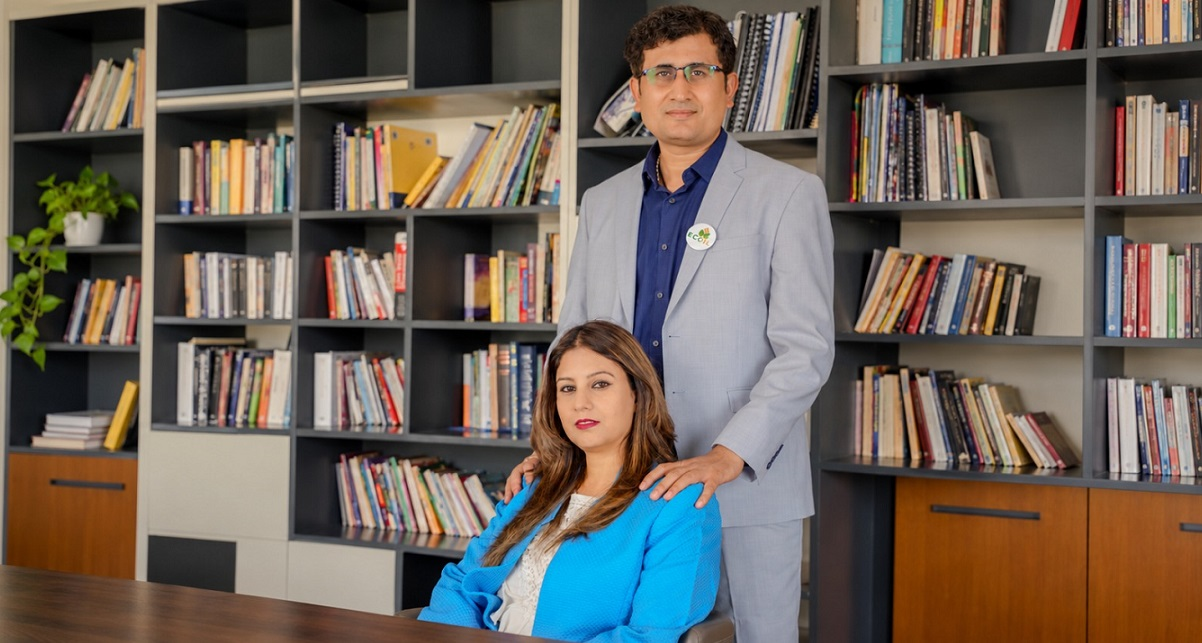
India’s food service industry generates significant quantities of used cooking oil every day. While this oil is a valuable resource for biodiesel and other industrial applications, its improper handling and unsafe reuse can pose serious risks to public health and the environment. Bringing structure, transparency, and accountability to this largely unorganised market is the mission behind ECOIL.
Founded in 2019 by a husband-and-wife team, ECOIL is building a collection network that connects food businesses with legitimate end users of used cooking oil. With a presence across more than 700 cities, a network of over 8,000 food businesses, and more than 3 crore litres of used cooking oil collected, the company is working to make responsible oil management a practical and commercially viable choice.
From overcoming operational challenges to leveraging technology and expanding its nationwide footprint, ECOIL’s journey reflects the potential of combining entrepreneurship with environmental responsibility.
In this interview, the founders share the inspiration behind ECOIL, the challenges of building an organised collection ecosystem, and their vision for the future of sustainable resource management in India.
Q. ECOIL was built around turning used cooking oil from a waste-management challenge into a valuable resource. What inspired you both to enter this space, and how did your shared vision develop into a business focused on sustainability, public health, and clean energy?
ECOIL: When we started ECOIL in 2019, we recognised a problem that was not receiving enough attention. Restaurants and food businesses generate used cooking oil every day, but there was no organised system to ensure that it was consistently collected and handled responsibly.
What concerned us most was the possibility of used cooking oil re-entering the food chain through unsafe reuse. At the same time, we recognised that this oil had considerable value as a raw material for biodiesel and other industrial applications.
We saw an opportunity to address a genuine public-health and environmental concern while building a meaningful, sustainable business. My wife, Kirtti, and I shared the belief that by creating the right collection network and introducing greater transparency, we could generate value for businesses and society.
The journey has not been easy because this business requires significant ground-level execution, operational discipline, and consistent relationship-building. However, our vision has remained unchanged: to build an organised system that ensures used cooking oil reaches the right destination instead of becoming a threat to public health or the environment.
For us, ECOIL is about demonstrating that a problem traditionally viewed as waste can become a valuable resource when managed responsibly.
Q. What were the biggest challenges in building this collection network, and how do you encourage food businesses to see used oil as a resource rather than waste?
ECOIL: The biggest challenge is not collecting used cooking oil once; it is building a reliable system that operates every day across thousands of food businesses and multiple cities.
Restaurants expect timely collections, fair commercial terms, and dependable service. Meeting these expectations requires us to coordinate collection teams, vehicles, warehouses, logistics, and technology while ensuring that the oil is handled responsibly. We also operate in a competitive market where some businesses may choose a vendor purely on the basis of the price offered.
Our approach is to make the process as simple and reliable as possible for food businesses. We provide an organised collection system, digital records, and documentation that improve visibility into what happens to their used cooking oil.
We have also learned that awareness alone is not enough. Responsible disposal must make commercial sense for the restaurant and fit conveniently into its daily operations. If the process is complicated or unreliable, businesses may find it difficult to follow consistently.
Our responsibility is to create a system in which responsible disposal becomes the natural choice rather than an additional burden.
Today, our network includes more than 8,000 food businesses. Building this network has required persistent ground-level effort, and we believe there is considerable potential to organise this market further.
The larger objective is to create a circular economy in which used cooking oil is collected systematically and channelled towards appropriate applications, reducing waste while creating value across the supply chain.
Q. How has technology helped you build trust with food businesses, improve operational efficiency, and ensure responsible handling of collected oil?
ECOIL: For us, technology is not simply about having an app. It is about making a largely unorganised business more transparent, accountable, and easier to manage.
When you operate across multiple cities, serve thousands of food businesses, and coordinate a large collection team, you cannot depend entirely on phone calls, spreadsheets, and individual follow-ups. You need systems that provide visibility into collections, service performance, and documentation.
Our technology platform helps us manage collections and maintain digital records, making the process more transparent for both our customers and our internal teams. It also allows us to identify operational gaps, monitor performance, and strengthen accountability.
However, technology alone cannot solve every challenge. The real test is whether the digital system accurately reflects what is happening on the ground. A collection marked as completed in an app must correspond to an actual collection, and the oil must then move through the appropriate handling and processing channels.
That is why we consider technology and ground operations equally important. Digital systems can improve visibility and decision-making, but their effectiveness depends on disciplined execution.
Looking ahead, we want to use data and automation to improve collection planning, strengthen traceability, and make responsible used cooking oil management easier to monitor and verify. As our network expands, technology will be essential to improving productivity without allowing operational complexity to increase at the same pace.
Ultimately, trust is built when businesses can rely on the collection process and have greater confidence that their used cooking oil is being handled responsibly.
Q. How do you balance building a commercially sustainable business with your mission to prevent unsafe reuse of cooking oil and reduce environmental harm? Which milestones best reflect the impact you have created so far?
ECOIL: We believe these two objectives must go hand in hand. If we want to solve an environmental or public-health problem at scale, the business model must also be commercially sustainable.
A lasting solution cannot depend solely on awareness or good intentions. It requires an efficient collection network, strong relationships with food businesses, reliable buyers, and disciplined cost management. Every part of the operation must work economically.
At ECOIL, we continuously look for ways to improve collection productivity, optimise logistics costs, and use technology to make our operations more efficient. Better operational economics allow us to expand our reach and collect more used cooking oil responsibly.
Some of our most important milestones reflect the scale of the infrastructure we have built:
- More than 3 crore litres of used cooking oil collected, representing the scale of our collection efforts.
- A presence across more than 700 cities, extending our reach across a wide geographical area.
- More than 8,000 food businesses onboarded, establishing a growing network of collection partners.
- Over 16 warehouses, supporting our collection and logistics operations.
- Relationships with established food brands, including McDonald’s, KFC, Taco Bell, and Rebel Foods.
Our appearance on Shark Tank India Season 4 was another significant milestone. It helped bring greater attention to the problem we are trying to solve and the importance of building organised systems for used cooking oil management.
For us, these achievements are about more than numbers. They represent the collection infrastructure, customer relationships, and operational experience we have developed over time.
At the same time, we recognise that a substantial part of the market remains unorganised. Our work is far from complete, and there is significant room to expand the reach and effectiveness of responsible collection systems.
We believe that when commercial viability and environmental responsibility reinforce each other, the impact can be much greater and more sustainable over the long term.
Q. What is your long-term vision for ECOIL? How do you plan to expand your collection network, strengthen your technology platform, and contribute to the future of biodiesel and the circular economy?
ECOIL: Our ambition is to build one of India’s largest and most trusted used cooking oil collection networks.
We have already established a presence across more than 700 cities, but the opportunity is much bigger. We want to expand our geographical reach, onboard more food businesses, and create a collection system that works reliably across the country.
Technology will play a major role in our next phase of growth. We want to make our platform smarter through better route planning, automated collection scheduling, data-driven decision-making, and stronger traceability. As the network grows, these capabilities will help us improve productivity, use resources more efficiently, and maintain consistent service standards.
We also recognise that used cooking oil has multiple potential end uses, including biodiesel production and industrial applications. Our focus is to ensure that the oil we collect reaches appropriate, legitimate end users while keeping the collection model commercially viable.
We see ECOIL’s role as building the trusted infrastructure that connects food businesses with industries capable of using this resource responsibly. This means creating a dependable link between oil generators, collection operations, and downstream users.
If we can make responsible collection convenient, transparent, and economically attractive, we can bring a much larger share of India’s used cooking oil market into an organised system.
Ultimately, we want responsible used cooking oil management to become standard practice for food businesses across India. The real measure of our success will be when businesses no longer need constant persuasion to dispose of used cooking oil responsibly because the right system is already in place.
ECOIL’s journey highlights an important principle of the circular economy: waste becomes a resource when the right infrastructure, incentives, and processes are in place.
By combining a growing collection network with technology, operational discipline, and long-term relationships with food businesses, ECOIL is working to address the challenges associated with used cooking oil while supporting its responsible use in downstream industries.
The road ahead will require continued investment, stronger traceability, greater awareness, and the ability to scale operations efficiently. But the underlying opportunity is significant.
For ECOIL, the goal extends beyond collecting used cooking oil. It is about building a dependable ecosystem in which responsible handling becomes the easiest and most commercially sensible option for businesses.
As India continues to explore cleaner energy pathways and more sustainable resource-management practices, organised used cooking oil collection can play a meaningful role in connecting public health, environmental responsibility, and economic value.