
A conversation about power, values, technology and the future
We have built a powerful world. Now we need to build a better one.
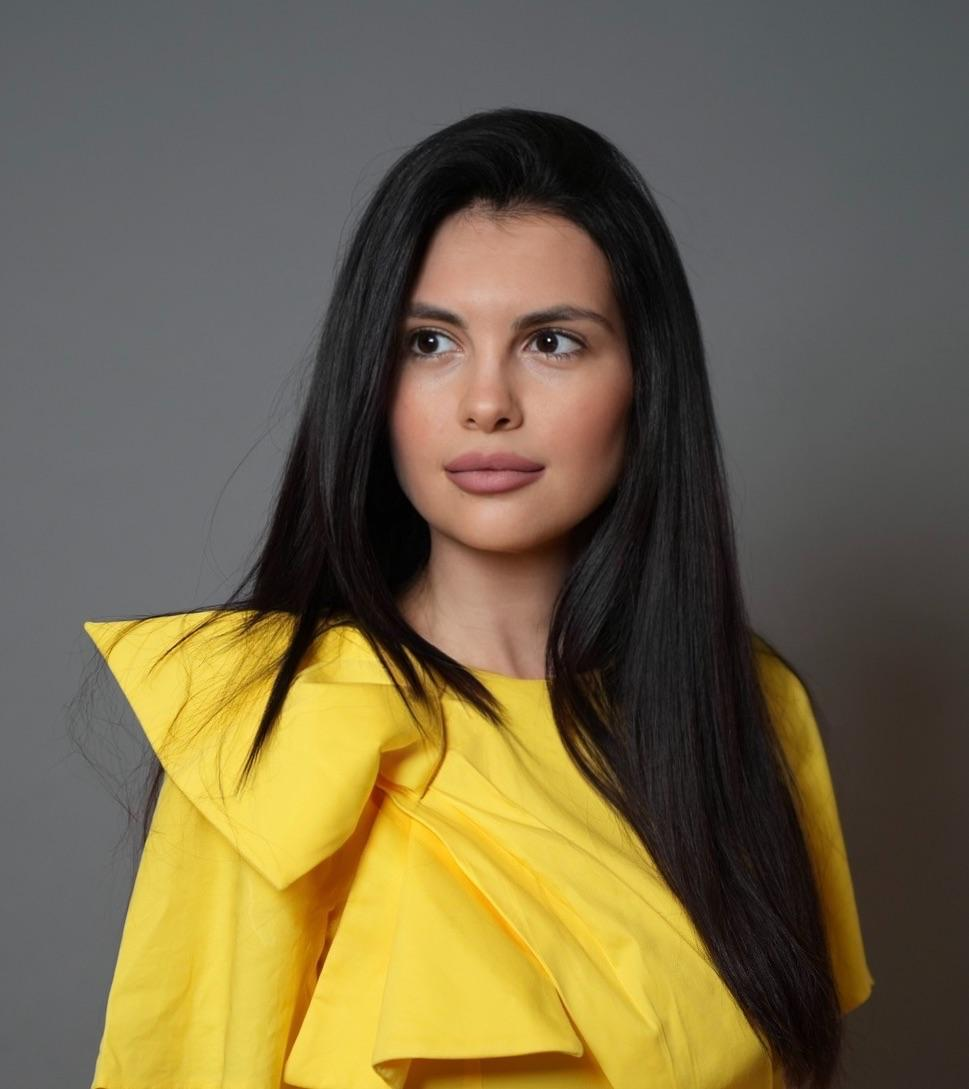
For Gabriela Rumenova Kirova, this is more than an idea. It is a question that has gradually become the thread connecting the different chapters of her life and work.
Her journey has taken her through fashion, film, philanthropy, politics, women’s leadership, sustainability and international advocacy. Today, many of these ideas come together in her book New World, which explores the fragility of peace, the balance of global power, technology and the values that should shape our future.
We spoke with Gabriela about her journey, what motivates her and why she believes humanity needs more than technological progress.
What connects the different chapters of your work?
For me, there has always been one question: How can we create something that has meaning?
The fields may look different, but the purpose is similar. I am interested in people, ideas and the possibility of changing things we have accepted for too long as inevitable.
Sometimes that happens through politics, sometimes through business, writing, philanthropy or simply bringing people together.
The form changes. The purpose doesn’t.
What made you write New World?
I became increasingly uncomfortable with the gap between the language we use and the reality we see.
We speak about peace, equality, freedom and international cooperation, yet power remains concentrated and smaller nations are often expected to adapt.
I began asking whether the world we have built is really the only world possible.
New World came from that questioning. It is not about predicting the future. It is about asking whether we have the courage to create a different one.
Are you optimistic about the future?
I am realistic, but I refuse to become cynical.
I see enormous danger in the world today, but I also see enormous human potential.
Systems change. Empires change. Technologies change. Civilisations change.
The question is whether humanity changes consciously, or only after catastrophe forces it to.
What worries you most about the world today?
The loss of perspective.
We are surrounded by noise while much deeper questions are developing underneath us.
Who controls information? Who controls resources? Who controls technology? Who decides what is true? And perhaps most importantly, who protects the individual when power becomes too powerful?
These questions will define the next era.
What is your view of artificial intelligence?
Technology itself is not the enemy. The question is who controls it, why and under what ethical limits.
AI can transform human life for the better. It can accelerate scientific discovery and help us solve problems that once seemed impossible.
But there is a dangerous moment when technology stops serving humanity and humanity starts serving technology.
We should never confuse technological capability with wisdom.
Just because we can do something does not mean we should.
You are Bulgarian and have spent many years in London. How has that shaped you?
Living in London gave me a wider perspective, but being Bulgarian remains an important part of who I am.
When you live outside your country, you begin to see both its weaknesses and its extraordinary qualities more clearly.
Bulgaria has enormous potential. We have talent, history, culture and people who can compete anywhere in the world.
We should not constantly ask how we can imitate other countries. We should ask what we can contribute.
You have also worked with people in positions of considerable power. What have you learned from them?
That power is much less impressive when you see it closely.
People often imagine that powerful people have all the answers. They don’t.
They have influence, access and resources, but they remain human beings, with the same fears, weaknesses and ambitions as everyone else.
What matters to me is not how powerful someone is. It is what they choose to do with that power.
What does success mean to you today?
Freedom.
Not financial freedom alone, but freedom to think, to speak, to choose the people around you, to say no and to walk away from anything that no longer represents who you are.
And perhaps most importantly, freedom from the need to be approved by everyone.
The older I become, the less interested I am in being accepted by a system simply because it is the system.
If you could change one thing about the world, what would it be?
The relationship between power and responsibility.
We have created enormous concentrations of power, but responsibility has not grown at the same speed.
That is dangerous.
Whether we are talking about governments, corporations, technology or individuals, the greater the power, the greater the responsibility should be.
Without that balance, every civilisation eventually becomes fragile.
What do you hope people take away from New World?
I hope they question things.
Whether the world they inherited is the only world possible.
Whether success has to mean consumption. Whether strength has to mean domination. Whether technology has to mean control. Whether politics has to mean division.
I believe we need people willing to imagine a better world, and courageous enough to build it.
What are you working toward now?
Bringing people and ideas together.
I believe the future will not be created by one politician, one company or one ideology. It will be created by people willing to speak to one another when division is easier.
Ultimately, that is what I am trying to do through my work, create conversations that can lead somewhere.
Because our future is not predetermined.
We are still writing it.
And perhaps the choice before our generation is the most important one of all: whether we wait for cataclysm to shape our future, or find the courage to create catharsis before it is too late.