

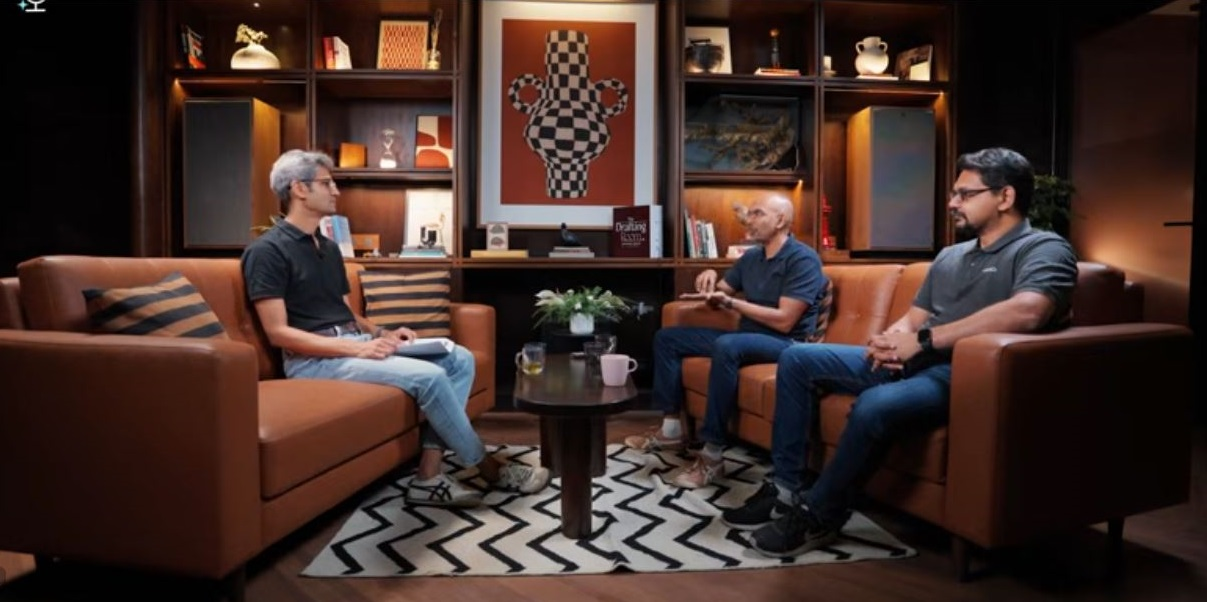
Lumio is positioning itself as a premium Indian consumer electronics brand by addressing a common but often overlooked problem in smart TVs: slow performance and laggy interfaces.
India’s consumer electronics market has long been dominated by established global brands such as Samsung, Sony and LG. However, Indian startup Lumio is attempting to challenge these players with a different approach, focusing on faster smart TVs, software innovation and a premium home entertainment experience.
Founded by Ragu and Kalash, Lumio entered the television market with the belief that consumers deserved a better experience when navigating apps, browsing content and switching between streaming platforms. Rather than competing primarily on price or display specifications, the company identified performance as an opportunity to differentiate itself.
Identifying a Common Problem With Smart TVs
Lumio’s founders said the company analysed more than 50,000 customer reviews on Amazon and Flipkart from 2022 to 2024 to understand consumer pain points. According to the founders, around 10% to 15% of the reviews explicitly mentioned slow performance or laggy television interfaces.
The findings reinforced their belief that smart TV performance had not kept pace with the experience consumers had become accustomed to on smartphones and laptops.
While television manufacturers traditionally emphasise display quality, refresh rates and audio output, Lumio decided to focus on making its interface faster and more responsive.
The company believes this addresses an existing consumer frustration rather than attempting to create an entirely new need.
Why Lumio Chose the Premium Segment
Unlike many Indian consumer electronics startups that initially compete in the value-for-money segment, Lumio chose to position itself as a premium brand.
According to its founders, premium consumers are often more willing to adopt new technology and experiment with differentiated product experiences. Starting in the premium segment could also help the company establish brand credibility before potentially expanding into more affordable categories.
Building trust, however, remains a significant challenge for a relatively new brand selling high-value products that consumers may use for several years.
To address this, Lumio focused on engaging technology enthusiasts and demonstrating its product performance through comparisons with competing televisions. The founders said these efforts helped the company establish early credibility among consumers who influence purchasing decisions within their families and social circles.
Taking on Established Television Brands
Lumio is positioning its televisions as an upgrade option for consumers who have already experienced the limitations of conventional smart TVs.
According to the founders, approximately 45% to 50% of the company’s customers previously owned televisions from established brands, including Samsung, Sony and LG. They also said speed was the leading reason customers cited for choosing Lumio.
These figures suggest that the company is targeting consumers who are familiar with smart television technology and are willing to switch brands for a better user experience.
Rather than relying exclusively on hardware specifications, Lumio is attempting to differentiate itself through a combination of responsive performance, software features and content discovery.
Combining Hardware With Software Innovation
Lumio’s strategy extends beyond faster television interfaces. The company is also developing software features designed to make finding content easier.
One of its initiatives, TLDDR, aims to simplify content discovery by bringing different forms of entertainment together in one place. The objective is to reduce the time viewers spend switching between streaming applications while deciding what to watch.
The founders believe hardware can help a company establish an initial competitive advantage, but long-term success depends on continuous software innovation and the overall customer experience.
They also highlighted the importance of product quality, pricing, inventory management, installation and after-sales service in building a sustainable consumer electronics business.
Expanding Into Projectors and Audio
After entering the television market, Lumio expanded into projectors and audio products.
The founders said the projector category offered an opportunity to serve consumers looking for a more seamless home entertainment experience in a market where low-cost products often struggled to deliver on their promises.
The company also took a differentiated approach to audio. Instead of launching only a conventional soundbar, it explored high-fidelity bookshelf speakers as an alternative.
Before moving forward, Lumio conducted blind listening tests involving more than 70 people to compare its speakers with soundbars. The founders said the feedback helped validate the product opportunity.
This approach reflects the company’s broader strategy of combining market research with direct consumer testing before entering new categories.
Building a Long-Term Consumer Electronics Brand
Lumio’s founders acknowledge that hardware products can be copied. They argue that an enduring competitive advantage comes from consistently bringing together product design, performance, brand positioning, profitability, inventory planning and customer service.
The company is also exploring how artificial intelligence could change the capabilities of home entertainment devices, although its founders said identifying the right applications and product opportunities remains an ongoing process.
For Lumio, the challenge is not simply to build a faster television but to establish a trusted Indian brand in a category where global manufacturers have significant experience and scale.
Its focus on performance, software-led experiences and premium positioning offers an alternative to the conventional price-and-specification-driven approach.
Whether this strategy can translate into sustained market share will depend on Lumio’s ability to maintain product quality, expand its customer base and deliver a consistently strong ownership experience as it competes with established television brands.