

Modern civilization depends on technologies that most people no longer understand at the level required to build, repair, or reproduce them. From automated factories and computer systems to power grids, communications networks and highly specialized industrial equipment, technological progress has made everyday life increasingly dependent on complex systems operating largely beyond individual human knowledge. The same progress that makes technology more reliable, however, could also create a less visible vulnerability: technological amnesia.
The danger is not necessarily that humanity would suddenly forget basic scientific facts. Instead, a society could gradually lose the practical knowledge needed to turn those facts into functioning technology. Knowing that a microchip works through semiconductor physics, for example, is very different from possessing the tools, materials, precision equipment, manufacturing expertise and supply chains required to produce one.
When technology becomes a black box
As automation becomes more sophisticated, humans can increasingly become users rather than builders. A system may continue operating for years while fewer people understand its internal workings. Skills that once existed in thousands of workers can become concentrated among a small number of specialists, while maintenance knowledge becomes embedded inside machines, software and institutional procedures.
This creates a potential chain reaction. If specialists disappear, training programs are abandoned, suppliers close and the tools required for maintenance are no longer produced, the knowledge may technically still exist in documents but become practically unusable. Modern factories illustrate this problem because they function as interconnected ecosystems of equipment, expertise, suppliers, calibration systems and trained workers.
In such a scenario, civilization could retain the headline knowledge while losing the load-bearing details.
The problem becomes greater in isolated settlements
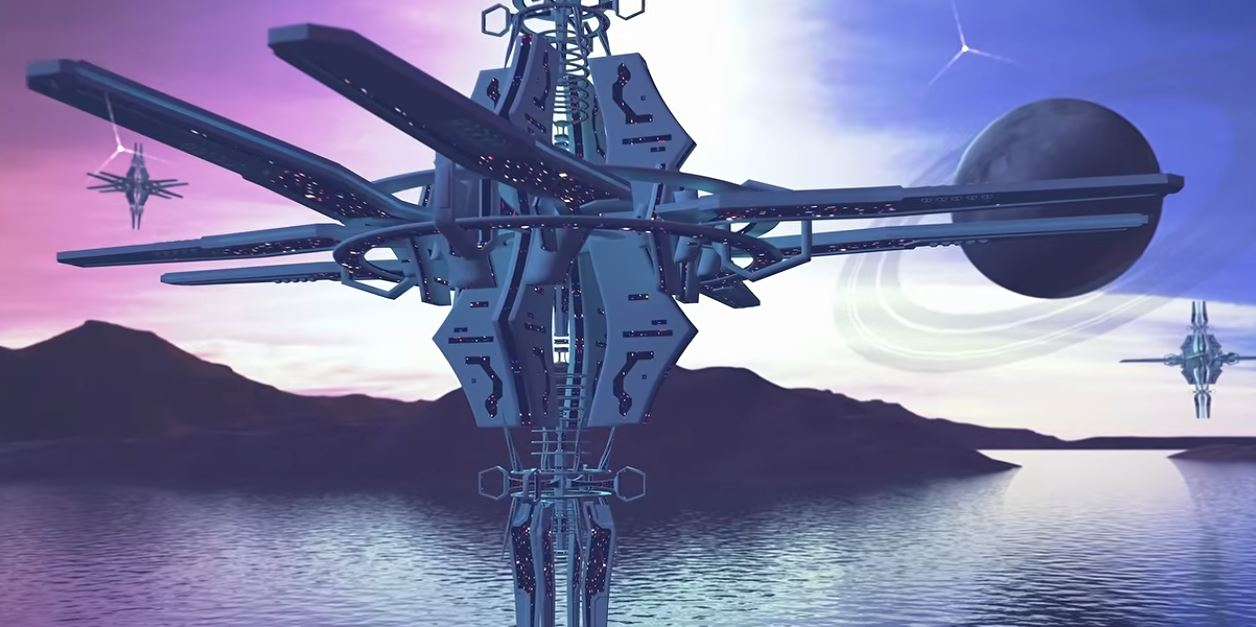
The issue could become particularly serious for future space habitats and isolated colonies. Such settlements would depend on technology for atmosphere, pressure, radiation protection, electricity, waste recycling and food production. A colony might possess highly automated systems capable of maintaining these functions, but a major failure could expose how little practical knowledge its inhabitants retain.
If replacement parts, specialists or manufacturing capabilities are unavailable, repairing one failed machine could become much more than an engineering problem. It could become a problem of civilizational capability.
Over generations, maintenance practices could even turn into traditions. People might continue performing procedures because they have always been performed, while the original technical reasons become increasingly obscure. The transcript describes a progression in which explanations can become stories, stories can become traditions, and traditions can eventually become legends or myths.
Nobody is paid to remember
Technological amnesia does not necessarily require a catastrophe. It can also emerge through economics.
When an old technology becomes cheap, reliable and automated, there may be little financial incentive to preserve the skills required to repair it manually. Schools stop teaching the old techniques, companies discontinue obsolete equipment, suppliers disappear and experienced workers retire without passing on their knowledge.
Digital systems introduce another layer of vulnerability. Proprietary technology, inaccessible documentation, forgotten passwords or lost cryptographic keys can make functioning systems difficult to operate even when the physical hardware remains intact.
Could civilization become its own archaeological site?
The most extreme scenario is not necessarily a world where humanity forgets everything. Complete technological amnesia would be difficult because physical artifacts, ruins, books and surviving machines could provide clues about the past.
A more plausible danger is partial technological amnesia: civilization remembers what a technology was supposed to accomplish but forgets how to reproduce or maintain it.
That distinction changes the meaning of technological progress. A civilization could possess advanced machines while gradually losing the ability to create the tools needed to repair them. Future generations might inherit sophisticated infrastructure in much the same way archaeologists discover ancient structures today: able to see what was built, but unable to fully reconstruct how it was accomplished.
Preventing a technological dark age
The solution is not to reject automation or technological advancement. Instead, the key is maintaining redundant competence.
That means preserving technical knowledge in multiple forms, continuing to practice important skills rather than merely documenting them, retaining simpler versions of sophisticated tools, designing systems that can be inspected and repaired, and ensuring that maintenance remains a valued activity.
The underlying principle is straightforward: a civilization should not merely preserve information about how its machines work. It should preserve enough people, tools and practical experience to actually make them work again.
If future societies succeed, advanced machines could remain tools that humans understand, improve, repair and pass to the next generation. If they fail, the technology of the future could become something much stranger a collection of powerful artifacts whose builders are remembered, but whose methods have been forgotten.