

India stands at the threshold of a transformative technology era, with artificial intelligence, deep tech and globally competitive startups creating a once-in-a-generation opportunity to reshape the country’s technology landscape.
India’s technology ecosystem is entering a new phase of growth as artificial intelligence (AI) begins to reshape industries, businesses and consumer experiences. The next decade could unlock an opportunity to create a $3 trillion technology ecosystem, driven by innovation, entrepreneurship and the country’s growing technological capabilities.
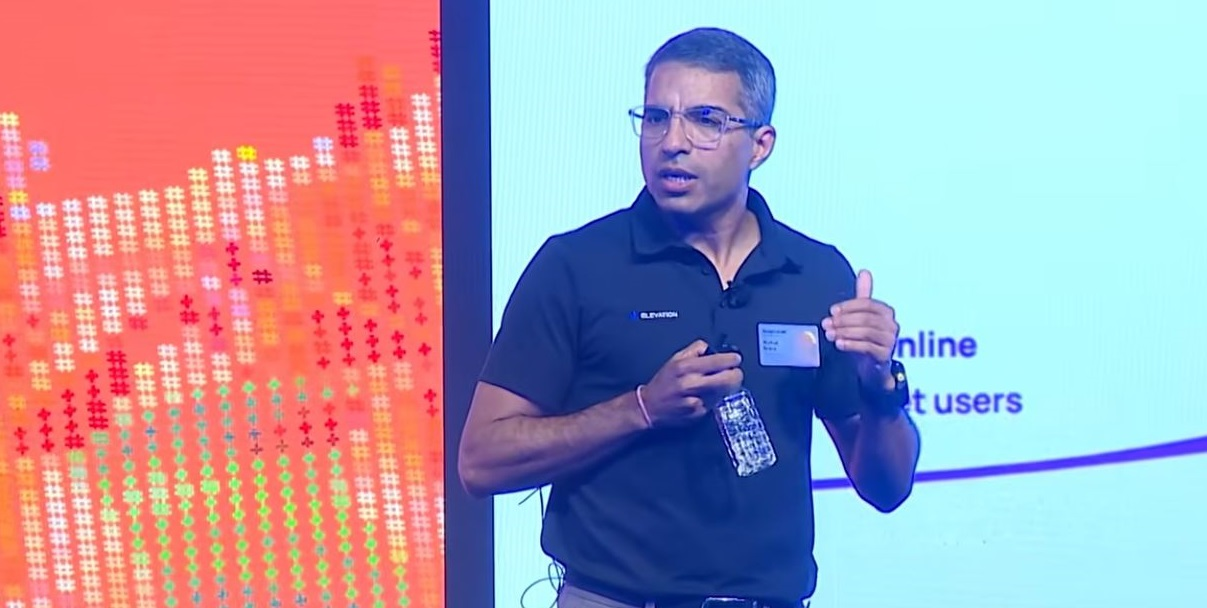
Speaking at a gathering of entrepreneurs and industry leaders, Mukul Arora highlighted India’s positioning in the ongoing AI platform shift and outlined three major opportunities that could define the country’s next phase of technology growth.
According to the perspective shared during the session, India’s startup ecosystem is cautiously optimistic about its ability to benefit from the AI revolution. While the initial phase of AI development was dominated by countries and companies investing heavily in data centres, computing infrastructure and large foundation models, the next phase is expected to create opportunities across applications, enterprise adoption and supporting infrastructure.
AI to unlock new opportunities for India
The first major opportunity lies in building technology solutions for an emerging India. Previous technology transitions, including desktop internet and mobile internet, enabled millions of Indians to access digital services and created successful businesses in e-commerce, food delivery, ride-hailing and digital payments.
AI could drive an even bigger transformation by making specialised knowledge and services more accessible.
Healthcare, education, financial services and employment are among the sectors where AI could help address longstanding supply-side constraints. Voice-based interfaces and conversational AI could also make digital services more accessible to people who are less comfortable with traditional app-based experiences.
However, building successful businesses in India requires more than developing technology. Operational and regulatory complexities must be addressed to deliver solutions at scale.
The discussion emphasised that complexity is a competitive advantage when building for India. Companies that understand local challenges and invest in solving operational problems can create stronger and more sustainable businesses.
For instance, AI-powered healthcare delivery could combine local diagnostic centres, nursing support, AI-based preliminary assessments and doctors supported by technology. Such a model could expand access to quality healthcare while enabling medical professionals to serve significantly more patients.
Similar opportunities exist in education, financial services and employment, where AI could enable more personalised and accessible services.
Building global category leaders from India
The second opportunity is to create globally competitive technology companies from India.
India has already demonstrated its ability to build software businesses for international markets through the growth of its SaaS ecosystem. However, the AI transition offers Indian entrepreneurs an opportunity to participate much earlier in a major technology shift.
As enterprises worldwide rethink their technology stacks and business workflows, Indian startups can build products and platforms for global customers.
The growing adoption of AI by enterprises will require considerable implementation and operational support. Indian companies could leverage their combination of product development, engineering and services capabilities to capture this emerging market.
Deep tech and foundational technology emerge as major growth drivers
The third opportunity lies in developing foundational technologies within India.
The growing momentum in India’s space, semiconductor, defence and robotics sectors signals a new phase for the country’s startup ecosystem.
The achievements of companies such as Skyroot Aerospace have demonstrated the potential of Indian startups to solve complex technological challenges. Such milestones can inspire entrepreneurs, attract specialised talent and encourage greater risk-taking in deep tech.
Several factors are supporting this momentum, including the return of experienced talent, improving access to venture capital and increasing government support.
Government institutions are also becoming more open to working with startups through funding, research infrastructure, design partnerships and procurement opportunities.
This creates an opportunity for Indian companies to develop technologies that can reduce dependence on imports and eventually serve international markets.
A $3 trillion opportunity for India’s technology ecosystem
The scale of the opportunity becomes clearer when viewed against India’s previous technology growth cycles.
The first phase of India’s technology startup development created an estimated $30 billion in value, while the mobile internet era helped expand the ecosystem to approximately $300 billion, according to the figures presented during the session.
However, achieving this ambition will require more than favourable market conditions. It will demand greater risk-taking, long-term capital, technological innovation and strong execution from both entrepreneurs and investors.
India’s time to build
The AI revolution presents India with an opportunity to move beyond being primarily a technology services and adoption market and emerge as a global centre for innovation and foundational technology development.
The real impact of this transformation will not be limited to the financial value created by startups. It could also improve the quality of life for hundreds of millions of people, strengthen India’s position in global markets and build domestic capabilities in strategically important technologies.
The message is clear: India’s next technology wave will be shaped by entrepreneurs willing to solve difficult problems, build for global markets and invest in long-term innovation.
With AI, deep tech and a new generation of ambitious founders coming together, India has an opportunity to create its next major technology success story.