

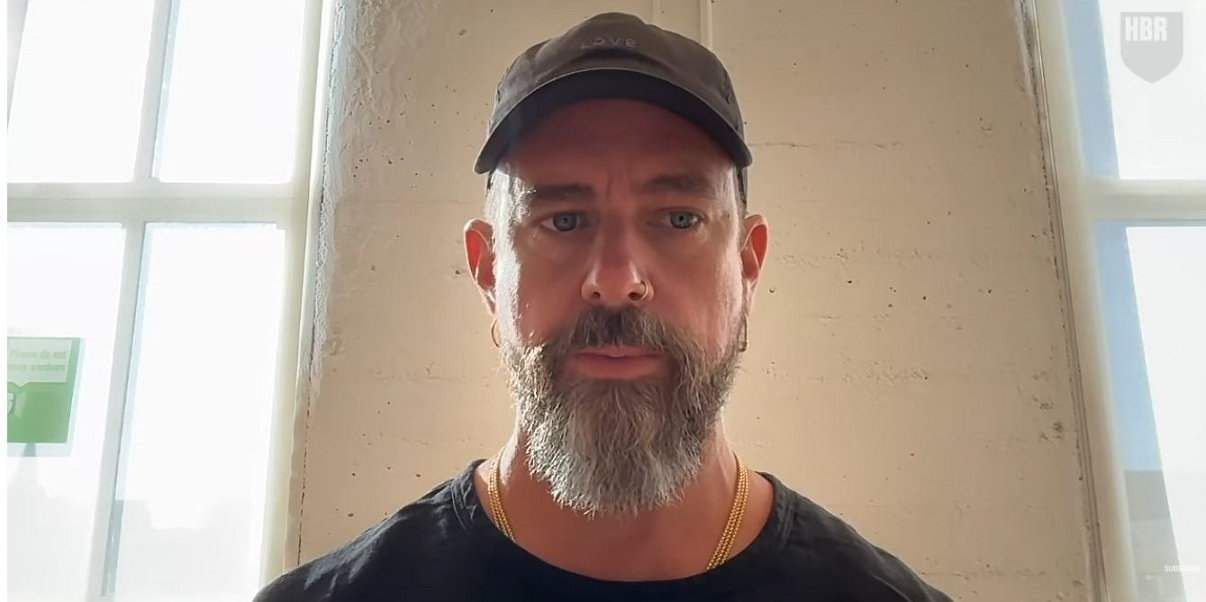
Block co-founder Jack Dorsey envisions a new era of AI-powered organizations, where traditional management hierarchies give way to intelligent systems, employee autonomy and faster decision-making.
The future of business organizations may look significantly different as artificial intelligence (AI) reshapes how companies operate, collaborate and innovate. Jack Dorsey, co-founder and chairman of Block, believes that companies must rethink their traditional organizational structures and evolve into intelligence-driven organizations.
Speaking with Alison Beard at the Harvard Business Review’s 2026 Innovation Summit, Dorsey explained how Block is transforming its organizational model by placing intelligence, information sharing and individual accountability at the centre of its operations.
According to Dorsey, a company itself is a form of technology designed to distribute information, responsibilities and accountability. Traditional corporate hierarchies were developed to manage information flow, but AI now offers an opportunity to make information accessible across the organization, reducing dependence on layers of management.
Moving Beyond Traditional Corporate Hierarchies
Dorsey explained that Block’s organizational transformation began with its decision in 2024 to move away from separate business-unit structures and return to a discipline-based model.
The shift was intended to bring teams together, establish common standards and reduce duplication across the company’s businesses, including Square and Cash App.
He believes that AI can further accelerate this transformation by bringing the company’s knowledge, documents, discussions and working information together on a single platform.
This would allow employees to access relevant information, ask questions and take action without relying on traditional communication and approval chains.
Dorsey outlined three important roles in this evolving organizational structure: Individual Contributors, Directly Responsible Individuals (DRIs) and Coaches.
Individual Contributors focus on building or operating products and services, DRIs take strategic responsibility and develop roadmaps, while Coaches help employees develop expertise and improve their professional capabilities.
Rather than functioning through a traditional command-and-control management structure, the model emphasizes individual agency, accountability and professional mastery.
Human Judgment Will Remain Essential
Despite the growing capabilities of AI, Dorsey believes human judgment will become even more important.
As AI makes it easier and faster to build products, the real challenge will be deciding what is worth building, whether it aligns with company values and whether customers genuinely need it.
He emphasized that employees must continuously align their decisions with the organization’s purpose, long-term strategy and customer expectations.
In his view, leadership should focus on establishing a clear mission, ensuring that decisions are made with the right information and continuously raising expectations about what the organization can achieve.
Dorsey also believes that leaders should not become the bottleneck for organizational decisions. Instead, they should create an environment where employees can make informed decisions independently.
AI and the Next Wave of Innovation
Dorsey highlighted customer behaviour as one of the most important sources of innovation.
He referred to Twitter’s early development, explaining that the company initially focused on status updates but noticed users mentioning one another to have conversations. By recognizing this unexpected behaviour, Twitter developed a feature that helped transform the platform into a conversational network.
He believes businesses should observe how customers actually use their products rather than relying exclusively on what customers say they want.
AI can help organizations identify these patterns more quickly, understand emerging customer needs and discover opportunities for new products and business models.
Dorsey also discussed the potential of world models, which focus on predicting possible actions and behaviours rather than simply predicting the next word, as large language models do.
For Block, financial transactions provide valuable signals about customer and seller behaviour. By analysing these patterns, the company hopes to better anticipate what customers might need and determine how it can serve them.
Open-Source AI and Efficient Computing
Dorsey expressed strong support for open-source AI, arguing that wider access to models and tools can encourage innovation, collaboration and stronger security.
He discussed Block’s open-source AI initiatives, including Goose and Buzz, which are designed to help developers and organizations build and operate AI-powered systems.
He explained that open-source adoption can also reveal commercial opportunities. Businesses may be willing to pay for hosting, model inference, integrations, security, compliance and other services that reduce the time and effort required to operate AI systems.
Dorsey also questioned the industry’s dependence on increasingly large and resource-intensive language models. He highlighted the potential of more efficient AI approaches, particularly world models, and discussed Block’s speech-based model, Dessa, which was developed using relatively limited computing resources.
Building an AI-First Mindset
For business leaders looking to introduce AI into their organizations, Dorsey offered a straightforward recommendation: start by using the technology themselves.
He encouraged leaders to move beyond simply asking AI questions and begin building practical systems that save time, improve learning and solve everyday problems.
He also suggested introducing AI adoption through small, manageable steps rather than forcing employees to make significant changes immediately.
Drawing an analogy with meditation and habit formation, Dorsey recommended spending just one minute exploring an AI tool every day for two weeks before gradually increasing the time and complexity of its use.
According to him, allowing people to experience the technology firsthand can create curiosity, build confidence and encourage wider adoption.
The Future of Leadership and Work
Dorsey’s vision points towards a fundamental shift in how organizations define leadership, management and employee responsibilities.
In an intelligence-driven company, information becomes more accessible, decisions become less dependent on hierarchical approvals, and employees gain greater freedom to experiment and innovate.
However, the transformation will require more than adopting new AI tools. Organizations will need strong leadership, clear values, deep professional expertise and the ability to exercise sound judgment.
Ultimately, Dorsey believes the future belongs to organizations that combine machine intelligence with human creativity, experience and decision-making.
As AI continues to evolve, companies that successfully redesign how information flows and how people work together could gain a significant advantage in the next era of business innovation.