

The legendary Zilog Z80 powered arcade classics, early personal computers, gaming consoles and graphing calculators before its standalone production finally ended in 2024.
The microprocessor that helped power the golden age of arcade gaming and the rise of personal computers has reached the end of an extraordinary chapter. The Zilog Z80, an eight-bit processor introduced in July 1976, remained in production for nearly 48 years before its manufacturer announced the discontinuation of its standalone chip line in April 2024.
Best known for its role in classic arcade machines such as Pac-Man, the Z80 became one of the most influential processors of its generation. Its widespread adoption across computers, video game systems, musical instruments and calculators made it a quiet but essential part of everyday technology for millions of people.
From an Intel Rival to a Computing Legend
The Z80’s story began with Federico Faggin, an engineer who had played a significant role in developing Intel’s early microprocessors. After leaving Intel in 1974, Faggin co-founded Zilog with Ralph Ungermann to develop processors that could compete with Intel’s offerings.
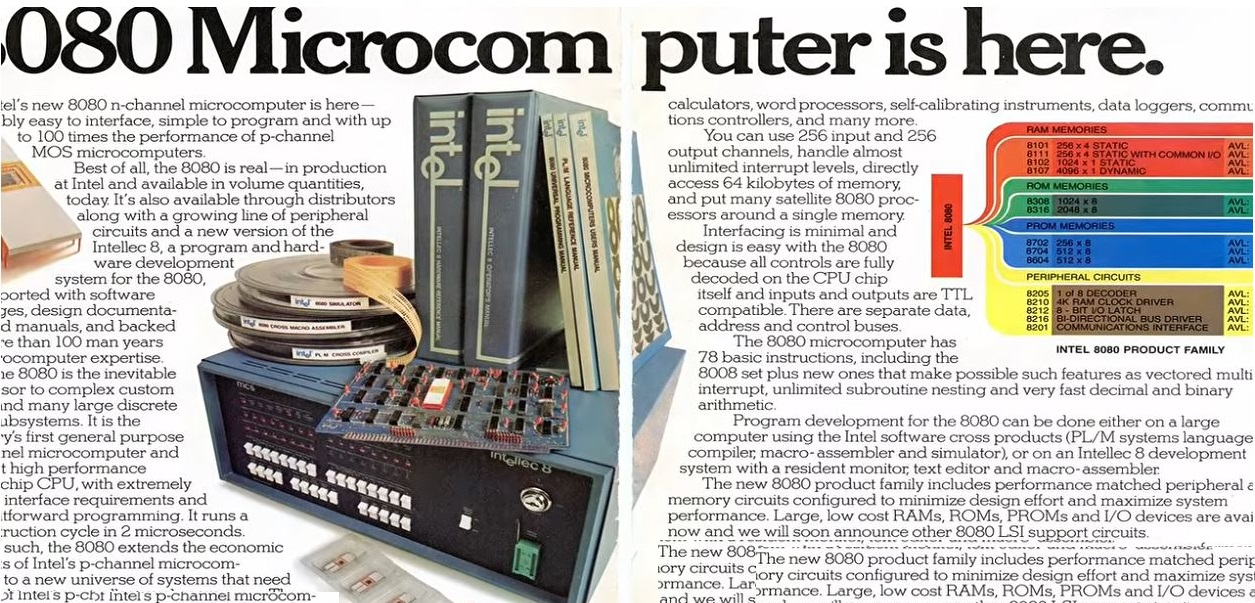
The company’s first major product was designed as an improved, software-compatible alternative to Intel’s 8080 processor. The Z80 offered additional instructions, a simpler power arrangement and built-in dynamic memory refresh circuitry, helping computer manufacturers build systems with fewer components and lower costs.
The processor officially launched in July 1976. Its ability to run software written for the Intel 8080 family made it especially attractive to manufacturers who wanted improved hardware without abandoning their existing software.
The Chip Behind an Arcade Revolution
One of the Z80’s most famous applications was the original Pac-Man arcade machine. The processor also appeared in other classic arcade games, including Galaga, helping bring the emerging video game industry to life.
Its influence extended far beyond arcades. The Z80 powered the Tandy Radio Shack TRS-80 family of computers and numerous machines running CP/M, an operating system widely used in early business computing.
The processor also found a home in gaming consoles, including the Sega Master System and Game Gear. In some systems, Z80-based processors handled sound or other supporting tasks alongside a more powerful main processor.
Later, Texas Instruments incorporated Z80 processors into popular graphing calculators, including the TI-81 and subsequent models. For generations of students, the chip became an unseen part of classroom mathematics.
Why the Z80 Lasted So Long
The Z80 succeeded because it offered a practical combination of affordability, compatibility and reliability. Its architecture was straightforward enough for engineers to understand and use, while its established software ecosystem made it a dependable choice for new products.
As computing technology advanced, newer processors became dramatically faster and more powerful. Yet many embedded systems did not need cutting-edge performance. They needed a proven design that could continue performing a specific task reliably.
That kept the Z80 relevant long after it had disappeared from the center of the personal computer market.
The processor was also manufactured by multiple companies under licensing arrangements, and compatible versions appeared around the world. This broad ecosystem helped establish the architecture as a lasting industry standard.
Why Production Finally Ended
On April 15, 2024, Zilog announced the end of life for several standalone Z80 products. The company cited the discontinuation of support from its wafer foundry supplier. Customers were given until June 14, 2024, to place final orders for the affected parts.
The announcement marked the end of an era for the classic standalone processor, which had remained available for almost five decades. However, it did not mean that every descendant of the Z80 architecture disappeared. Zilog continued to offer its eZ80 family, an enhanced line of processors based on the same architectural heritage.
The decision particularly affected electronics enthusiasts, repair specialists and manufacturers maintaining older equipment that relied on the original chip.
A Lasting Legacy in Computing History
The Z80’s importance goes beyond its technical specifications. It helped make early computers more affordable, supported the growth of the software industry and powered entertainment systems that became cultural icons.
Its nearly 48-year production history is remarkable in an industry defined by rapid technological change. Few processors have remained commercially available for so long while retaining such a recognizable place in computing history.
Although the standalone Z80 is no longer being manufactured, its influence remains visible in retro-computing projects, preserved arcade machines and the continued use of compatible technologies.
From the flashing lights of Pac-Man arcade cabinets to the graphing calculators used in classrooms, the Z80 quietly powered a generation of technology.
Its story demonstrates that a chip does not need to be the fastest or most advanced to become a legend. Sometimes, the most enduring technology is simply the one that works, remains affordable and gives people a reason to keep using it.
Nearly half a century after its debut, the Z80 remains a symbol of the early computing revolution—and a reminder that even the smallest components can leave an enormous legacy.