

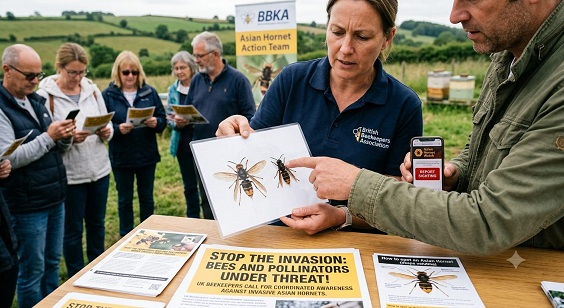
British beekeepers are demanding a comprehensive national awareness campaign to combat the rapid proliferation of the invasive yellow legged hornet. Industry leaders and conservationists warn that without wider public involvement, the aggressive predator threatens to decimate native insect populations and trigger severe ecological damage across the country.
The invasive species preys directly on native honeybees, hoverflies, and other vital pollinators. A single hornet can capture dozens of honeybees in a single day, hovering outside active hives to trap foraging bees and prevent them from gathering nectar. Agricultural specialists warn that unmanaged infestations could create widespread pollinator deserts, disrupting commercial crop production and weakening domestic food security.
The end of summer represents a critical turning point in the containment effort. As colonies reach full maturity, nests produce hundreds of new queens that disperse to survive the winter and establish fresh colonies the following spring. While the National Bee Unit has successfully tracked and destroyed record numbers of nests, genetic sampling reveals that overwintered queens have managed to establish new nests, underscoring the risk of permanent colonization.
Representatives from the British Beekeepers Association emphasize that eradicating the invasive insect cannot remain the sole responsibility of volunteer beekeepers. Because locating hidden nests depends heavily on timely reports from everyday citizens, beekeepers are urging ministers to commit to an ongoing publicity drive and long term funding. Officials urge members of the public to remain vigilant, photograph suspected hornets safely, and log potential sightings through dedicated mobile reporting tools to help prevent the species from securing an irreversible foothold.