

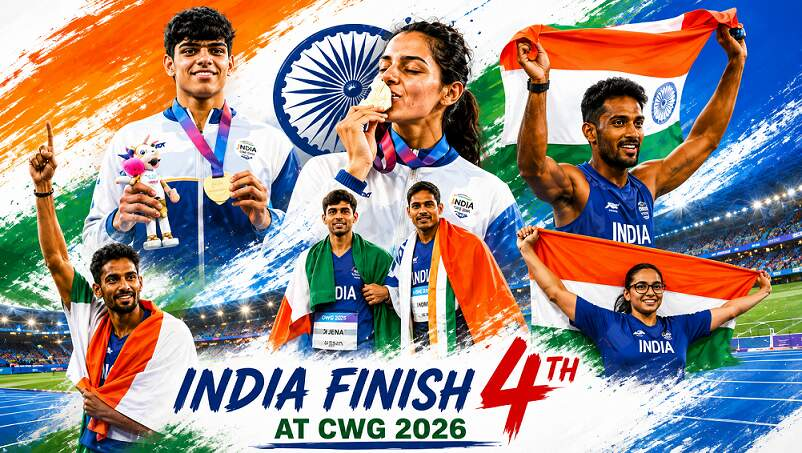
India’s performance at the Commonwealth Games 2026 has sparked a major discussion about the country’s changing sports landscape. While India finished fourth in the overall standings with 39 medals, including 13 gold, 17 silver and 9 bronze medals, the numbers do not tell the complete story.
The biggest highlight of India’s campaign was its record-breaking performance in boxing. Indian boxers delivered a historic show, winning 10 medals, including 7 gold medals and 3 silver medals. This became one of the strongest boxing performances by any country in a single Commonwealth Games edition. The success reflects the impact of improved coaching, scientific training methods, better athlete support systems and increased participation.
India also performed strongly in athletics and para-athletics, winning multiple medals across events such as long-distance races and triple jump. Weightlifting, judo and other sports also contributed to India’s medal tally, with judo witnessing a historic milestone as India secured its first-ever Commonwealth Games gold medal in the sport.
However, India’s overall medal count was lower compared to previous editions. The reason was not a decline in performance but changes in the sporting programme. The 2026 Commonwealth Games, held in Glasgow, featured only 10 sports due to organisational and financial limitations. Several events where India traditionally performs strongly, including wrestling, shooting, badminton, hockey and table tennis, were not included.
In previous editions, these sports contributed significantly to India’s medal haul. Wrestling alone had regularly provided India with numerous medals, while shooting had been one of the country’s most successful Commonwealth Games disciplines. Their absence had a direct impact on India’s final medal tally.
India’s improving performance is linked to long-term sports development programmes. Initiatives such as Khelo India and the Target Olympic Podium Scheme (TOPS) have focused on identifying young talent, providing financial assistance, improving training facilities and supporting athletes with international coaching, nutrition and sports science.
The country’s sporting culture is also expanding beyond cricket. Athletes from smaller towns and rural areas are increasingly making their mark in athletics, boxing, wrestling and other Olympic disciplines. Women athletes have also played a significant role in India’s recent sporting success.
The Commonwealth Games 2026 performance is also important because India is preparing to host the 2030 Commonwealth Games in Ahmedabad. The event is expected to showcase India’s sports infrastructure, urban development and global sporting ambitions.
Ahmedabad has been selected due to its existing facilities, including major stadiums, sports complexes and connectivity infrastructure. Plans are underway to develop world-class sporting facilities, including the Sardar Vallabhbhai Patel Sports Enclave, which is expected to become one of India’s largest integrated sports complexes.
Hosting the 2030 Commonwealth Games is seen as a stepping stone towards India’s larger ambition of hosting the Olympic Games in the future. A successful event could strengthen India’s case for its Olympic hosting aspirations.
The journey from Commonwealth Games success to Olympic ambitions will depend on effective planning, transparent execution and continued investment in athletes. India’s 2026 campaign shows that the country’s sports ecosystem is evolving, with stronger performances across multiple disciplines and a growing focus on becoming a global sporting power.