

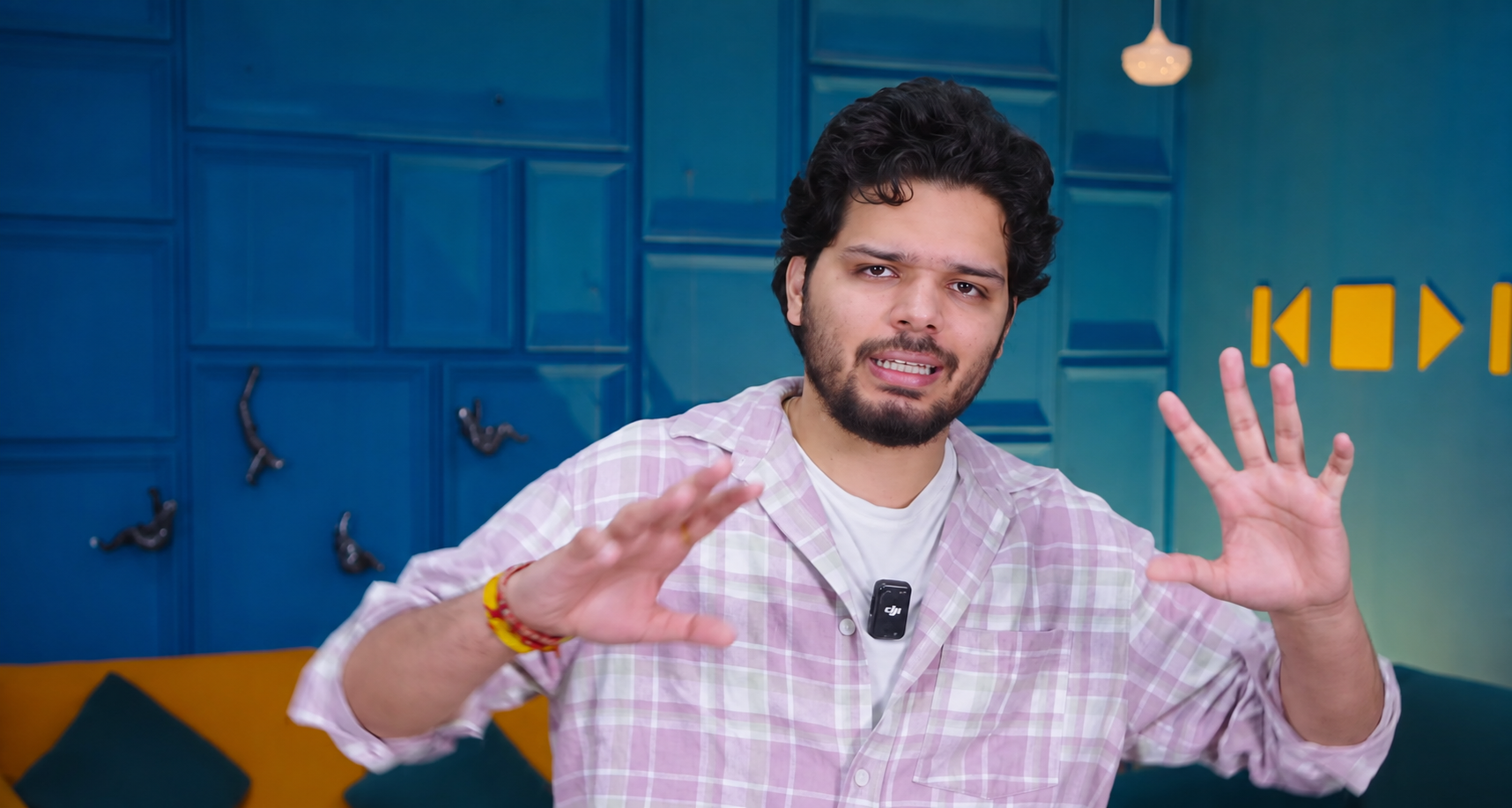
YouTuber Lakshay Chaudhary has sparked discussion around online content standards after sharing a video that questions the growing presence of sexually suggestive and provocative material on mainstream social-media platforms.
In the video, Chaudhary comments on what he describes as an apparent inconsistency in how different forms of online content are received, criticised and moderated. He contrasts the scrutiny faced by some creators, comedians and entertainment content with the visibility achieved by short-form videos designed around provocative themes.
The discussion arrives at a time when India’s creator economy is expanding rapidly. Instagram Reels, YouTube Shorts and other short-video formats have made it easier for creators to reach large audiences, build followings and monetise attention. However, the same growth has also renewed concerns around content moderation, age-appropriate viewing and the influence of algorithms on what users see.
Chaudhary’s video focuses on the difference between public conversations about cultural values and the content that gains significant reach online. He argues that creators producing more conventional or effort-intensive content may struggle for visibility, while sensational and highly suggestive videos often generate stronger engagement through views, comments and shares.
His comments reflect a wider debate around whether platform algorithms reward controversy and provocation more than creativity, information or entertainment value.
The Engagement Economy
Short-form social-media content is heavily influenced by engagement. Videos that prompt strong reactions—whether positive, critical or controversial—can often travel further than ordinary posts. This has created an environment in which creators are encouraged to respond quickly to trends and create content that captures attention within seconds.
Industry observers note that this does not apply to one category of creators alone. Content built around outrage, shock value, misinformation, personal conflict or provocative themes can all benefit from the same engagement-driven system.
The issue, therefore, is not simply about individual posts. It is about the incentives created by platforms, audiences and the larger digital-content economy.
Moderation and Audience Protection
The video also brings attention to broader questions about platform responsibility. Social-media companies maintain community guidelines intended to restrict explicit content, harassment and material that may be unsuitable for younger users. Yet, users and creators often raise concerns about how consistently those standards are applied, especially when content is framed as humour, lifestyle entertainment or trend-based reels.
For parents and younger users, the question is increasingly relevant. Short-video feeds are designed to recommend content based on viewing behaviour, which can make it difficult to predict what may appear next on a user’s screen.
Digital-safety experts have regularly emphasised the importance of stronger age-appropriate controls, transparent moderation processes and improved digital literacy. They also stress that users should report content that they believe violates platform rules instead of directing harassment towards creators.
A Wider Conversation on Cultural Boundaries
Public morality debates are not new in India. Films, music videos, advertisements, stand-up comedy and television have all faced scrutiny at different times. Social media has made these debates more immediate because content can reach millions of people within hours and generate instant public reactions.
Chaudhary’s video adds to this conversation by questioning how cultural boundaries are being negotiated in an era of viral content. While some viewers see provocative content as a matter of personal choice and creative freedom, others believe platforms should exercise greater care when material may reach young or impressionable audiences.
The debate is unlikely to end soon. As the line between entertainment, influence and monetisation continues to blur, creators, platforms and audiences will all play a role in deciding what kind of digital culture takes shape next.