

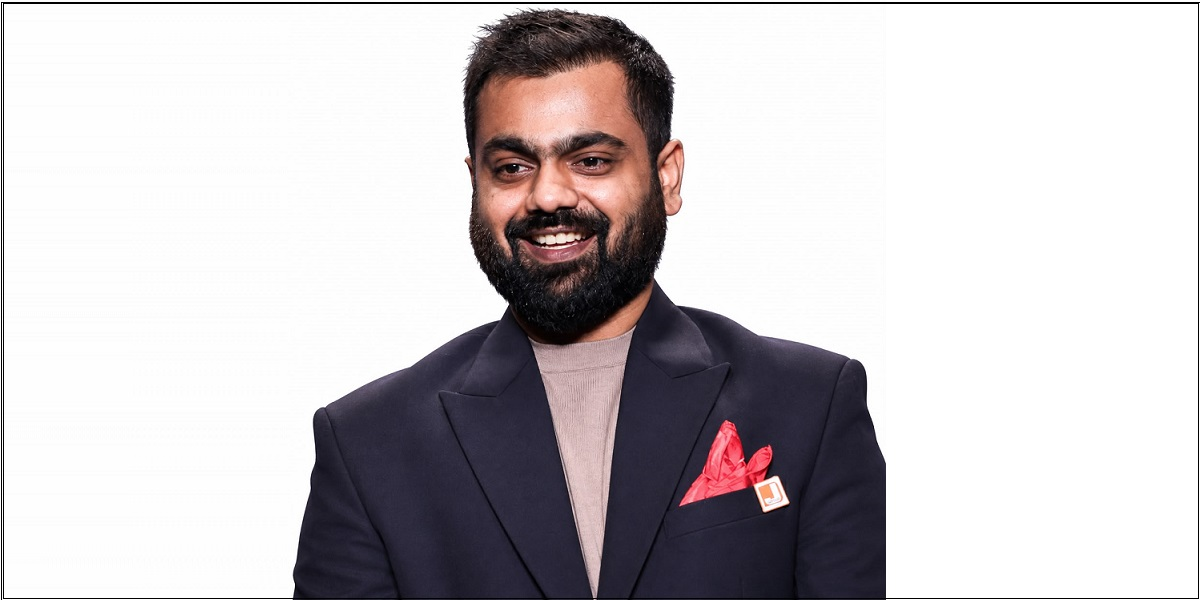
For more than five decades, Shree Jalan Impex has built its business around a simple yet powerful idea: making sourcing easier for small retailers. Founded in Varanasi in 1974 as Jalan Synthetics, the family-run business has grown from a modest textile operation into a large B2B distribution network serving around 5,000–6,000 retailers across Uttar Pradesh, Bihar and parts of neighbouring states.
Today, Managing Director Abhishek Jalan is leading the company through another phase of transformation expanding beyond traditional textiles, strengthening its sourcing network, adding new product categories and exploring opportunities in new territories.
In an exclusive conversation with A2Z Insider, Abhishek Jalan discusses the company’s 52-year journey, the values inherited from his grandfather and father, changing customer preferences, the importance of Varanasi, the company’s nationwide sourcing strategy, future expansion plans and his parallel journey as a professional poker player.
Q1. Shree Jalan Impex carries forward a 52-year journey that began with Jalan Synthetics in 1974. What was the vision behind starting the business in Varanasi, and how has that original vision evolved over the decades?
Abhishek Jalan: Good evening. I am Abhishek Jalan, Managing Director at Shree Jalan Impex, formerly Jalan Synthetics.
The business was started 52 years ago by my grandfather. His core vision was to create a one-stop ecosystem for small retail shopkeepers, particularly those operating in rural villages, who couldn’t afford to travel to distant manufacturing hubs like Mumbai for shirting and suiting, Surat for sarees, or Ahmedabad for dress materials.
He wanted to bring all those products under one roof in Varanasi.
In the early days, my grandfather managed sales from a modest shop space, while my father, then just 13 years old, would tie sarees to the back of a bicycle and visit local retailers to sell to them directly.
It was always a B2B model focused on serving other retailers rather than end consumers.
Over the decades, that small operation expanded into a massive supply network where goods from across India are centralised at our Varanasi warehouse and distributed to approximately 5,000–6,000 retailers.
Q2. From textiles and fabrics to a much broader range of products, how has the business evolved with changing customer preferences while maintaining the trust and relationships built over generations?
Abhishek Jalan: When I joined the business around 12 years ago, consumer demand was shifting noticeably towards ready-made garments such as jeans, T-shirts and innerwear, whereas customers previously bought unstitched fabrics for custom tailoring.
We realised that if our retail partners had to go elsewhere for ready-made apparel or utility items, we risked losing their core fabric business as well.
To protect our market share and stay aligned with my grandfather’s “one-roof” vision, we added ready-made garments and other high-demand categories.
Our goal is to ensure that a village shopkeeper can source everything they need to run their shop from apparel to basic home furnishings directly from us.
Despite expanding our catalogue, our foundational values remain unchanged. The trust built over 52 years passed down from my grandfather, to my father, to me is backed by our transparent operating model.
Unlike competitors who offer varying prices or discounts based on order size, we maintain a strict single-price policy. Whether a client purchases ₹10,000 or ₹10,00,000 worth of stock, they receive the exact same rate and discount structure.
We work on minimal margins and high volume, giving our network complete pricing confidence without needing to negotiate.
Q3. With Varanasi being such an important centre for India’s textile and weaving heritage, how has being rooted in the city shaped the way Shree Jalan Impex understands fabrics, customers and the market?
Abhishek Jalan: While Varanasi is famous for its rich local weaving heritage, our B2B wholesale business actually operates on a different dynamic.
Around 2000, our family business split into two verticals. My uncle established a retail vertical focused on local tourism, heritage weaving and Banarasi products across Uttar Pradesh.
My father and I stayed focused on the B2B wholesale side.
Because our client base spans across Uttar Pradesh and Bihar, supplying locally woven Banarasi products exclusively wouldn’t be price-competitive for their broader customer base, who can access local weavers directly.
Instead, approximately 80% of our volume consists of Surat sarees, 15% consists of Bombay shirting and suiting, and the remainder covers ready-made items sourced from manufacturing hubs such as Kolkata, Delhi and Tirupur.
Varanasi serves as our central strategic hub. Goods arrive at our main warehouse here and are dispatched to more than 5,000 retailers across the region.
Q4. The textile trade has changed significantly with new brands, changing fashion trends, sourcing patterns and the growth of organised retail. How has Shree Jalan Impex adapted its business approach while preserving the values that have sustained it for more than five decades?
Abhishek Jalan: Fashion trends cycle rapidly today, especially in ready-made apparel. Managing inventory risk requires us to stay constantly ahead of market demand.
Because my core team in Varanasi cannot physically monitor emerging trends across every fashion hub in real time, we set up dedicated procurement and R&D offices in major manufacturing cities across India, including Delhi for ready-made garments and lehengas, Kolkata for kids’ wear, Mumbai, Surat and Jaipur.
Our regional offices continuously study local market trends, select sample designs and send them to our central team in Varanasi for evaluation.
Once approved, we place bulk orders.
This decentralised sourcing network allows us to deliver the latest nationwide fashion trends to rural and semi-urban shopkeepers without sacrificing inventory efficiency or supply-chain speed.
Q5. Looking ahead, what is the vision for the next chapter of Shree Jalan Impex, and how do you see the business building on the legacy of Jalan Synthetics for the next generation?
Abhishek Jalan: Currently, our distribution presence covers Uttar Pradesh, Bihar and portions of Chhattisgarh and Jharkhand.
The immediate vision is to expand our geographical footprint into neighbouring states.
Strategically, we are expanding beyond traditional apparel to turn Shree Jalan Impex into a complete one-stop procurement ecosystem for rural shopkeepers.
In small village shops, retailers often sell a mix of clothing, home furnishings, pillows and utensils under one roof.
We want to supply all those non-apparel retail categories as well, eliminating their need to interact with any other wholesaler or distributor.
Additionally, we hold exclusive B2B dealership rights for major mill brands such as Raymond and Siyaram’s across Uttar Pradesh and Bihar.
We plan to secure more exclusive territorial rights for leading national brands, ensuring that our retail partners receive guaranteed authentic inventory through a seamless, updated digital and physical network.
Q6. Beyond leading Shree Jalan Impex, you also have a distinct journey as a professional poker player. How do you manage both roles, and how has that passion influenced your professional career?
Abhishek Jalan: Beyond being a full-time corporate leader for the last 10 to 12 years, I have actively pursued my passion as a part-time poker player.
Earlier on, when my father was actively managing the business, I pursued poker full-time.
But as my father grew older and decided to retire, I transitioned poker back to a part-time pursuit and took over the business full-time.
Even today, after 12 years in the business, I haven’t given up on poker.
Out of every 20–25 days spent working in our corporate setup and office, I ensure I take five to seven days out to play poker, participate in tournaments and appear on poker shows.
It is a sport and discipline I take immense pride in, and maintaining that balance has allowed me to bring strategic focus to both my venture and my personal passion.
From a small Varanasi shop to a distribution network reaching thousands of retailers, the journey of Shree Jalan Impex reflects the evolution of India’s textile and retail trade over five decades.
For Abhishek Jalan, however, the company’s next chapter is not simply about expanding its geographical reach. It is about taking the original vision of his grandfather a one-stop destination for small retailers and expanding it into a broader procurement ecosystem.
With new product categories, decentralised sourcing offices, brand partnerships and plans for expansion into neighbouring states, Shree Jalan Impex is positioning itself for its next phase while continuing to rely on the trust and relationships built across three generations.
At the same time, Jalan’s continued involvement in poker represents another distinctive aspect of his journey, allowing him to maintain a personal passion alongside the responsibility of carrying forward a family business that has been operating for more than half a century.
As Shree Jalan Impex moves into its next generation, its story remains rooted in the same principle with which it began in 1974: making business simpler, more accessible and more efficient for India’s small retailers.