

The beauty industry is undergoing a significant transformation as artificial intelligence (AI), social media creators and personalized digital experiences reshape how brands connect with consumers. For L’Oréal, one of the world’s established beauty companies, adapting to these changes means combining scientific innovation and technology with creativity, authenticity and a deeper understanding of consumer needs.
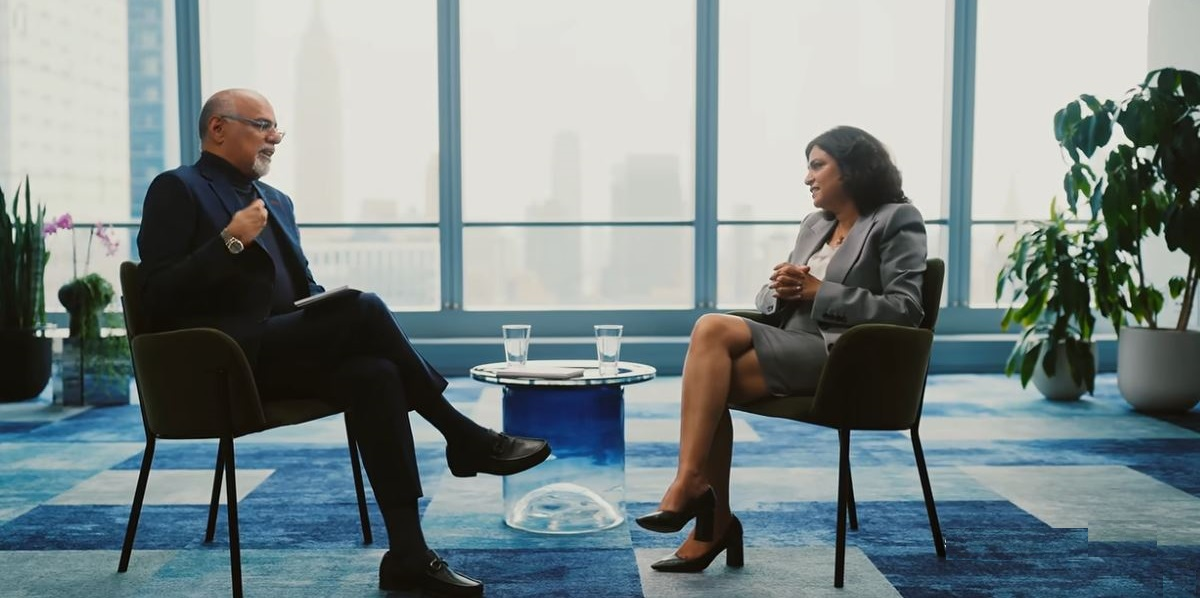
In a conversation on Quantum Marketing, hosted by marketing executive and author Raja Rajamannar, Asmita Dubey of L’Oréal Group discussed how the beauty industry is evolving and how brands can remain relevant in an increasingly fragmented digital landscape. The discussion explored the growing influence of creators, the role of AI in beauty discovery, and the importance of balancing data-driven marketing with human creativity.
Marketing in an Era of Fragmented Consumer Journeys
Consumer behavior has changed considerably as digital platforms, e-commerce and social media have expanded the ways people discover and purchase beauty products. Traditional marketing models, in which brands largely controlled their messaging and bought advertising to reach audiences, are giving way to a more interactive environment.
Dubey highlighted fragmentation as one of the defining challenges of modern marketing. Consumers move between online and offline channels, social platforms, video formats, influencers and retail experiences. At the same time, marketing teams have become increasingly specialized in areas such as content, social media, e-commerce, performance marketing and data analytics.
This fragmentation creates challenges for brands seeking to maintain a consistent identity across multiple consumer touchpoints. AI could help bring these activities closer together by enabling marketers to interpret consumer signals, identify emerging interests and deliver more relevant experiences.
At the center of this transition, however, remains a fundamental principle: marketing must fulfill consumer needs and give people meaningful reasons to choose one product or brand over another.
Creators Are Becoming Central to Beauty Marketing
The rise of social media has shifted the balance of influence from traditional brand advertising toward creators, influencers and peer-to-peer recommendations. Platforms such as YouTube, Instagram and TikTok have made beauty tutorials, product reviews and personal experiences an important part of the consumer journey.
According to Dubey, L’Oréal has increasingly focused on social-first communication, recognizing that consumers want to hear from people whose experiences and perspectives they trust. Rather than relying exclusively on celebrity endorsements, brands are working with creators who can make products part of everyday conversations.
The interview highlighted Maybelline’s approach to revitalizing its famous “Maybe It’s Maybelline” jingle. The brand worked with creators to encourage conversations around the slogan and collaborated with pop star Miley Cyrus to create a renewed version of the jingle. The example illustrated how established brand assets can gain fresh relevance when adapted to contemporary digital culture.
Another example involved CeraVe and basketball player Kevin Durant. The brand drew on longstanding social media conversations about Durant’s dry skin to position him as a face of its body-care messaging. The campaign demonstrated how brands can identify existing cultural conversations and use them to connect with audiences in a more relatable way.
Dubey also emphasized the importance of micro-influencers and smaller communities. Although large creators can provide significant reach, smaller creators often maintain close relationships with their audiences and generate engagement around specific interests. For beauty brands, these communities offer opportunities to communicate with consumers who value practical advice, product knowledge and authentic recommendations.
Democratizing Beauty Through Creator Communities
The growing availability of beauty information is changing how consumers form preferences and make purchasing decisions. Product ingredients, application techniques, reviews and demonstrations are increasingly accessible through online communities, allowing consumers to make more informed choices.
Dubey described this development as the democratization of beauty. Historically, established brands played a major role in defining beauty aspirations through advertising and celebrity campaigns. Today, creators and ordinary consumers also influence those aspirations by sharing diverse perspectives, routines and experiences.
This shift creates opportunities for brands to engage with a broader range of consumers while recognizing differences in preferences, demographics and cultural expectations.
Changing demographic patterns also influence product development and marketing strategies. Hair textures, skin needs, aging and evolving social attitudes all affect how consumers approach beauty. For companies operating across multiple markets, understanding these differences is essential to developing relevant products and communication.
The challenge is to combine a consistent brand identity with messaging that reflects the diversity of consumer needs.
AI and Personalization Are Changing Beauty Experiences
Technology is also transforming how consumers discover, evaluate and experience beauty products. Virtual try-on tools, augmented reality and image-recognition technology allow customers to explore products digitally before making purchasing decisions.
During the discussion, Dubey highlighted L’Oréal’s acquisition of Modiface in 2018 as an important step in expanding its beauty technology capabilities. The company developed augmented-reality and virtual try-on experiences that could be integrated across its brands and digital platforms.
L’Oréal has also used image-recognition technology to support skincare assessment. As discussed in the interview, dermatologist-reviewed and annotated skin images help inform technologies designed to identify visible skin characteristics and provide personalized guidance.
Dubey cited Lancôme’s in-store Skin Screen service and its online eSkin Screen experience as examples of how technology can connect physical retail with digital services. These tools are intended to help consumers better understand their skin and identify products that may suit their needs.
Personalization is particularly relevant in a category where consumers can face an overwhelming number of choices. Dubey noted during the conversation that many consumers feel lost among the products available on shelves. Digital guidance and personalized recommendations can help simplify the decision-making process.
The broader strategy is to connect product innovation, digital tools and consumer services into a more integrated experience rather than treating online and offline engagement as separate activities.
Balancing Data, Technology and Creativity
While AI and data analytics can improve efficiency and provide insights into consumer behavior, Dubey stressed that creativity remains central to beauty marketing.
She described L’Oréal’s innovation approach as resting on three pillars: science, technology and creativity. Science supports product development and performance, technology creates new ways to understand and engage consumers, and creativity helps brands build desire, emotional connections and distinctive identities.
This balance is particularly important as brands experiment with generative AI in advertising and content production. AI can help automate time-consuming tasks, support the development of marketing assets and expand creative possibilities. However, technology alone cannot guarantee that a campaign will resonate with consumers.
The discussion also highlighted the importance of authenticity. Consumers increasingly expect credible, relatable representations of beauty, making it essential for brands to consider how AI-generated content is used in external communications.
Dubey explained that L’Oréal had decided not to use AI-generated lifelike faces, bodies, hair or skin to exaggerate product benefits in its external marketing. She distinguished this from using AI to create backgrounds and support other parts of content production.
The approach reflects a broader challenge facing the industry: using emerging technologies to improve efficiency without undermining consumer trust.
Competing for Visibility in AI-Powered Beauty Discovery
As consumers increasingly turn to conversational AI tools to ask questions and discover products, the way brands gain visibility is changing. Traditional search engine optimization and social media visibility remain relevant, but companies must also consider how their products and expertise appear in AI-generated answers.
Dubey described this emerging environment as the “answer layer,” where consumers seek direct responses to questions about beauty, skincare and product selection.
For L’Oréal, the opportunity lies in establishing itself as a credible source of beauty information. Dubey pointed to the company’s scientific research, publications and relationships with healthcare professionals as elements that contribute to its knowledge base and digital authority.
The development of AI-assisted discovery also raises questions about the quality and reliability of information available to consumers. Brands will need to ensure that product information, scientific evidence and educational content are accurate, accessible and clearly presented.
L’Oréal’s wider digital strategy reflects this shift toward connecting technology with the underlying systems that support marketing, from consumer insights and product information to content creation and measurement. A recent Fortune report on Dubey’s approach similarly highlighted the growing importance of AI infrastructure and credible content as consumer journeys evolve.
The Future of Beauty Marketing
L’Oréal’s approach illustrates how established beauty brands can adapt to a changing marketplace by combining their heritage with new technologies and consumer-led insights. Social media creators are influencing product discovery, personalization is helping consumers navigate increasingly complex choices, and AI is expanding the possibilities for marketing, research and digital services.
Yet the central objective remains unchanged: understanding consumers and meeting their needs in ways that are relevant, distinctive and trustworthy.
For L’Oréal, the next phase of transformation will involve scaling these capabilities across its diverse portfolio of brands while preserving the creativity and authenticity that underpin effective brand building.
As beauty discovery becomes more personalized and increasingly shaped by digital platforms, the companies best positioned to succeed will be those that use technology not simply to reach more consumers, but to build meaningful relationships with them.