

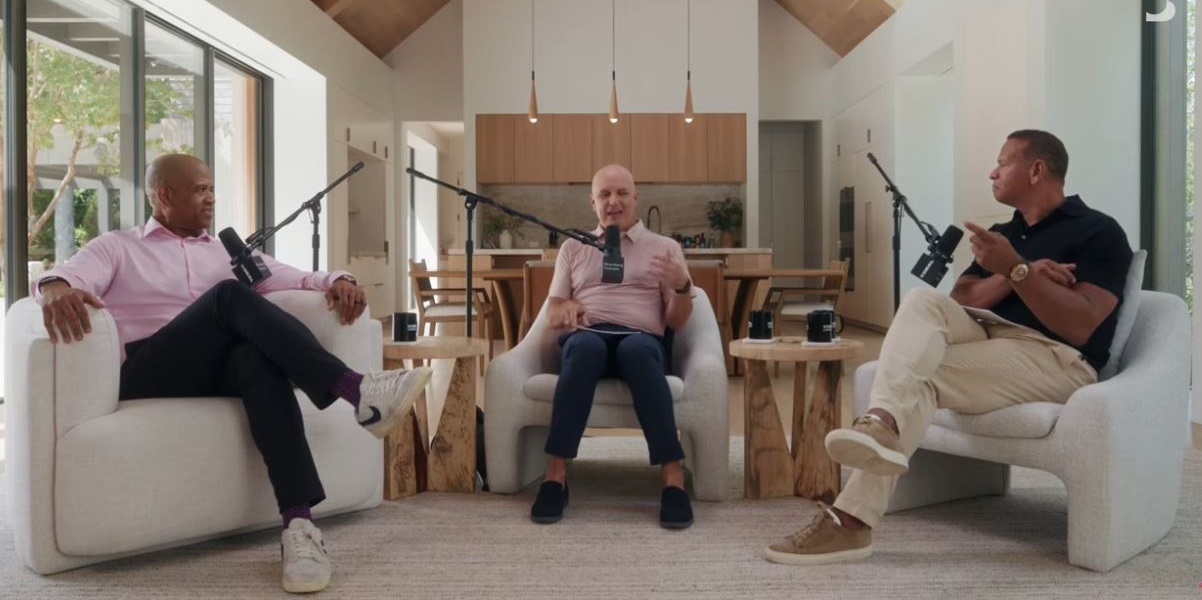
Private equity is playing an increasingly significant role in professional sports, providing capital for team development, stadium improvements, technology adoption and new sports ventures. Don Cornwell, co-founder and CEO of Dynasty Equity, says institutional investors can help sports organizations expand their businesses while allowing team owners to retain control over their franchises.
Speaking on The Deal, hosted by Jason Kelly and Alex Rodriguez, Cornwell discussed the rapid evolution of sports investing, Dynasty Equity’s investment strategy, the economics of sports leagues and the importance of maintaining strong relationships with fans and local communities.
Founded by Cornwell and Jonathan Nelson, Dynasty Equity was established to bring traditional private equity investment strategies to the sports industry. The firm identified an opportunity to support sports organizations as the sector evolved, attracting interest from institutional investors and technology-focused businesses.
The Growing Role of Institutional Capital in Sports
Cornwell said the transformation of the sports industry has happened faster than he and Nelson initially anticipated. When they established Dynasty Equity, social media was a major factor influencing the industry. Since then, the growth of artificial intelligence and digital platforms has further changed how fans interact with sports organizations.
He noted that the increasing presence of technology companies, streaming platforms and digital services has created new opportunities for sports businesses. At the same time, audiences continue to value live events and shared experiences, making sports an attractive investment category.
Major private equity firms, including Ares, Apollo and KKR, have also entered the sports investment market. According to Cornwell, their participation has helped establish sports as a recognized asset class among institutional investors.
Dynasty Equity differentiates itself through its specialized focus on sports. While larger investment firms operate across multiple industries, Dynasty concentrates on sports-related opportunities and the relationships required to execute transactions in the sector.
Providing Capital Without Taking Control
Cornwell emphasized that private equity investment in professional sports does not necessarily mean investors take over the management of teams. Under the ownership structures used by major North American sports leagues, institutional investors can acquire minority stakes while existing owners retain control.
He explained that Dynasty Equity primarily provides capital to support growth initiatives, including practice facilities, stadium renovations and other improvements that can strengthen a franchise’s business performance.
The objective is to help teams increase revenue, improve operations and enhance their long-term value rather than introduce sweeping management changes.
Cornwell cited the firm’s investment alongside Vinod Khosla and his family in the acquisition of the Seattle Seahawks from the estate of Paul Allen for $9.5 billion. Dynasty Equity participated as a minority investor in the transaction, which Cornwell described as an opportunity to combine sports investment with technological expertise.
He highlighted potential applications of artificial intelligence and other technologies in areas such as fan engagement, ticketing, stadium experiences and local sponsorships. These initiatives could help teams develop stronger connections with supporters while creating additional commercial opportunities.
TMRW Sports and the Expansion of New Leagues
Another important component of Dynasty Equity’s investment strategy is TMRW Sports, the sports venture co-founded by golf stars Tiger Woods and Rory McIlroy, alongside sports executive Mike McCarley.
Cornwell said Dynasty initially recognized TMRW Sports as an opportunity to develop new golf experiences in partnership with established organizations, including the PGA Tour. The firm’s investment thesis extended beyond golf, anticipating that the company’s operating model could be applied to other sports.
One of the advantages of the business, he explained, was its relatively low capital intensity compared with traditional sports ventures. Rather than constructing numerous stadiums across the country, TMRW Sports planned to operate around a centralized venue, with an estimated cost of $75 million discussed during the interview.
Cornwell said the opportunity to own a business at the league level was particularly attractive. Unlike traditional professional leagues, where much of the economic value flows to individual team owners, a league-level platform can generate revenue through corporate partnerships, fan engagement and other commercial activities.
The venture’s expansion into flag football represents another example of this strategy. Cornwell discussed the NFL’s efforts to develop professional men’s and women’s flag football leagues, building on the sport’s growing participation and its inclusion in the 2028 Los Angeles Olympic Games.
He said TMRW Sports’ experience in sports operations and media helped position it as a potential partner for the NFL as it explored the development of professional flag football.
What Investors Look for in Sports Franchises
Cornwell explained that Dynasty Equity evaluates several factors when considering investments in professional sports, including league leadership, revenue opportunities, ownership relationships and the potential for measurable business improvements.
League offices play an important role because they negotiate media rights agreements, labor arrangements and other commercial partnerships that influence the financial performance of franchises.
For Dynasty Equity, the goal is to identify situations in which additional capital could produce meaningful improvements in a team’s financial performance. Stadium upgrades, enhanced fan experiences and stronger commercial operations can all contribute to revenue growth.
However, Cornwell said valuation multiples and financial analysis are only part of the investment decision. The firm also considers whether the existing ownership group is a suitable partner, particularly because institutional investors generally cannot acquire controlling stakes in the major leagues under their current ownership rules.
Trust and alignment between investors and team owners are therefore central to Dynasty Equity’s approach.
Private Equity, Franchise Valuations and Exit Opportunities
The growing availability of institutional capital has also influenced the market for sports franchises. Cornwell suggested that private equity participation provides wealthy families with greater confidence when investing in teams because it creates a potential source of liquidity if they eventually decide to sell their stakes.
Although owners may have no immediate plans to exit their investments, the presence of institutional buyers can make ownership more attractive by offering an additional potential route to a future transaction.
Cornwell also pointed to the growing ability of teams to connect directly with fans. Data-driven marketing, personalized products, merchandise and customized experiences can help franchises generate additional revenue while strengthening customer relationships.
These developments may support higher valuations by improving the commercial potential of sports organizations. However, the long-term effects depend on how effectively teams use their capital and develop sustainable revenue streams.
Keeping Fans and Communities at the Center
Despite the financial opportunities, Cornwell stressed that sports teams have responsibilities beyond generating returns for investors. He described professional franchises as community assets whose popularity depends on connections with supporters across different neighborhoods and economic backgrounds.
Using the New York Knicks as an example, he said their broad appeal depends on maintaining relationships with fans throughout New York City, including communities in the Bronx, Queens and Brooklyn.
Cornwell argued that teams can pursue revenue growth through sponsorships, merchandise and premium experiences rather than relying primarily on ticket price increases. He cited Liverpool FC as an example of a club that has historically pursued relatively modest ticket price increases while seeking growth through other commercial activities.
Technology, he added, could help sports organizations develop new revenue sources while preserving access for fans who might otherwise be priced out of live events.
His comments reflect a broader challenge facing professional sports: balancing rising franchise valuations and investor returns with affordability, accessibility and community engagement.
The Future of Sports Investment
Dynasty Equity’s investment strategy reflects a wider shift in how professional sports are financed and managed. Institutional investors are increasingly looking beyond the ownership of individual teams to opportunities involving leagues, sports technology, media, live entertainment and new competition formats.
Cornwell’s perspective suggests that capital alone is not enough to create lasting value. Successful investments also require strong ownership partnerships, experienced leadership, technological innovation and a clear understanding of how fans engage with sports.
As institutional investment continues to expand, the industry’s long-term success may depend on whether teams and investors can turn new financial resources into better business performance without weakening the community connections that make sports valuable in the first place.