

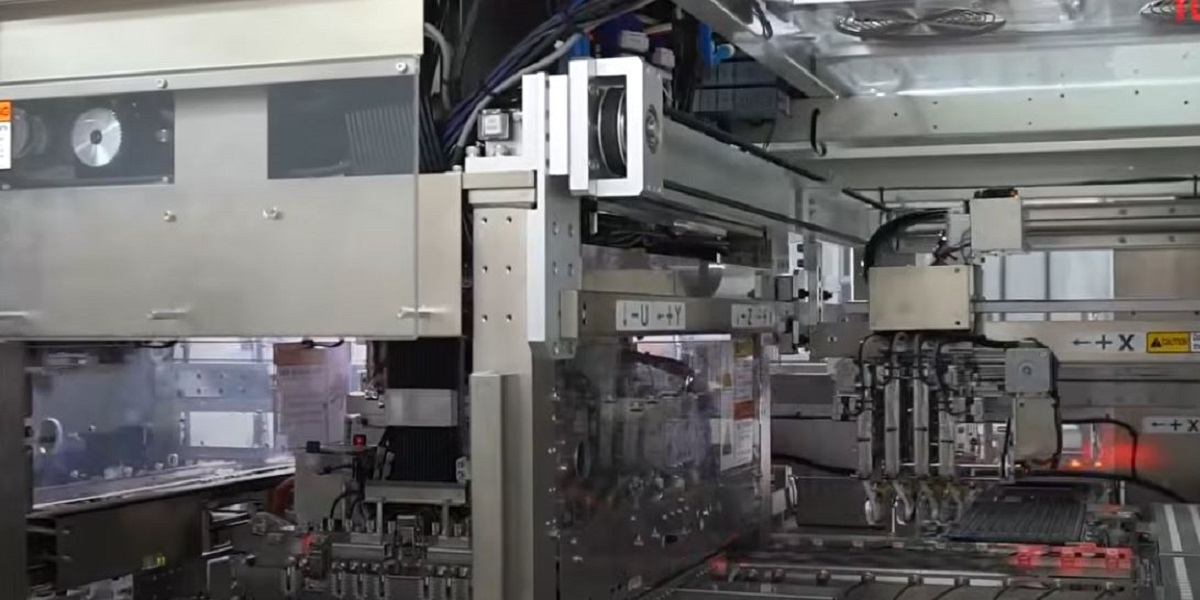
India’s semiconductor push is moving beyond policy announcements, with projects now taking shape on the ground. In an interview with YourStory Founder and CEO Shradha Sharma, S Krishnan, Secretary, Ministry of Electronics and Information Technology (MeitY), discussed what helped the India Semiconductor Mission move from planning to implementation and what India needs to do next.
Krishnan said the mission benefited from a focused approach, flexibility in processing applications and strong commitment at the highest levels of government.
The initial programme concentrated on two key areas: establishing semiconductor fabrication plants in India and developing semiconductor packaging facilities, including ATMP and OSAT units.
According to Krishnan, the flexibility built into the application process also played an important role. Government officials were able to engage with companies, examine proposals, seek changes where necessary and work with applicants to ensure projects met the programme’s objectives.
Another factor was the level of institutional commitment. Semiconductor projects ultimately required Cabinet approval, helping ensure that projects receiving the government’s backing were treated as a national priority.
From Announcements to Ground-Level Execution
Krishnan pointed to the progress of semiconductor facilities as evidence that the mission has moved into implementation.
He said three plants are being brought towards commercial-scale production, while two or three additional projects could potentially come into production before the end of the year.
The physical construction of these facilities has also helped build confidence among investors and government officials, according to Krishnan.
He cited conversations with investors who were particularly encouraged by seeing images of factories and semiconductor plants under construction. For him, the ability to demonstrate tangible progress is important in establishing credibility around India’s semiconductor ambitions.
Building the Wider Semiconductor Ecosystem
India’s next phase of semiconductor development is expected to take a broader ecosystem approach.
Krishnan said the government is focusing not only on manufacturing but also on research and development, chip design, training and skills, materials, gases, chemicals, equipment and other parts of the semiconductor supply chain.
The objective is to make India a more significant participant in the global semiconductor value chain, particularly in areas that are critical to modern technology and the wider economy.
He also stressed the importance of balancing technological self-reliance with global cooperation. India needs to build domestic capabilities and reduce excessive dependence on external sources while remaining open to technology, investment and ideas from other countries.
Preparing Students for an AI-Driven Economy
The conversation also examined how India’s education system needs to evolve as artificial intelligence becomes part of almost every industry.
Krishnan identified two areas that students should focus on: AI literacy and strong domain expertise.
He said students across universities, colleges, institutes and schools should learn how AI can be used across different sectors and disciplines. At the same time, they need deep knowledge of their chosen subjects.
That combination will become particularly important as AI systems become more widely used. Professionals with strong domain knowledge will be better positioned to identify inaccurate or unreliable AI-generated information and question the technology when necessary.
India’s Broader Technology Strategy
Krishnan said India’s technology strategy should be guided by clear objectives, with inclusion at its centre.
He pointed to initiatives covering artificial intelligence, quantum technology, healthcare and agriculture, alongside government efforts to encourage research and development through measures such as the Anusandhan National Research Foundation and the RDI Fund.
The broader approach, he said, is to ensure that technology works for people while creating the capabilities India needs to develop and deploy critical technologies.
For the semiconductor sector, that means going beyond building factories. India is also seeking to develop the talent, research, design capabilities, supply chains and supporting infrastructure needed to create a complete semiconductor ecosystem.
The progress of the India Semiconductor Mission will ultimately be measured by how effectively these projects move into production and how successfully the wider ecosystem develops around them. For now, the focus is shifting from announcing the ambition to demonstrating execution on the ground.