

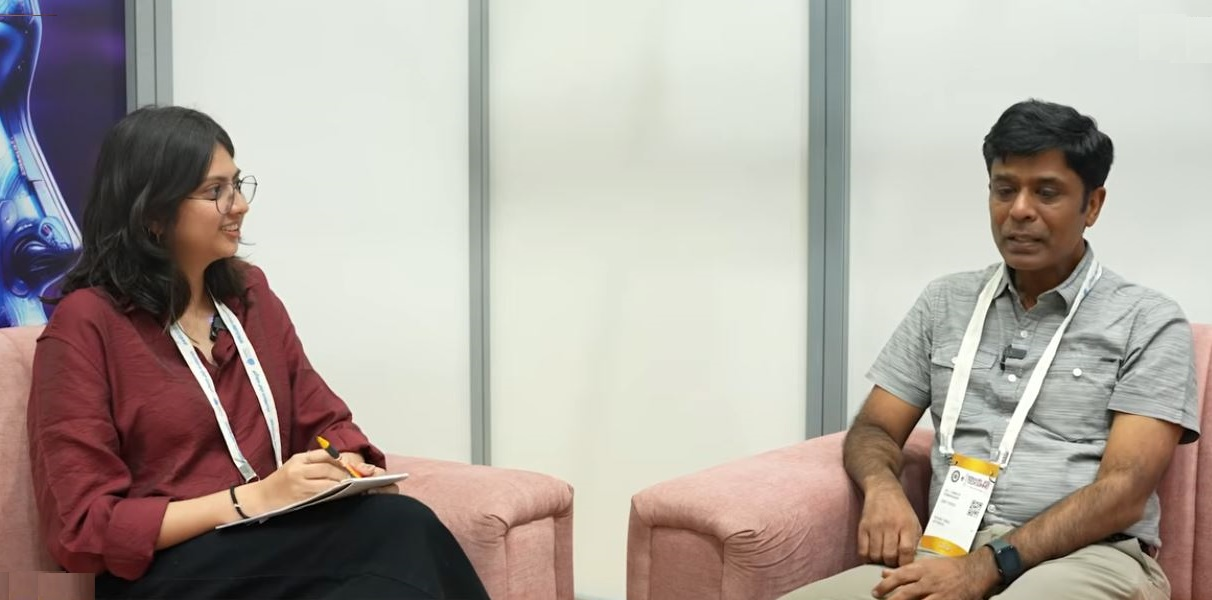
Qbit Force, founded by Dr. Venkat, is positioning itself in the global quantum computing market with its open-access hardware approach and the launch of its Q-Shiva platform, aiming to make quantum hardware development, testing and innovation more accessible to universities, research institutions and laboratories.
India’s quantum technology ecosystem is gaining momentum, with homegrown deep-tech companies increasingly focusing on indigenous hardware development, research infrastructure and talent creation. Among the emerging players, Qbit Force is working to establish a distinctive position through its open-access quantum hardware systems and efforts to build a broader quantum innovation ecosystem.
In an interview at the Bengaluru Tech Summit, Dr. Venkat, Founder of Qbit Force, discussed the company’s technology roadmap, its newly introduced Q-Shiva platform, global expansion ambitions and the growing opportunities in India’s quantum computing sector.
Q-Shiva: Making Quantum Hardware Development More Accessible
One of Qbit Force’s recent developments is the Q-Shiva platform, designed to support quantum hardware integration, validation and architecture.
According to Dr. Venkat, the platform was developed in response to growing interest from universities and academic institutions seeking affordable ways to enter quantum hardware research.
While quantum computing software and cloud-based access have created opportunities for researchers, access to physical quantum hardware remains a significant challenge. Q-Shiva aims to address this gap by enabling researchers to test different components of quantum computers without necessarily investing in expensive infrastructure.
The platform supports testing of quantum components, including resonators and other hardware elements, potentially reducing some of the cost and infrastructure barriers associated with quantum research.
Indigenous Quantum Hardware and the Nada Processor
Another important development highlighted during the interview was Qbit Force’s in-house-developed Nada processor.
The processor incorporates niobium resonators, which play an important role in activating and controlling qubits at specific frequencies.
Dr. Venkat also highlighted the company’s developing domestic supply chain, including gold-plated components and packaging work carried out in Machilipatnam, Andhra Pradesh.
The initiative reflects an effort to develop more of the quantum computing hardware ecosystem within India while creating opportunities for local manufacturing partners to participate in advanced technology development.
Exploring More Accessible Quantum Hardware Technologies
Cryogenic infrastructure remains one of the major challenges in superconducting quantum computing. Quantum processors typically require extremely low temperatures, often achieved using dilution refrigerators and specialised cooling systems.
During the discussion, Dr. Venkat explained how research into superconducting materials could help reduce some of these infrastructure requirements.
He highlighted the potential of niobium-based materials and the possibility of developing systems that can operate under less demanding cooling conditions.
He also discussed the importance of helium-4 as a more widely available alternative to helium-3 in certain cooling applications.
Although these developments do not eliminate the need for specialised cryogenic infrastructure, they point towards opportunities to make quantum hardware research more accessible and potentially less expensive.
Open-Access Hardware: Qbit Force’s Differentiating Strategy
One of Qbit Force’s defining approaches is its emphasis on open-access hardware.
Unlike many quantum computing providers that primarily offer access to quantum processors through cloud platforms, Qbit Force wants researchers and students to physically access, examine and understand the underlying hardware.
Dr. Venkat believes that making quantum systems accessible can encourage more people to become builders and innovators rather than remaining users of technology.
He described the company’s approach as comparable to open-source software, but applied to quantum hardware.
The company aims to create an environment where universities, research institutions and technology developers can experiment with quantum systems, understand their architecture and contribute to future improvements.
This approach could help strengthen the quantum research ecosystem by encouraging practical learning and hardware-level innovation.
Empowering Students and Building India’s Quantum Talent
Talent development is another important part of Qbit Force’s vision.
Dr. Venkat highlighted the growing interest in quantum technologies among universities, including institutions outside India’s major technology hubs.
He shared an example of a 16-year-old student who visited the company’s facility, learned about its quantum systems and subsequently filed a patent related to a helium-based cooling system.
For Dr. Venkat, this experience demonstrated the importance of making advanced technologies accessible to young learners.
He believes that students should have opportunities to explore how quantum computers are built, understand their components and develop their own innovations.
Qbit Force has also been engaging with educational institutions and supporting initiatives to introduce students to practical quantum computing.
Global Expansion and Quantum Hardware Exports
Beyond the domestic market, Qbit Force is preparing to expand its presence internationally.
Dr. Venkat indicated that the company is looking at exports of its quantum systems, particularly to research laboratories, academic institutions and government research organisations.
The company believes its open-access hardware model could attract interest from international research communities seeking physical access to quantum computing systems.
By providing platforms that allow researchers to work directly with quantum hardware, Qbit Force hopes to establish a new category within the broader quantum technology market.
Its international expansion strategy is closely connected to its ambition to develop a full-stack quantum hardware ecosystem.
Bootstrapping, Early Revenue and Business Growth
Qbit Force’s business strategy is also notable for its approach to funding.
According to Dr. Venkat, the company was established with his co-founders in December of the previous year. Rather than immediately pursuing external investment, the founders decided to initially finance the venture using their own resources.
He explained that some of the funding proposals they considered came with restrictions on operational independence, including decisions related to hiring and entering new markets.
The founders therefore prioritised maintaining strategic flexibility during the company’s early development.
Dr. Venkat also highlighted the support received from academic institutions, including SRM, Qubitech, Chandigarh University and BIBS.
He stated that Qbit Force had secured orders and generated approximately ₹40 crore in revenue within its first year of operations.
The figure, as stated by Dr. Venkat during the interview, highlights the company’s early commercial momentum in a technology sector where research and development cycles can be lengthy.
India’s Quantum Ecosystem and the Road Ahead
India’s growing focus on quantum technology is creating opportunities across quantum computing, semiconductors, artificial intelligence and advanced hardware development.
The increasing participation of universities, startups and research organisations is helping expand the country’s deep-tech capabilities.
For Qbit Force, the next phase involves scaling its hardware platforms, expanding its institutional partnerships, exploring international markets and encouraging more students and researchers to participate in quantum innovation.
The company’s open-access approach represents an alternative vision for quantum computing development, one that places emphasis not only on providing computing capabilities but also on enabling people to understand and build the underlying technology.
As global competition in quantum computing intensifies, companies developing indigenous hardware and accessible research platforms could play an important role in shaping the next generation of quantum technologies.
Qbit Force’s ambition is to contribute to that transformation by making quantum hardware more accessible, strengthening India’s domestic capabilities and connecting its innovation ecosystem with global research markets.