

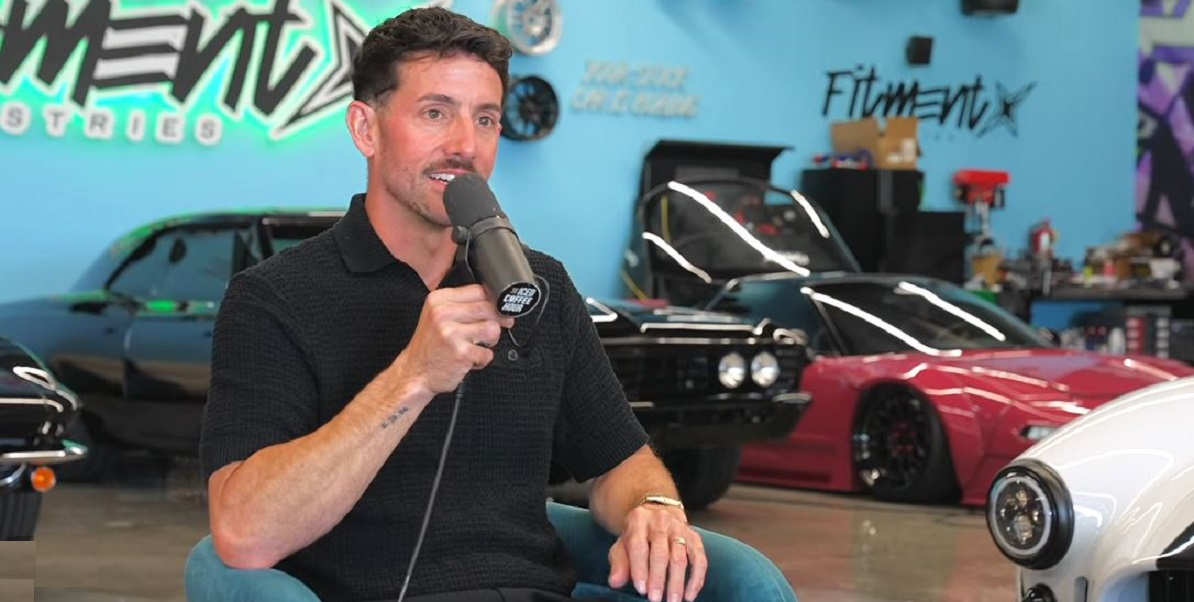
For Steve Hamilton, financial success has not necessarily meant changing the way he dresses or presents himself. Despite being associated with an expensive car collection and the world of automotive content, Hamilton says he remains surprisingly frugal in several aspects of his everyday life.
In a recent conversation, Hamilton discussed his approach to money, the point at which he began to feel financially secure, the economics behind automotive creators, and his changing strategy for growing a YouTube channel.
Why Hamilton Is Still Frugal
Asked what he remains frugal about, Hamilton pointed to his clothing and everyday appearance.
He explained that he is willing to spend money on experiences, travel and cars, but does not feel the need to spend heavily on clothes or accessories. He described wearing regular Nike shoes, a roughly $40 shirt and a watch costing around $60.
For Hamilton, the contrast is intentional. He enjoys high-end cars and experiences but prefers to look like an ordinary person rather than use clothing or accessories to signal wealth.
His approach reflects a broader distinction between spending on experiences and spending for appearances. While he is comfortable investing in cars and travel, he says he has little interest in simply “flexing” through the way he looks.
From a $6,000 First Month to Financial Security
Hamilton also reflected on his early financial journey. He recalled earning approximately $6,000 during his first month in business, noting that the figure was roughly equivalent to what he had earned during the previous year.
While that early income gave him confidence, he said his perception of financial security changed significantly as his businesses grew.
During the COVID-era period, when business valuations were particularly high, Hamilton said one company valued his business at approximately $1 billion. He also recalled an offer involving $200 million in exchange for a 20% stake, subject to aggressive future growth expectations.
Hamilton ultimately decided against the arrangement because of the conditions attached to the deal. He said the growth requirements could have resulted in the investor effectively taking control of the company if the targets were not achieved.
Looking back, he said he was pleased that the deal did not happen.
The Money Behind Automotive YouTubers
The conversation also turned to the financial habits of automotive YouTubers.
Hamilton discussed several prominent creators and noted that some have built businesses beyond YouTube, making it difficult to judge their financial position simply by looking at their channels or car collections.
He pointed out that YouTube revenue alone may not explain how some creators finance large automotive collections. Business interests, investments and other income sources can play a significant role.
Hamilton also discussed creators who focus heavily on finding deals when purchasing vehicles, compared with those who make expensive purchases primarily for content.
The distinction, he suggested, is between treating cars as an expense for content and treating them as assets or business opportunities.
The Limits of Online Estimates
Hamilton also questioned the accuracy of online estimates of private company revenues.
He described searching for information about one of his businesses and finding estimates that he believed were significantly below its actual revenue. He cited the scale of the company’s physical operations as one reason he questioned the figures.
The discussion highlighted a wider issue with online business estimates: publicly available information can provide only an incomplete picture of privately held companies.
As AI systems increasingly gather and analyse information from the internet, Hamilton suggested that inaccurate figures can potentially continue circulating and being repeated as if they were facts.
YouTube Is at a Crossroads
Beyond money, Hamilton said his YouTube channel is currently facing an important strategic decision.
His channel has grown to approximately 2.2 million subscribers over about four and a half years, but Hamilton said he is increasingly questioning how much importance should be placed on subscriber numbers.
The channel began experimenting with stronger storytelling, taking inspiration from automotive creator Matt Armstrong. Hamilton said the approach had performed well but that the team was now considering another change to encourage continued subscriber growth.
One challenge, he explained, is that the channel sometimes puts an entire journey into a single video. That can deliver a complete story to viewers but may give them less reason to subscribe and return for the next instalment.
By contrast, multi-part projects can create an unfinished journey that encourages viewers to follow the channel for future episodes.
Views Versus Subscribers
The conversation also examined whether subscriber numbers remain the most important measure of success on YouTube.
Hamilton said he personally places significant importance on both views and subscriber growth because the channel is something he wants to succeed at even though it is secondary to his other business interests.
However, another perspective raised during the discussion was that viewership and content performance may be more meaningful than the raw subscriber count.
The changing role of YouTube Shorts was also discussed. Shorts once became a major source of subscriber growth for many channels, but Hamilton suggested that their ability to consistently generate subscribers has changed.
The broader strategy, therefore, is shifting once again toward high-quality content, storytelling and consistency.
Why Consistency Still Matters
Hamilton said creators cannot rely solely on occasional viral videos if they want to build a lasting audience.
He pointed to creators such as Matt Armstrong and Cletus McFarland as examples of channels that have developed strong audiences through regular publishing and consistent content.
For Hamilton, this creates a decision point: whether to increase his involvement and publishing frequency or potentially step away from the channel after reaching a significant milestone.
The discussion illustrates how even established creators with millions of subscribers continue to reassess their strategy as YouTube’s recommendation system, audience behaviour and content formats evolve.
The Bigger Question: What Does It Mean to Be Rich?
Hamilton’s comments offer a broader perspective on wealth beyond the headline numbers associated with luxury cars and business valuations.
His willingness to remain frugal with everyday clothing while spending heavily on cars and experiences demonstrates that financial success does not necessarily translate into conspicuous spending across every area of life.
His story also shows that the definition of financial security can change as a person’s business grows. What initially feels like a major financial breakthrough can eventually become only one milestone in a much larger journey.
For Hamilton, wealth appears to be closely connected not only to how much money someone has, but also to how that money is used, how businesses are structured and whether financial decisions support long-term goals.
As his YouTube channel reaches a new strategic crossroads, that same approach to money and decision-making appears to remain central to how he evaluates success both on and off the screen.