

In the urgent race to restore landscapes scorched by wildfires and depleted by erosion, environmental restoration often hits a quiet, unseen barrier: the vulnerability of raw seeds. Newly planted native seeds face aggressive soil molds, physical stress, and harsh outdoor conditions before they ever sprout.
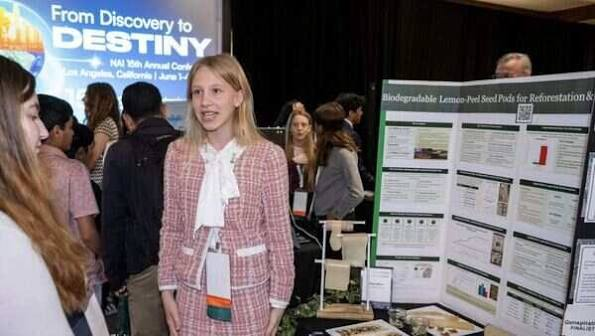
Now, thirteen-year-old Massachusetts inventor Kaia Minn has developed a solution from a surprising resource: discarded citrus fruit rinds.
Minn has engineered a patent-pending biodegradable seed pod built from food scrap citrus peels and complementary plant-based binders. Unlike standard industrial agricultural techniques that coat seeds in synthetic polymers, petroleum-derived adhesives, or plastic micro-capsules, Minn looked toward circular biomaterials.
The innovation zeroes in on the innate biology of citrus fruit. The rinds of oranges, lemons, and grapefruits contain essential oils rich in limonene alongside organic acids, which serve as natural chemical shields against rot, fungi, and bacterial decay. Minn recognized that by transforming these dried and processed peels into protective outer casings, the material could naturally suppress fungal spores and mold while retaining moisture around the embryo during early germination.
Once the seed establishes root structure and breaks through, the surrounding casing simply decays into organic compost, nourishing the soil rather than leaving persistent microplastics behind.
The concept started after Minn observed television coverage of vast forest fires across North America. Seeing entire tree canopies destroyed, she noticed that conventional manual replanting was frequently too slow, expensive, and difficult over rough terrain.
To bridge that gap, Minn designed her citrus pods to be structurally resilient. They withstand the mechanical impact of being deployed across rugged, remote locations via drones or high-capacity aerial drop systems without cracking or damaging the fragile seed inside.
Early trials confirmed that the citrus composite reliably deters mold and improves early seed survival rates compared to unprotected control seeds. Her work has earned recognition across national STEM platforms, including accolades in the 3M Young Scientist Challenge and the United States National Innovator Challenge.
Minn is currently collaborating to test the seed pods across diverse native species in outdoor soil environments. Her goal is to partner with conservation agencies and reforestation non-profits to bring the pods directly into scorched woodlands, turning discarded kitchen waste into the forest canopies of tomorrow.